DSQ Meaning in Real Estate: What It Is & Why It Matters
DSQ stands for Domestic Staff Quarters — a separate room in Kenyan homes. Learn how DSQ adds value, modern uses (home office, Airbnb), and what to check
What Is DSQ in Kenya Real Estate? Complete Guide
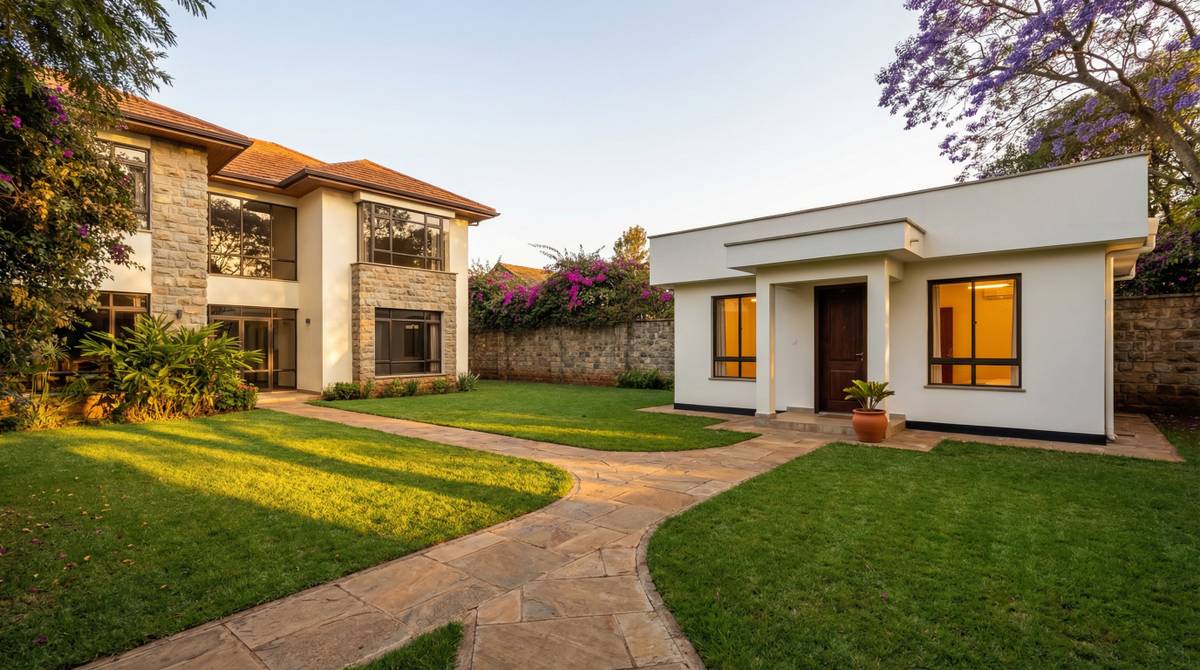
DSQ stands for Domestic Staff Quarters. In Kenyan real estate, a DSQ is a self-contained room or unit built into or alongside a main house, originally designed to house domestic workers. A DSQ typically includes a bedroom, bathroom, and sometimes a kitchenette, with its own entrance separate from the main living area.
If you’ve seen a Kenyan property listing that reads “3BR + DSQ” and wondered what it means, you’re not alone. DSQ is one of the most common — and most confusing — terms in Kenya’s property market. This guide explains everything you need to know about the DSQ meaning in Kenya property: what it physically looks like, how it affects pricing, its modern uses beyond staff housing, and what to check before buying a property with one.
This is the hub article for DSQ content on Afriqahome. For related terms, see our guides on SQ vs DSQ, Maisonette in Kenya, Studio vs Bedsitter vs One-Bedroom, and the full Kenya Property Terms Glossary. → Links to Articles #21, #19, #22, #29 |
Why DSQ Exists in Kenya: History and Cultural Context
The DSQ traces directly to colonial-era Kenya, when British settlers built houses with spatially segregated accommodation for domestic workers. The design principle was straightforward: staff quarters were physically separated from the main house, usually at the rear of the compound, with a service entrance.
After independence, the practice persisted. Affordable domestic labour remained culturally embedded, and most middle-to-upper-class Kenyan families employed at least one live-in domestic worker — a cook, house help, nanny, or gardener. The DSQ became standard in residential architecture. Academic research published in MDPI’s Buildings journal in 2024 found that DSQs have become a standard feature of middle- to upper-class housing in Kenya, reflecting a society where working families rely on domestic workers for childcare and household management.
Today, Kenya has an estimated two million domestic workers in urban centres. While the terminology has softened — “servant quarters” has largely given way to “domestic staff quarters” or simply “DSQ” — the physical feature remains embedded in how homes are designed, marketed, and priced across Nairobi and beyond.
What a DSQ Physically Looks Like
A DSQ’s physical form varies depending on the property type and neighbourhood, but the core elements are consistent:
• Size: Typically 12–50+ square metres, depending on the property tier.
• Layout: One room with an en-suite bathroom. Higher-end DSQs include a kitchenette and sometimes a small sitting area.
• Entrance: A separate entrance from the main house. In apartments, this may be a service corridor near the kitchen. In standalone houses, it’s often a separate external door.
• Location: Usually at the rear of the compound (houses) or accessed via a service corridor (apartments).
[DIAGRAM PLACEHOLDER] Typical property layout showing: main house (front) → shared compound/garden (middle) → DSQ unit (rear, near service gate). Label: separate entrance, self-contained room + bathroom, kitchenette. For design team. |
The DSQ’s physical form varies sharply across Nairobi’s neighbourhoods:
Neighbourhood | Property Type | Typical DSQ Size | DSQ Configuration |
Karen / Runda | Standalone house on ½–1 acre | 25–50+ sqm | Freestanding structure, 1–2 bedrooms, full kitchenette, sitting area |
Kilimani / Kileleshwa | Apartment (3BR+) | 12–25 sqm | Room within apartment footprint, en-suite bathroom, service corridor access |
Lavington / Kitisuru | Townhouse / villa | 18–35 sqm | Semi-detached or attached, own entrance, bathroom + kitchenette |
Satellite towns (Kitengela, Ruiru) | Maisonette | 15–20 sqm | Basic: single room, sometimes shared bathroom, attached to main structure |
DSQ vs SQ: What’s the Difference?
These two terms are frequently used interchangeably by agents, but they describe different configurations:
Feature | DSQ (Domestic Staff Quarters) | SQ (Servants’ Quarter) |
Physical separation | Separately accessible from the main house | Integrated into the main house, connected by internal door |
Entrance | Own external entrance or separate service corridor | Accessed through the main living area |
Rental potential | Can be independently let as a separate unit | Difficult to rent out separately |
Typical setting | Houses, villas, townhouses, some apartments | Apartments, compact maisonettes |
Common listing language | “self-contained DSQ”, “detached DSQ” | “plus SQ”, “servant quarter” |
The distinction matters most for investment purposes. A truly detached DSQ can generate independent rental income. An attached SQ adds convenience but not income potential. → For a deep comparison, see: /blog/sq-vs-dsq-difference-kenya (Article #21)
Which Property Types Typically Have a DSQ
Not every Kenyan property comes with a DSQ. Here’s where you’ll find them:
• Maisonettes and townhouses: The most common DSQ property type. Almost every maisonette in Karen, Lavington, Runda, and Kileleshwa includes at least one DSQ unit.
• Standalone bungalows and villas: Properties on larger plots (¼ acre and above) in Karen, Runda, Kitisuru, and Muthaiga almost always feature detached DSQ structures.
• Apartments (3BR and above): In neighbourhoods like Kilimani, Kileleshwa, Westlands, and Lavington, most apartments with three or more bedrooms include a DSQ room within the unit footprint. Two-bedroom apartments with DSQ exist but are less common.
• Apartments (studio, 1BR, 2BR): Rarely include DSQ. These property types prioritise maximising the main living area.
• Land plots: Obviously no DSQ, but agents may note that a plot’s zoning allows DSQ construction.
The general rule: the more expensive the property and the larger the plot, the more likely it includes a DSQ — and the more generous that DSQ will be. → See: /blog/what-is-maisonette-kenya (Article #19)
How DSQ Affects Property Value and Pricing
The value of a DSQ is one of the most debated questions in Kenyan real estate. Two competing perspectives dominate the market:
The bullish view
Listing platforms and agents consistently position DSQ as a premium feature. Jumuika.co.ke estimates that DSQ-equipped homes command a 15–30% premium over comparable properties without one. The logic: Kenya’s two million urban domestic workers need accommodation, live-in arrangements remain standard for families with children, and a DSQ adds flexible utility beyond staff housing.
The statistical view
The Kenya Bankers Association’s Housing Price Index study found that DSQ presence was statistically insignificant in determining price. KBA research indicated that buyers preferred to maximise primary living space rather than allocate square metres to a staff room. One Nairobi developer reported 10 bungalows with DSQs in Ngong sitting unsold for two years, partly due to DSQ-related price inflation.
The practical reality
Both views contain truth. In the KES 15–50 million apartment segment, DSQ is so ubiquitous that it functions as a baseline expectation rather than a premium feature — its absence would hurt a listing more than its presence helps. In the KES 50 million+ house segment, multi-room DSQ genuinely differentiates properties.
Based on current listing data across Kenya Property Centre, Property24, and BuyRentKenya:
Property Segment | Estimated DSQ Value Contribution | Context |
Apartments (KES 15–50M) | KES 500,000 – 3 million | Standard feature; adds marginal premium |
Houses (KES 50–100M) | KES 1 – 5 million | Expected; quality and size differentiate |
Ultra-luxury (KES 100M+) | KES 5 – 15+ million | 2–3 bedroom DSQ = separate apartment; major value-add |
Current pricing snapshot: properties with DSQ (Q1 2026)
Neighbourhood | 3BR + DSQ (Sale) | 3BR + DSQ (Rent/month) | Note |
Kilimani | KES 15–22M | KES 90,000–170,000 | DSQ room within apartment footprint |
Kileleshwa | KES 15–55M | KES 100,000–270,000 | Nearly every 2BR+ has DSQ as standard |
Lavington | KES 17.9–59M | KES 100,000–180,000 | Townhouses: 1BR DSQ up to KES 59M |
Westlands | KES 14–37M | KES 80,000–450,000 | Furnished serviced at top end |
Karen (houses) | KES 85–250M | KES 250,000–600,000 | Detached 1–2BR DSQ on ½–1 acre |
Runda (houses) | KES 95–250M+ | KES 350,000–650,000 | Strongest price growth: +12.8% YoY (HassConsult) |
Kitisuru | KES 40–245M | KES 200,000–400,000 | UN/ISK proximity premium |
Market context: Nairobi’s rental yields hit a 20-year high of 7.4% in Q4 2025, according to HassConsult’s latest index. Properties with rentable DSQ units in Karen, Westlands, and Gigiri are particularly well-positioned given expected demand from three additional UN headquarters opening by late 2026. |
Modern Uses of DSQ Beyond Staff Housing
The most significant shift in Kenya’s DSQ market is the move away from its original purpose. Here are five ways property owners are using DSQ units today:
1. Airbnb and short-term rental income
The fastest-growing DSQ use case. Knight Frank reports that approximately 15% of homes in Nairobi’s middle- and high-end estates have been converted to Airbnbs, and many conversions start with the DSQ. The economics are compelling:
Income Source | Monthly Revenue | Notes |
Long-term tenant | KES 8,000–25,000 | Steady, low-management |
Airbnb (46% occupancy) | KES 41,000–62,000 | Nairobi median occupancy |
Airbnb (60% occupancy) | KES 72,000–105,000 | Achievable in Karen, Westlands, Gigiri |
Conversion costs: a basic furnishing setup runs approximately KES 410,000 (bed, sofa, TV, fridge, cooker, Wi-Fi), with a payback period of 4–8 months at average occupancy. Hosts typically market these as “detached studio guest house” or “private cottage” on booking platforms — the word “DSQ” rarely appears in Airbnb listings.
2. Home office or studio
Post-pandemic, the self-contained DSQ has become a popular workspace. The physical separation from the main house provides genuine work-life boundaries that a spare bedroom cannot. Particularly popular among freelancers, consultants, and remote workers in Karen and Lavington.
3. Guest house
For families who host visitors regularly — particularly those with relatives travelling from upcountry or abroad — the DSQ functions as a guest suite with privacy for both host and guest.
4. Teenage or young adult independence space
An increasingly common use among Nairobi’s upper-middle-class families: converting the DSQ into semi-independent accommodation for older children who want autonomy without the cost of renting separately.
5. Long-term rental income
Renting the DSQ to a long-term tenant at KES 8,000–25,000 per month provides steady income that offsets mortgage payments or service charges. Lower management intensity than Airbnb, though at lower revenue.
What to Check About a DSQ Before Buying
If a property’s DSQ is a factor in your decision — especially if you’re planning to rent it out — verify these points before committing:
1. Separate utility metres. Does the DSQ have its own electricity and water metres? Without them, you can’t bill a tenant separately, which makes rental arrangements complicated.
2. Independent entrance. Can a tenant access the DSQ without passing through your main living area or compound gate? True independence requires a separate access point.
3. Building approval for conversion. If the DSQ has been converted from its original design (e.g., enlarged, had a kitchen added), check that the changes have county planning approval. Unauthorised modifications can create legal complications.
4. Structural condition. DSQs are often the last part of a property to be maintained. Check for damp, cracks, drainage issues, and roof condition. Budget KES 15,000–30,000 for a structural survey if the DSQ is a significant part of your purchase rationale.
5. Regulatory compliance for rental. Renting a DSQ as a short-term Airbnb may require a Kenya Tourism Regulatory Authority licence (KES 26,000/year), Nairobi County business permit (~KES 10,000/year), and compliance with tax obligations including VAT on stays under one month.
6. Building management rules. For apartments, check whether the management corporation’s bylaws permit subletting the DSQ. Many apartment blocks explicitly prohibit Airbnb use.
These checks apply regardless of whether you plan to use the DSQ for staff, rental income, or personal use. → See: /blog/property-red-flags-kenya (Article #6)
DSQ in Property Listings: How to Read What Agents Mean
Kenyan property listings use specific language around DSQ that can be confusing, especially for first-time buyers or diaspora investors. Here’s a decoder:
Listing Language | What It Actually Means |
“4BR + DSQ” | 4 main bedrooms plus 1 additional staff room. Total: 5 sleeping rooms. |
“Self-contained DSQ” | The DSQ has its own bathroom (and usually kitchenette). Can be independently occupied. |
“Detached DSQ” | The DSQ is a separate physical structure from the main house. Strongest rental potential. |
“Converted DSQ” | The DSQ has been upgraded from a basic room to a studio or furnished unit. |
“Plus SQ” / “Servant quarter” | Usually a basic room integrated into the main house, accessed internally. Lower tier than DSQ. |
“DSQ for 2 staff” | A larger DSQ with two rooms — effectively a one-bedroom apartment. |
“Guest wing” (luxury) | A DSQ rebranded for the premium market. Functionally the same, but with higher finish quality. |
Key point: the DSQ is never counted in the main bedroom tally. A “3BR + DSQ” property has four total rooms. On Airbnb, this same property might appear as a “4-bedroom” listing — a discrepancy that regularly confuses diaspora buyers researching remotely.
FOR DIASPORA BUYERS: What to Know About DSQ If you’re based in the US, UK, UAE, or anywhere outside East Africa and you’re browsing Kenyan property listings for the first time, DSQ will be one of the first unfamiliar terms you encounter. Here’s what you need to know: DSQ is a uniquely East African term. It does not exist in UK, US, or UAE property markets. The closest equivalent in British English is “granny flat” or “annex.” In American English, think “in-law suite” or “accessory dwelling unit (ADU).” “3BR + DSQ” = 4 total rooms. The DSQ is always additional to the listed bedroom count. When calculating whether a property fits your family or investment plan, count it as an extra room. A self-contained DSQ has rental potential. If you’re buying as an investment and plan to live abroad, a detached DSQ can be rented separately — via Airbnb at KES 41,000–105,000/month or to a long-term tenant at KES 8,000–25,000/month. Ask about independence. Before buying remotely, confirm: Does the DSQ have its own entrance, utility metres, and bathroom? Can it be let independently without access through the main house? Verify the agent. A verified agent on Afriqahome can explain exactly what the DSQ includes, send photos and measurements, and advise on rental potential for your specific property. → afriqahome.com/agents |
Frequently Asked Questions About DSQ
Does every house in Nairobi have a DSQ?
No. DSQ is most common in mid-range to luxury properties priced above KES 15 million. Budget apartments, bedsitters, and one-bedroom units do not have DSQ. In premium neighbourhoods like Karen, Runda, and Kitisuru, virtually every standalone house includes one. In apartment complexes, DSQ is standard from 3BR upward in areas like Kilimani and Kileleshwa.
Can I convert a DSQ into a rental unit?
Yes, and many property owners are doing so. For long-term rental, you need separate utility metres and a tenancy agreement. For Airbnb or short-term rental, you may also need a Kenya Tourism Regulatory Authority licence, a county business permit, and compliance with tax obligations. If the DSQ is in an apartment block, check the building’s management bylaws first — many prohibit short-term letting.
Is it legal to rent out a DSQ separately?
Renting a DSQ to a tenant is legal, but converting from residential staff use to commercial short-term rental may constitute a “change of use” under the Kenya Building Code, requiring county planning approval. Enforcement is currently minimal, but regulatory pressure on Airbnb-style rentals is increasing.
What is the typical rent for a DSQ?
Long-term rental: KES 8,000–25,000 per month depending on location and finish level. Airbnb/short-term: KES 41,000–105,000 per month at 46–60% occupancy, though this varies significantly by neighbourhood. Karen, Westlands, and Gigiri command the highest Airbnb rates due to proximity to the UN complex and embassies.
Do apartments have DSQs?
Yes, but only in mid-range and above developments. In Kilimani, Kileleshwa, Westlands, and Lavington, most apartments with three or more bedrooms include a DSQ room within the unit’s footprint. The apartment DSQ is smaller (12–25 sqm) than a house DSQ and accessed via a service corridor. Two-bedroom apartments with DSQ exist but are less common. Studios and one-bedrooms do not have DSQ.
DOWNLOAD: Kenya Property Terms Cheat Sheet A printable one-pager with DSQ, SQ, maisonette, bedsitter, sectional title, and other Kenya-specific property terms defined clearly. Essential for diaspora buyers navigating listings for the first time. → Download the free cheat sheet: /downloads/kenya-property-terms-cheat-sheet |
Looking for a Property with a DSQ?
Now that you understand what DSQ means, how it affects pricing, and what to check, you’re ready to search with confidence. On Afriqahome, you can browse verified listings and connect with agents who can tell you exactly what a property’s DSQ includes — size, condition, independence, and rental potential.
Whether you’re looking for a family home with staff accommodation, an investment property with Airbnb potential, or a home office that’s genuinely separate from your living space, the DSQ is the most versatile feature in Kenyan real estate.
Browse Verified Listings on Afriqahome Find properties with DSQ from verified agents across Nairobi. Filter by neighbourhood, price, and property features. → afriqahome.com |
Other Guides
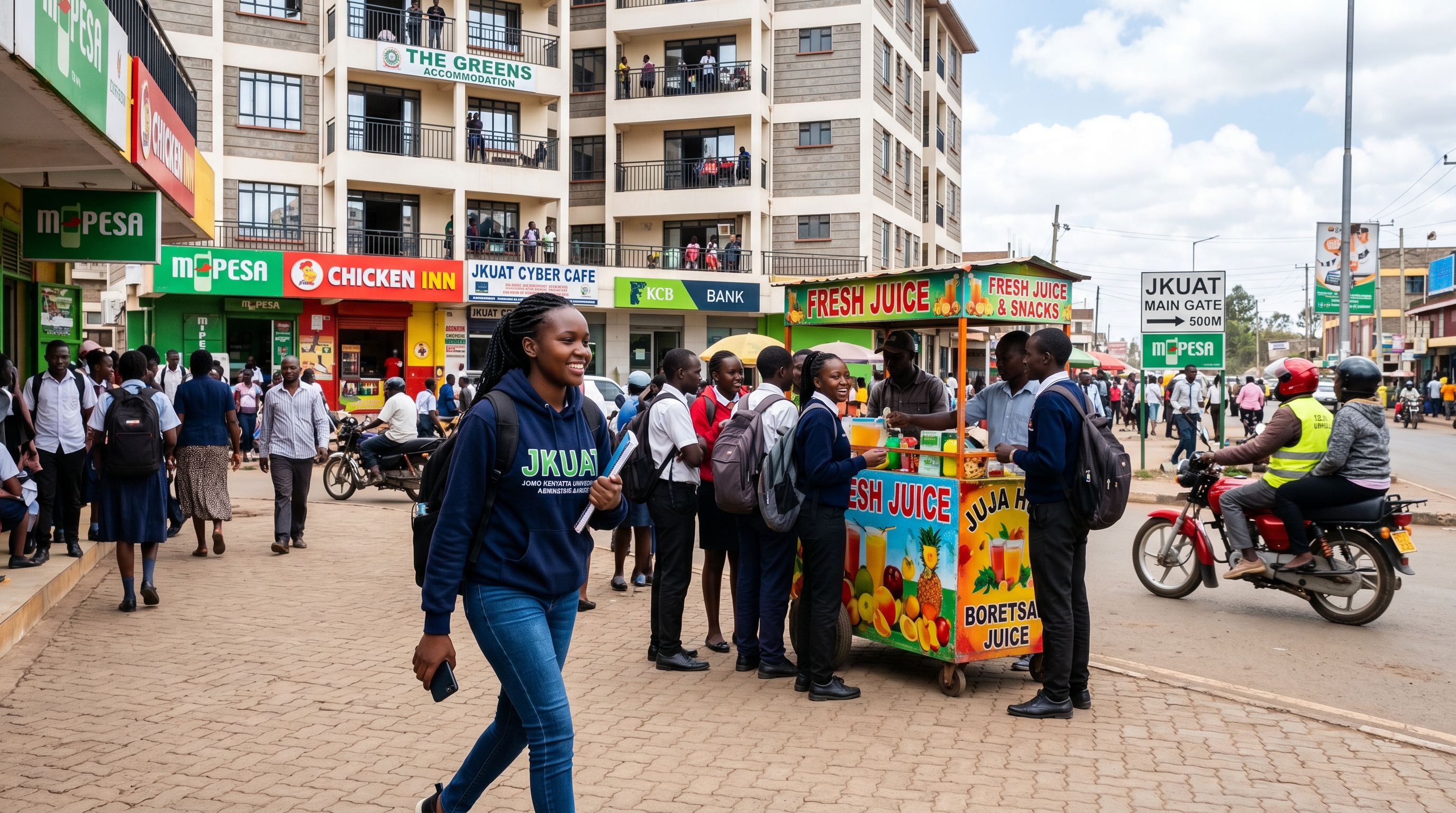
Living in Juja, Kiambu: The University Town That Became a Satellite City — Prices, Estates & Honest Guide (2026)
Juja houses from KSh 1.2M, rent from KSh 2.5K. JKUAT area, Kenyatta Road estates, Kalimoni, Witeithie. Student yields 9-15%.
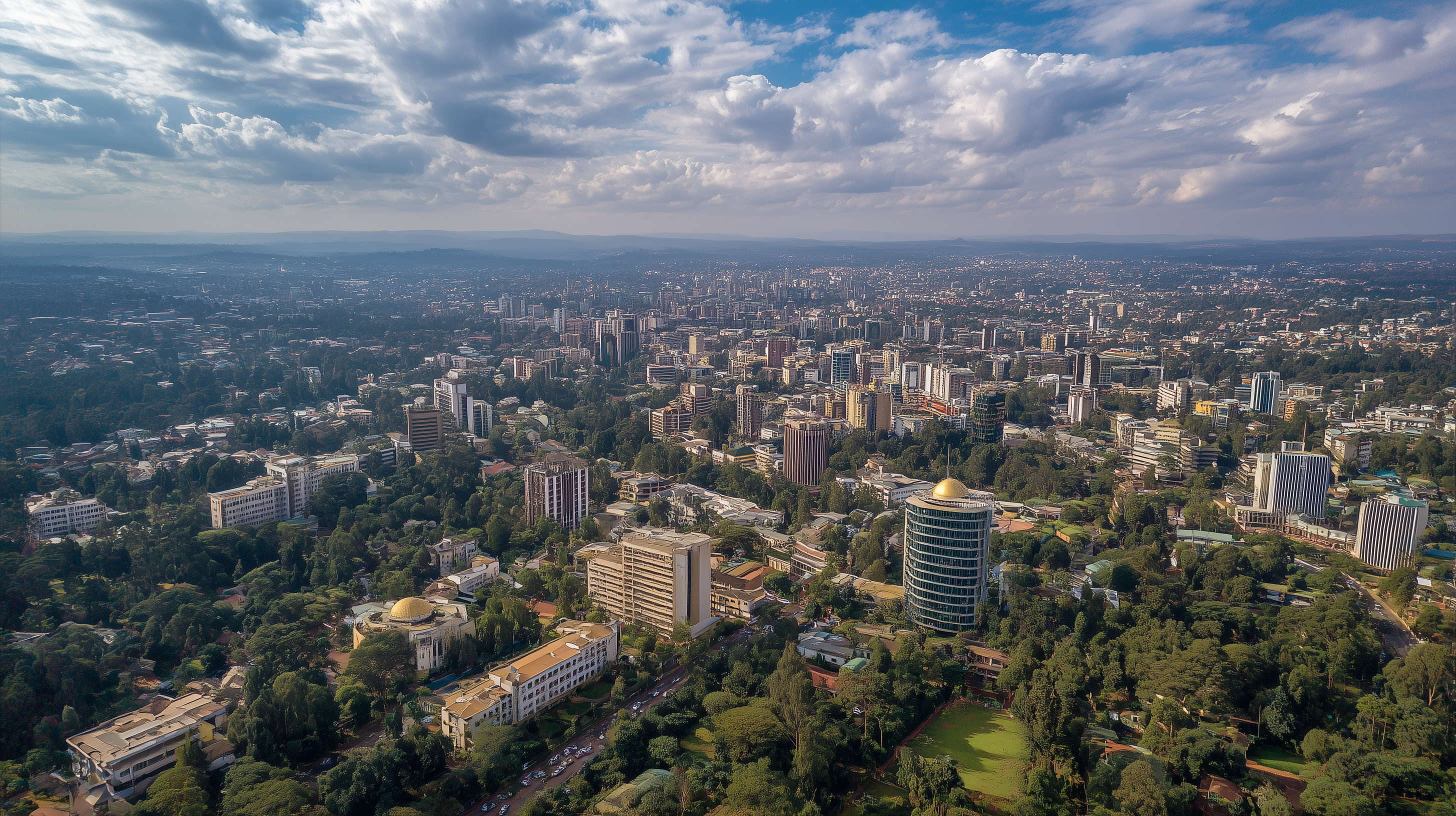
Westlands Property Guide: Prices, Lifestyle & Investment (2026)
Complete guide to Westlands real estate. Apartments from KES 8M, rental yields 6-8%, plus lifestyle amenities. Browse verified Westlands listings today.
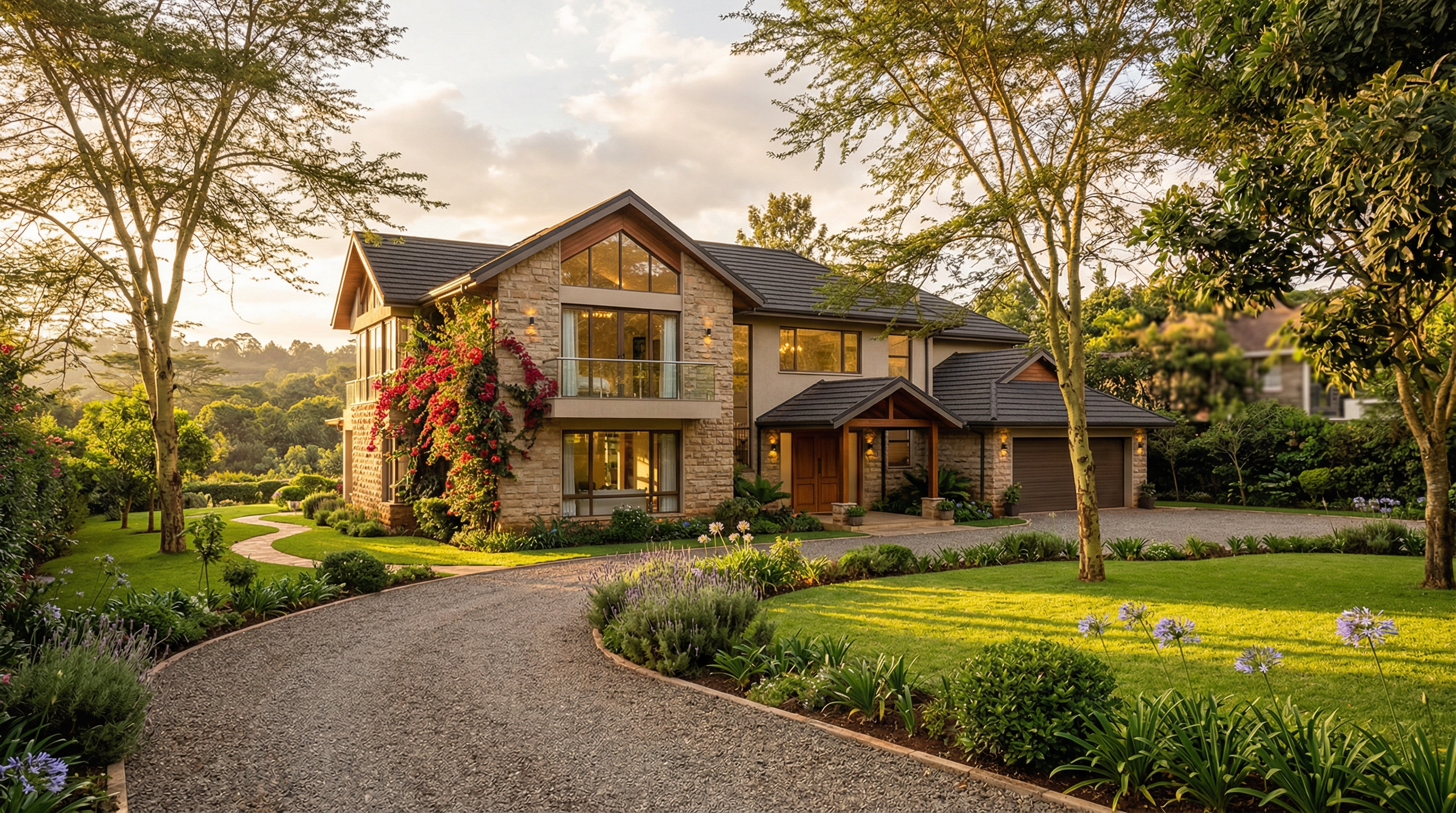
Houses for Sale in Karen: Price Guide 2026
Karen house prices from KES 35M–250M+. 4-bedroom, 5-bedroom, villas. Karen Hardy, Ndege Road, budget breakdown. Updated March 2026.