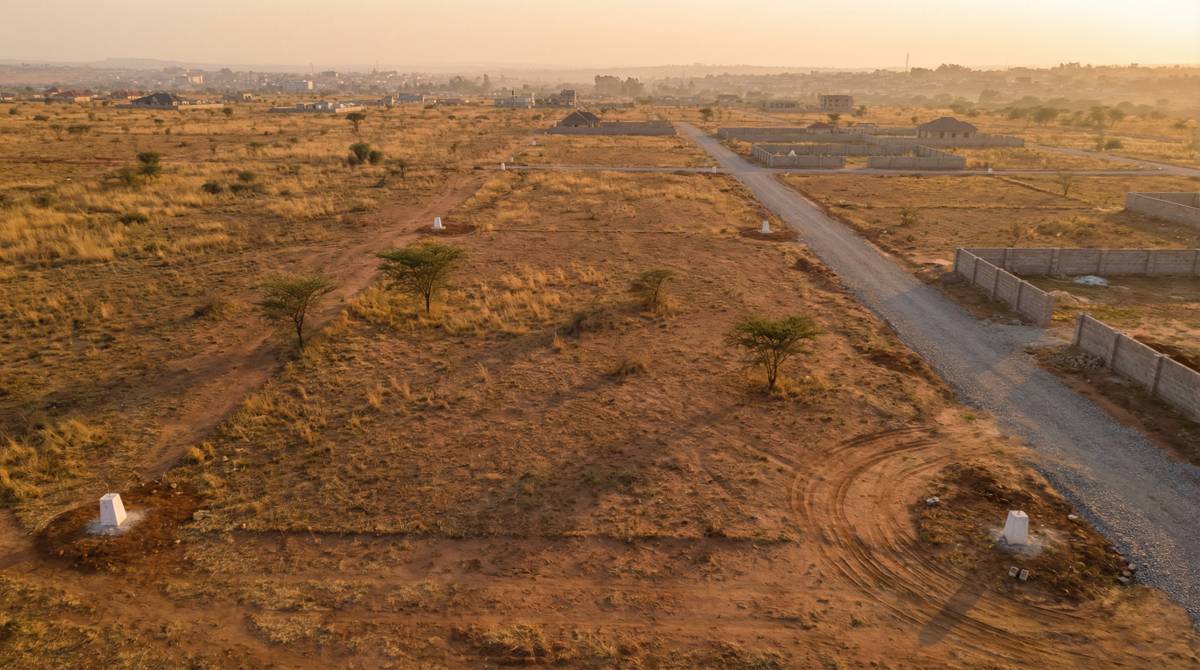
50 by 100 Plot Size in Kenya: Metres, Acres & 2026 Prices
A 50x100 plot = 15m × 30m (464 sqm / 0.11 acres). See exact measurements, what fits on it, and average prices per area in 2026.
Understanding 50x100 Plots in Kenya: Sizes, Prices & What to Check Before You Buy
You’ve seen it on every Kenyan property listing: “50x100 plot for sale.” It sounds straightforward. Fifty feet by one hundred feet. But if you’re a 50 by 100 plot Kenya buyer — especially one searching from London, Houston, or Dubai — that number raises more questions than it answers.
How big is that in metres? What can you actually build on it? Is it the same as an eighth of an acre? And why does every listing seem to quote a different price?
This guide answers all of it. We’ll convert the measurements, show you what fits on the land, compare current prices across Kenya’s most active markets, and walk you through the verification steps that separate a smart purchase from a costly mistake.
What Does 50x100 Actually Mean?
A 50x100 plot measures 50 feet wide by 100 feet deep. That’s the standard residential plot size across most of Kenya, from Nairobi’s satellite towns to upcountry locations like Nakuru and Kisumu.
In the metric system, those dimensions convert to 15.24 metres by 30.48 metres, giving you a total area of 464.5 square metres (sqm). In acres, that’s approximately 0.115 acres, or about 0.047 hectares.
Why do Kenyans use feet instead of metres? It’s historical. Kenya’s land surveying system inherited British imperial measurements during the colonial era, and the convention stuck. County governments, surveyors, and developers all default to feet when describing residential plot sizes. If you’re used to metric measurements, the conversion table below will help.
Quick Conversion Table: 50x100 Plot
Measurement | Value | Notes |
|---|---|---|
Dimensions (feet) | 50 ft x 100 ft | Standard Kenya residential |
Dimensions (metres) | 15.24 m x 30.48 m | 1 foot = 0.3048 metres |
Total area (sqm) | 464.5 sqm | Length x width |
Total area (sq ft) | 5,000 sq ft | 50 x 100 |
Acres | 0.115 acres | Slightly less than 1/8 acre |
Hectares | 0.047 ha | 1 hectare = 10,000 sqm |
Visualising a 50x100 Plot: What It Looks Like on the Ground
Numbers alone can be misleading. Here’s how to picture a 50x100 plot in real-world terms:
Standard parking spaces: A 50x100 plot is roughly the same area as 20 standard car parking spaces arranged in a rectangle. Picture a small car park — that’s your plot.
Football pitch comparison: A regulation football pitch is about 7,000 sqm. A 50x100 plot (464.5 sqm) is about 1/15th of a pitch — roughly the size of one penalty area.
Typical 3-bedroom house footprint: A standard 3BR bungalow in Kenya occupies about 120–150 sqm of ground floor space. That leaves roughly 300 sqm for your compound — parking, a small garden, a perimeter wall, and the setbacks required by county regulations.
[Infographic Description: 50x100 Plot Layout]
Imagine a bird’s-eye rectangle, 15.24 metres wide and 30.48 metres long. The outer edges are marked with survey beacons at each corner. Inside, a dashed line running 1.5 metres from each boundary shows the required building setbacks (the minimum distance your structure must be from the plot boundary, as required by most county governments). The buildable area inside those setbacks is approximately 12.24 m x 27.48 m = 336 sqm. Overlaid on the buildable zone is the footprint of a typical 3BR bungalow (roughly 12 m x 10 m = 120 sqm), showing how the house, driveway, and compound space fit together.
📥 Download our free Plot Size Comparison Infographic (PDF) — print it out before your next site visit.
What Can You Build on a 50x100 Plot?
This is the question every buyer eventually asks. The answer depends on your goals, your budget, and your county’s building regulations. Here are three common scenarios:
Option 1: A 3-Bedroom Bungalow (Owner-Occupied)
A standard 3BR bungalow with a separate kitchen, living room, and small verandah typically occupies 120–150 sqm of the 464.5 sqm plot. That gives you a ground coverage ratio of about 25–32% — well within the 50% maximum that most county governments allow for residential zones. You’ll have space for a driveway, a small garden, and a DSQ (domestic staff quarters) if needed.
Option 2: A 4-Unit Bedsitter Block (Rental Investment)
For investors, a 50x100 plot can support a simple rental block of four to six bedsitter units (single rooms with a kitchenette and bathroom). Each unit runs about 18–25 sqm. At 50% ground coverage, your building footprint maxes out around 230 sqm. A ground-floor block of four bedsitters with a shared access corridor is comfortably achievable. In satellite towns like Kitengela or Juja, bedsitters rent for KES 4,000–7,000 per month, providing steady rental income.
Option 3: A Maisonette (Two-Storey Family Home)
If you want more living space without a larger plot, a maisonette (two-storey house) is the answer. A typical maisonette has a 100–120 sqm footprint on the ground floor and the same upstairs, giving you 200–240 sqm of total living space on a 50x100 plot. This is popular in gated communities across Ruiru, Ruaka, and Syokimau, where families want space but plots are compact.
50x100 vs 1/8 Acre: They Are NOT the Same
This is one of the most common misconceptions in Kenyan real estate. Many buyers — and even some agents — use “50x100” and “1/8 acre” interchangeably. They shouldn’t.
A true 1/8 acre is 504.7 sqm. A 50x100 plot is 464.5 sqm. The difference is about 40 sqm — roughly the size of a large bedroom. It might not sound like much, but it affects building setbacks, ground coverage ratios, and ultimately how much you can build.
When a listing says “1/8 acre,” always confirm the actual dimensions. If the plot measures 50x100 feet, it’s technically smaller than a true eighth. Some developers subdivide land at 50x100 and market it as 1/8 acre because it’s close enough — but “close enough” costs you 40 sqm.
Measurement | 50x100 Plot | True 1/8 Acre |
|---|---|---|
Area (sqm) | 464.5 sqm | 504.7 sqm |
Area (sq ft) | 5,000 sq ft | 5,445 sq ft |
Difference | — | +40.2 sqm (+8.6%) |
→ Read our detailed comparison: 50x100 vs 1/8 Acre: The Difference Explained
Current 50x100 Plot Prices Across Kenya (2026 Estimates)
Plot prices vary dramatically depending on location, proximity to tarmac roads, availability of water and electricity, and whether the plot has a freehold title deed. The prices below reflect current market listings and recent sales data from early 2026. All figures are in Kenya Shillings (KES), with approximate USD equivalents for diaspora reference.
According to BuyRentKenya’s H2 2025 Property Index, satellite towns like Ruiru, Kitengela, and Juja have seen property values appreciate by 4–6% over the past year, while Kenya’s real estate sector grew 5.3% overall in 2025 — outpacing national GDP growth.
Nairobi Suburbs & Commuter Towns
Location | Price Range (KES) | Approx. USD | Notes |
|---|---|---|---|
Ruaka (Kiambu) | 4M – 26M | $31,000 – $200,000 | Premium near Limuru Rd; commercial plots higher |
Kahawa Sukari | 8M – 12M | $62,000 – $93,000 | Close to Nairobi; established neighbourhood |
Ruiru (Kiambu) | 1.5M – 5M | $12,000 – $39,000 | Varies by proximity to Thika Superhighway |
Juja / Juja Farm | 500K – 2M | $3,900 – $15,500 | Fastest-growing; some from KES 499K |
Satellite Towns (Kajiado & Machakos Counties)
Location | Price Range (KES) | Approx. USD | Notes |
|---|---|---|---|
Kitengela | 850K – 3M | $6,600 – $23,000 | Popular for first-time buyers; prices rising |
Syokimau / Katani | 1.9M – 5M | $15,000 – $39,000 | Near SGR station & Mombasa Road |
Athi River / Mlolongo | 1M – 3.5M | $7,800 – $27,000 | Industrial & residential mix |
Rongai (Kajiado) | 1.5M – 3M | $12,000 – $23,000 | Serviced plots with water & electricity |
Joska (Kangundo Rd) | 800K – 1.5M | $6,200 – $12,000 | Budget-friendly; further from CBD |
Upcountry & Regional Cities
Location | Price Range (KES) | Approx. USD | Notes |
|---|---|---|---|
Nakuru Town East | 3.3M – 4.2M | $25,000 – $32,000 | Kenya’s newest city; strong demand |
Nakuru outskirts (Salgaa, Rongai) | 700K – 1.5M | $5,400 – $12,000 | Fastest-growing in county |
Kisumu (Mamboleo) | 600K – 2M | $4,700 – $15,500 | Lakeside city; growing infrastructure |
Eldoret | 800K – 3M | $6,200 – $23,000 | Northern Corridor logistics hub |
Nyandarua (Ol Kalou) | 250K – 500K | $1,900 – $3,900 | Rural; lowest entry point |
Note: Prices are based on current market listings as of early 2026 and may vary based on specific location within the area, proximity to tarmac roads, availability of utilities, and title deed status. Always verify current pricing through multiple sources before making a purchase decision.
USD conversions use an approximate rate of KES 129 = $1. Check the current exchange rate before budgeting.
What to Check Before Buying a 50x100 Plot
Buying land in Kenya without proper due diligence is one of the fastest ways to lose money. Here are the essential checks, in order of priority:
1. Title Deed Type
The title deed is the single most important document. Kenya has two main types:
Freehold title: You own the land outright, with no time limit. This is the strongest form of ownership and what you should aim for.
Leasehold title: The government grants you the right to use the land for a fixed period (typically 99 years). Leasehold is common in Nairobi and some county governments. It’s still a valid title, but you’ll need to factor in renewal costs down the line.
→ Learn how to verify any title deed: How to Verify a Title Deed in Kenya
2. County Approval & Zoning
Confirm that the subdivision was approved by the relevant county government. Unapproved subdivisions are a major source of disputes. Check whether the plot is zoned for residential, commercial, or agricultural use — this affects what you can build.
3. Survey Confirmation
Hire a licensed surveyor to confirm the plot’s exact boundaries using the beacon numbers on the title deed. Don’t rely on the seller’s word or a WhatsApp photo of survey pegs. A professional survey costs KES 15,000–30,000 depending on location — a fraction of the plot’s price and essential insurance against boundary disputes.
4. Infrastructure Access
Check for:
Road access: Is there a gazetted road to the plot, or are you relying on a neighbour’s goodwill? Access roads should be at least 6 metres wide for residential plots.
Water: Is county water or borehole water available? In satellite towns, many plots rely on borehole water. Confirm drilling is feasible.
Electricity: Confirm Kenya Power lines reach the area. Connection costs typically run KES 15,000–35,000 depending on distance from the nearest transformer.
5. Land Rates & Rent Clearance
Request a land rates clearance certificate from the county government. Unpaid land rates can block your title transfer. Also check for any land rent obligations (applicable to leasehold titles).
→ Protect yourself from fraud: How to Avoid Property Scams in Kenya 2026
Common Mistakes Buyers Make with 50x100 Plots
Even experienced buyers get tripped up. Here are the mistakes we see most often:
Mistake 1: Buying Without a Survey
Beacons get moved. Boundaries shift. Neighbours encroach. Without a fresh survey by a licensed surveyor, you’re trusting that the physical plot matches the title deed — and it often doesn’t. A survey costs a fraction of the purchase price and can save you millions in disputes.
Mistake 2: Assuming “50x100” in the Ad Is Accurate
Some listings advertise “50x100” but the actual plot measures 40x80 or 33x66. Always verify the dimensions on the title deed and confirm with a surveyor. If the plot is marketed as “1/8 acre” but measures 50x100, you’re getting 40 sqm less than a true eighth.
Mistake 3: Ignoring Building Setbacks
Most county governments require a minimum setback of 1.5 metres (about 5 feet) from each boundary. On a 50x100 plot, that reduces your buildable width from 15.24 metres to about 12.24 metres — a significant difference when planning your house design. Some areas require larger setbacks for corner plots or plots along major roads.
Mistake 4: Not Checking for Encumbrances
An encumbrance is any claim, charge, or restriction on the title — like a bank loan, a caveat from a dispute, or an unpaid mortgage. The land registrar’s office can provide a search revealing any encumbrances. Never skip this step, even if the seller provides a “clean” title deed copy.
Mistake 5: Buying “Sight Unseen” from Abroad
For diaspora buyers, this is the biggest trap. Photos and videos can be misleading. If you can’t visit in person, hire a trusted local agent (verified, not a random contact) to visit the site, take GPS-tagged photos, and confirm the plot matches the documents. A verified agent on Afriqahome can do this for you.
→ Full buying process walkthrough: How to Buy Land in Kenya: Step-by-Step
How to Find Verified 50x100 Plots on Afriqahome
Afriqahome connects you with verified real estate agents who list 50x100 plots across Kenya. Agents on Afriqahome can earn a Verified Agent badge by submitting identity and licence documentation. The badge is optional, so look for it rather than assuming it.
Here’s how to start your search:
Visit com/for-sale/land/ and filter by location, price range, and plot size.
Contact a verified agent directly through the platform. Your enquiry goes to the listing agent only — no middlemen.
Use the Ardhisasa online system (ardhisasa.lands.go.ke) to independently verify any title deed before committing funds.
Whether you’re a first-time buyer in Nairobi or a diaspora investor searching from abroad, Afriqahome gives you a safer starting point. Not a guarantee — there is no substitute for your own due diligence — but a platform built specifically to help you verify before you buy.
🔍 Browse verified 50x100 plots on Afriqahome → afriqahome.com/for-sale/land/
Key Takeaways
A 50x100 plot is 15.24 m x 30.48 m = 5 sqm (0.115 acres). It is NOT the same as 1/8 acre (504.7 sqm).
You can build a 3BR bungalow, a rental block of bedsitters, or a two-storey maisonette on a 50x100 plot.
Prices range from KES 250,000 in rural areas to KES 26 million+ in premium Nairobi suburbs like Ruaka.
Always verify the title deed, hire a licensed surveyor, check county approvals, and confirm infrastructure before purchasing.
Diaspora buyers: never buy sight unseen. Use a verified agent on Afriqahome and verify through Ardhisasa.
Other Guides
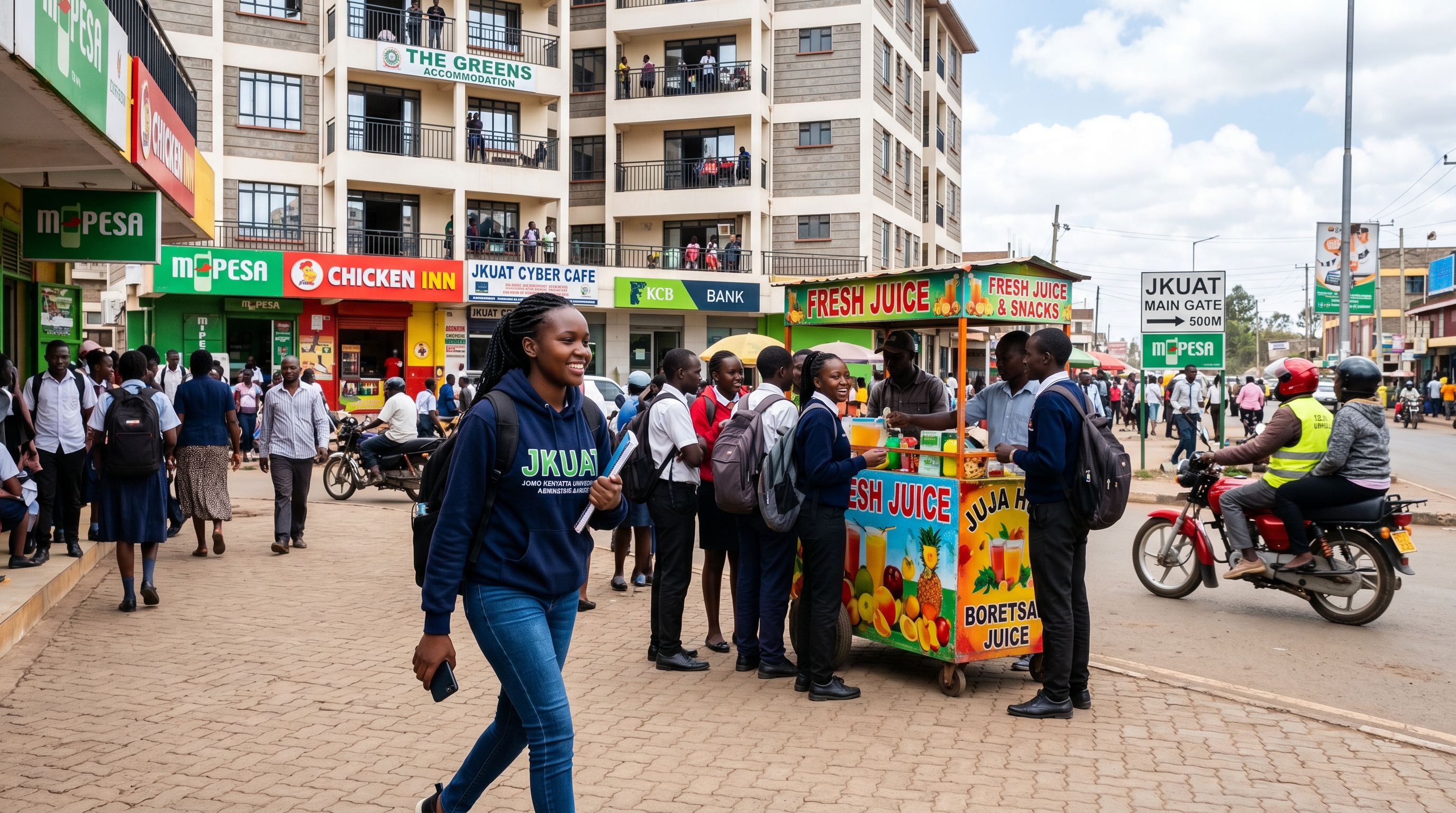
Living in Juja, Kiambu: The University Town That Became a Satellite City — Prices, Estates & Honest Guide (2026)
Juja houses from KSh 1.2M, rent from KSh 2.5K. JKUAT area, Kenyatta Road estates, Kalimoni, Witeithie. Student yields 9-15%.
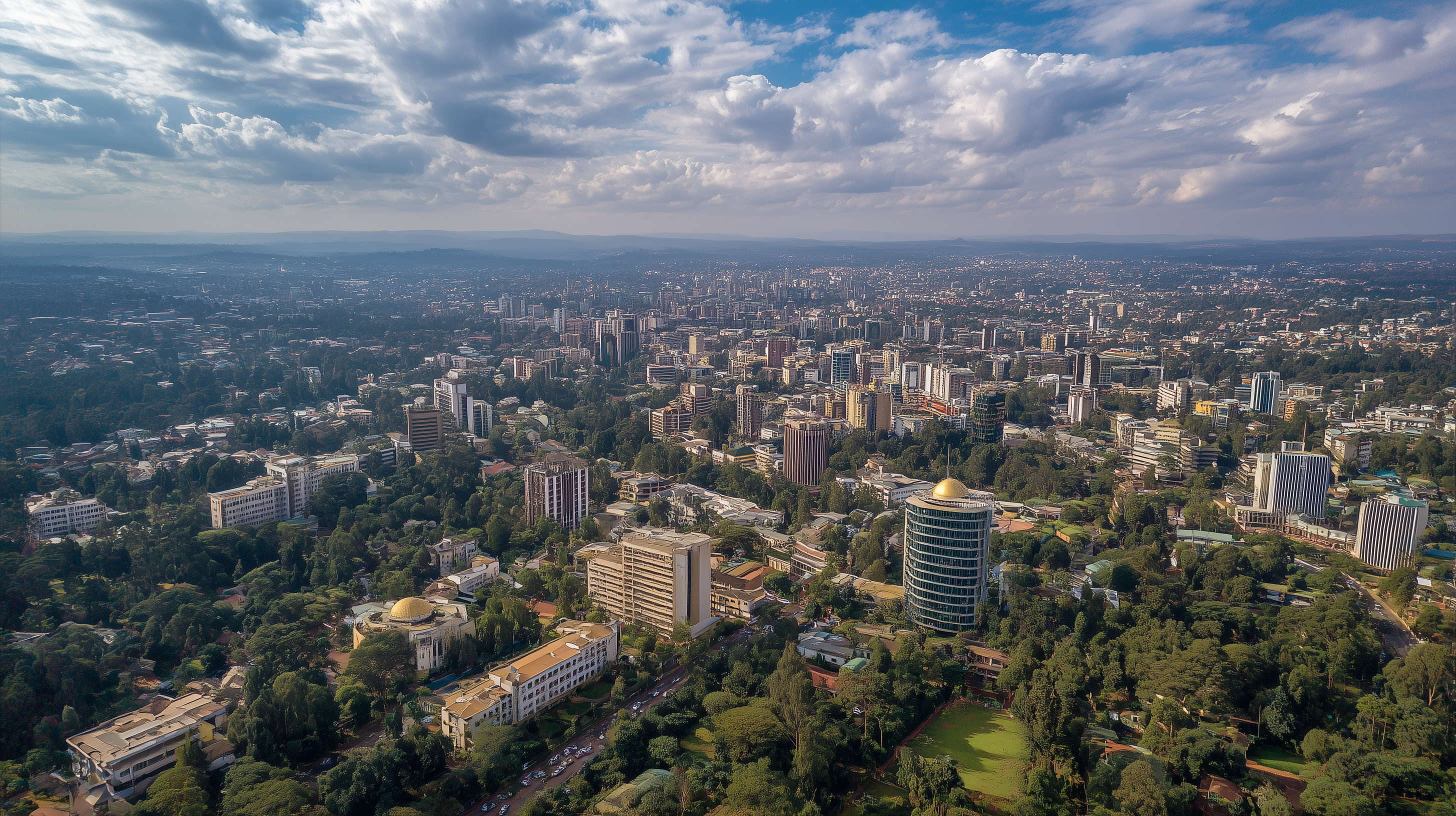
Westlands Property Guide: Prices, Lifestyle & Investment (2026)
Complete guide to Westlands real estate. Apartments from KES 8M, rental yields 6-8%, plus lifestyle amenities. Browse verified Westlands listings today.
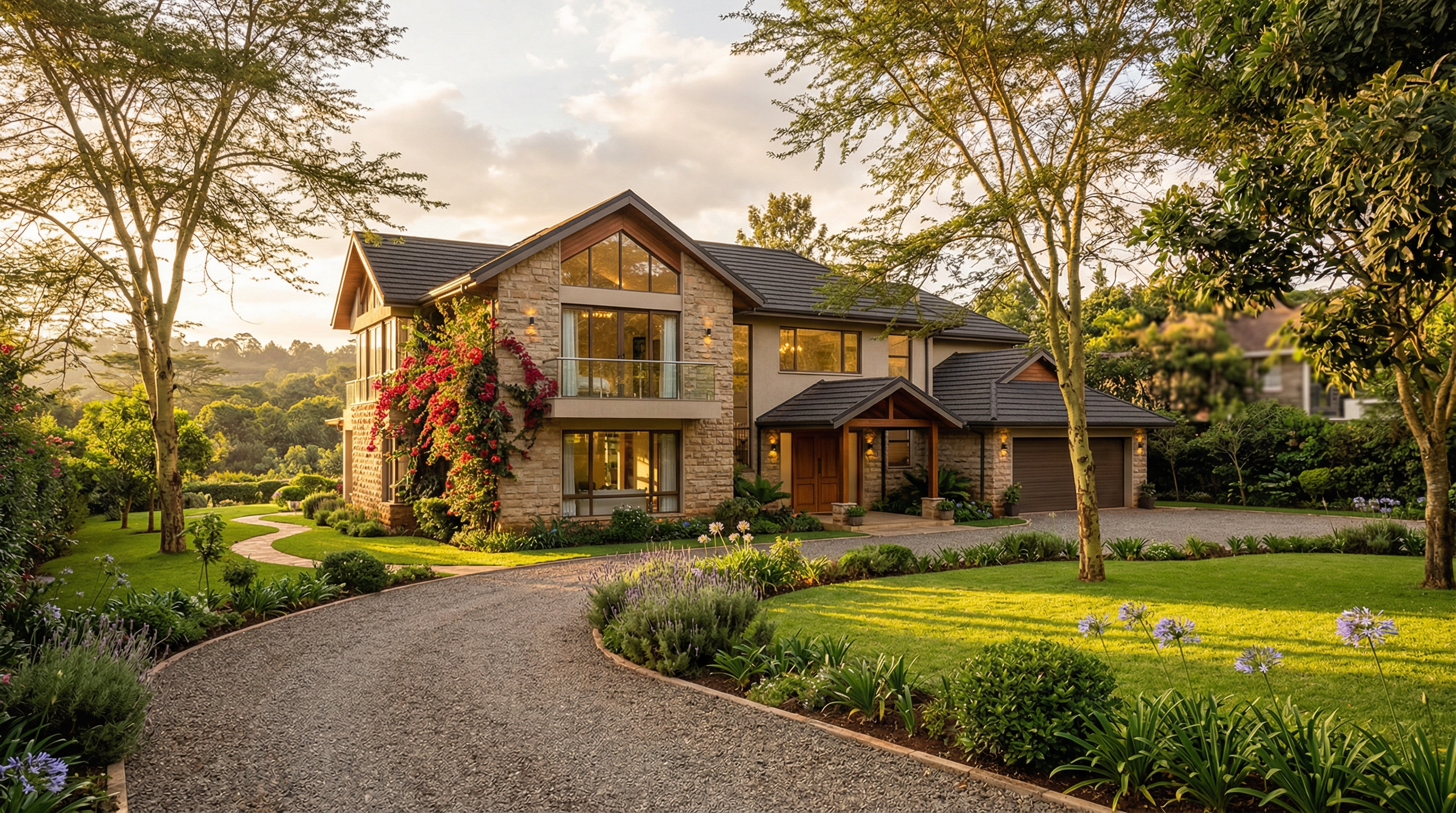
Houses for Sale in Karen: Price Guide 2026
Karen house prices from KES 35M–250M+. 4-bedroom, 5-bedroom, villas. Karen Hardy, Ndege Road, budget breakdown. Updated March 2026.