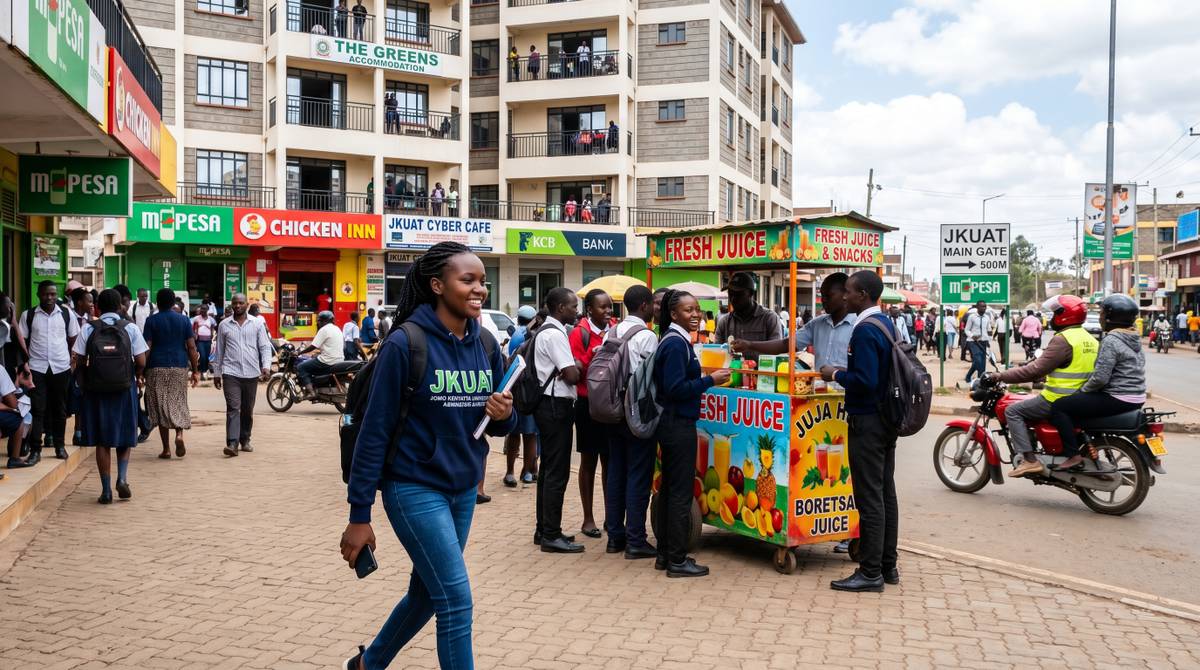
Living in Juja, Kiambu: The University Town That Became a Satellite City — Prices, Estates & Honest Guide (2026)
Juja houses from KSh 1.2M, rent from KSh 2.5K. JKUAT area, Kenyatta Road estates, Kalimoni, Witeithie. Student yields 9-15%.
Living in Juja, Kiambu: The University Town That Became a Satellite City — Prices, Estates & Honest Guide (2026)
Juja is a municipality in Kiambu County, approximately 30 kilometres north of Nairobi along the Thika Superhighway. Originally a colonial-era farm — "Ju-Ja Farm," named by Lord William Northrop Macmillan around 1900 after two West African statues — Juja has transformed into an educational and industrial hub with a population exceeding 300,000 people across five wards (Juja, Murera, Theta, Kalimoni, and Witeithie). Houses for sale start from KSh 1.2M for student bedsitter blocks to KSh 15M for 4-bed maisonettes along Kenyatta Road. The average property price sits at approximately KSh 5.9M–7.9M, reflecting Juja's position as one of the Nairobi Metropolitan Area's most affordable satellite towns. Rentals start from KSh 2,500 for a single room near JKUAT to KSh 120,000 for a premium 5-bed maisonette in Juja South.
What defines Juja is Jomo Kenyatta University of Agriculture and Technology (JKUAT) — one of Kenya's most respected universities, whose 30,000+ students have created an entire economy of hostels, apartments, restaurants, and services. But Juja is evolving beyond its university identity. Kenyatta Road — the main artery running from the Superhighway toward Gatundu — has become a booming residential corridor of gated communities targeting Nairobi's middle class. For buyers priced out of Ruiru and Kasarani, Juja offers more land, lower prices, and a surprising range of modern housing — with the trade-off being a longer commute and infrastructure that is still catching up with growth.
Quick Facts: Juja at a Glance
Detail | Juja |
|---|---|
Location | 30 km north of Nairobi CBD, along Thika Superhighway |
County | Kiambu County (Juja sub-county) |
Area | ~326.6 km² (Juja constituency) |
Population | ~300,948 (2019 census) |
Wards | Juja, Murera, Theta, Kalimoni, Witeithie |
Character | University town + emerging satellite residential |
House prices (sale) | KSh 1.2M–15M+ (avg KSh 5.9M–7.9M) |
Rent range | KSh 2,500 (single room) – KSh 120,000 (5-bed) |
Key landmarks | JKUAT, Juja City Mall (KSh 1.7B), Mang'u High School |
Commute to CBD | 40–75 min (Thika Superhighway, traffic-dependent) |
Juja Property Prices in 2026
Houses for Sale
Type | Price Range (KSh) | Notes |
|---|---|---|
Bedsitter block (investment) | 1.2M–1.4M per unit | Near JKUAT; ROI 12–15% for student rentals |
1-bed apartment (furnished) | 2.4M–4.2M | New builds opposite JKUAT; KSh 4.2M for 1-bed (45 sqm) |
3-bed bungalow | 3.5M–7.5M | Kalimoni, Witeithie; basic to modern finish |
3-bed bungalow + DSQ | 6.5M–10M | Kenyatta Road gated estates; own compound |
4-bed maisonette + DSQ | 10M–15M | Kenyatta Road, Theta; gated, 50×100 plots |
4-bed maisonette (premium) | 13M–18M | Family room, jacuzzi, walk-in closets; flat roof |
5-bed maisonette | 15M–20M | Juja South; 90×100 plots; executive finish |
Rental Prices
Property Type | Rent (KSh/month) | Notes |
|---|---|---|
Single room (near JKUAT) | 2,500–4,000 | Student market; basic |
Bedsitter | 5,000–8,000 | JKUAT environs; furnished from KSh 8K |
1-bed apartment | 6,000–15,000 | Juja town from KSh 6K; modern builds from KSh 12K |
2-bed apartment | 15,000–35,000 | Kenyatta Road gated from KSh 25K |
3-bed bungalow + DSQ | 30,000–60,000 | Gated communities; Kenyatta Road from KSh 35K |
4-bed maisonette + DSQ | 50,000–90,000 | Kenyatta Road Exit 14; modern gated estates |
5-bed maisonette | 80,000–120,000 | Juja South; executive grade on large plots |
Land Prices
Plot Size | Price Range (KSh) | Location |
|---|---|---|
40×60 (near JKUAT) | 3M–5M | Hostel/apartment investment plots |
50×100 (residential) | 1.5M–4M | Kalimoni, Witeithie; varies by proximity to tarmac |
⅛ acre (Mwalimu Farm) | 850K–1.5M | Emerging areas; further from main road |
¼ acre | 3M–8M | Near Thika Road; higher for commercial frontage |
⅛ acre (near JKUAT) | 12M per plot | Prime for hostels; high demand |
Context: A 4-bed maisonette + DSQ on Kenyatta Road at KSh 13M costs less than a 2-bed apartment in Kilimani. A student bedsitter investment near JKUAT at KSh 1.2M per unit generating KSh 9,000–12,000/month delivers 9–12% gross yield — among the highest residential returns in the metropolitan area. Juja's pricing reflects both its distance from the CBD and its extraordinary value proposition for space-seekers and yield-focused investors.
Juja's Neighbourhoods and Estates
Juja Town (JKUAT Environs)
The commercial and social centre of the municipality, anchored by JKUAT. Dense, vibrant, student-driven. Juja City Mall — a KSh 1.7 billion development — is the primary retail anchor. Bedsitters and 1-bed apartments dominate the housing stock near the university, targeting the 30,000+ student population. New apartment developments opposite JKUAT's Gate C offer furnished studios from KSh 2.4M and 1-bed from KSh 4.2M, with projected ROIs of 12–15%. The town has banks, supermarkets (Happy, Prize Worth, Ecomart), restaurants, and all essential services. Character: busy, affordable, commercial, heavily youth-oriented.
Kenyatta Road Corridor
Juja's fastest-growing residential area — the road from the Superhighway (Exit 14) toward Gatundu. This corridor has become a gated community hotspot, with developers building 3-4 bed maisonettes on 50×100 plots. 4-bed + DSQ from KSh 12.95M (346 sqm). Rent from KSh 50,000–90,000 for a 4-bed. The appeal: modern builds, own compounds, security, children-friendly environments, and 3-minute access to the Superhighway. Schools, churches, and small commercial centres are emerging along the road. This is where Nairobi's middle class is building its next generation of family homes — at prices that central Nairobi simply cannot match.
Theta Ward
One of five wards, situated along Kenyatta Road between Juja Town and the outer areas. A mixture of agriculture, emerging residential developments, and natural beauty. Fertile soils support banana, maize, and vegetable farming. Greenhouse farming, beekeeping, and organic produce are growing. The housing market along Kenyatta Road within Theta offers diverse options from mid-range to luxury, with gated communities becoming the standard for new developments. Theta is the ward most visibly transitioning from agricultural to residential land use.
Kalimoni
Located opposite Juja Town on the southern side of the constituency. Known for agricultural heritage, trading centres, and warehouses. Accessible via Thika Superhighway, Juja Farm Road, and Eastern Bypass. Vast lands with emerging estates offering peaceful environments and lower prices than Kenyatta Road — 3-bed bungalows from KSh 3.5M–6.5M. Investors are building and selling units at affordable rates targeting first-time buyers. The character is more rural than Kenyatta Road — expect quieter settings but less developed infrastructure.
Witeithie
The ward bordering Nairobi County and connecting to Kenyatta Road and the Eastern Bypass. Rapidly developing with feeder roads improving access to small trading centres. The ward has the highest projected population growth of any Juja ward — from 128,294 (2019 est.) to a projected 771,495 at build-out. Small businesses (groceries, hardware, salons, cybercafés, food joints) line the feeder roads. Solar-powered street lights (Angaza Kiambu Programme, 2025) improving safety. Land plots from KSh 925K–2.35M for ⅛ acre. This is the frontier — early-stage, affordable, with significant appreciation potential but limited current amenities.
Murera
The quietest and most rural ward in Juja municipality. Population ~21,310 (2019). Murera Road connects to the Superhighway via gravel road. Housing options are limited to individual builds and small developments. Best suited for land investors or self-build projects rather than ready-to-move-in buyers. Prices are the most affordable in Juja but infrastructure is the most limited.
What It Is Like to Live in Juja
A Storied History
Juja's origin story is one of Nairobi's most colourful. Around 1900, Lord William Northrop Macmillan arrived from the United States with two West African statues named "Ju" and "Ja," which he believed brought good fortune. He acquired approximately 19,000 acres along the Thika road — far exceeding the legal colonial limit of 5,000 — and named his estate "Ju-Ja Farm." Superstitions soon surrounded the property, making it a feared no-go zone among locals. Macmillan's wife eventually buried the idols in Ndarugu Valley near Thika. The name Juja stuck, replacing the original Kikuyu name "Weru wa Ndarugu" (the Ndarugu plains). After independence, the land was subdivided, and JKUAT's establishment in 1981 set the trajectory that defines the area today. The municipality was formally chartered in 2018, reflecting its growth from colonial farm to urban centre with over 300,000 residents.
Living in Juja means living with two identities. Near JKUAT, the town pulses with student energy — restaurants open late, boda-bodas are everywhere, and the commercial strip is buzzing at all hours. Along Kenyatta Road, the character shifts entirely: gated compounds behind high walls, children playing in private gardens, and the quiet rhythm of suburban family life. These two Jujas coexist within minutes of each other but serve completely different markets.
The commute is the primary consideration. Juja is 30 km from the CBD — at off-peak, the Superhighway delivers you in 40–45 minutes. During peak hours, 60–75 minutes is realistic. Matatus from Odeon stage, Tom Mboya Street, and Luthuli Avenue (route 237) cost KSh 100–200. The Nairobi commuter rail has a connection through Juja, though service frequency is inconsistent. For residents working in Thika (15 minutes away) or along the Thika Road corridor, the commute is manageable. For CBD workers, it is a daily calculation of time versus space and affordability.
Water supply is managed by RUJWASCO (Ruiru-Juja Water and Sewerage Company), which serves Kenyatta Road, Juja CBD, and Murera. Sewer coverage is 45 km of collection network — better than many satellite towns but not comprehensive. Most gated communities supplement with boreholes and storage tanks. Electricity is on the national grid with newer estates providing backup generators. Internet fibre is available in Juja town and along Kenyatta Road; mobile data covers the rest.
The social scene centres on Juja City Mall, JKUAT's nightlife strip, and Kenyatta Road's emerging restaurant scene. Senate Hotel (3-star) provides conference and dining facilities. Rainbow Resort (closer to Ruiru) and Kamakis restaurants along the Eastern Bypass are within 15 minutes. Mang'u High School — one of Kenya's most prestigious national boys' schools — is located in Juja, adding to the area's educational reputation beyond JKUAT.
Security follows the estate model. Gated communities on Kenyatta Road and in Juja South have 24/7 security, CCTV, and controlled access. Juja town centre and open estates require standard precautions — petty crime exists, particularly targeting students and their electronics near JKUAT. The Kiambu County police apparatus covers the area, with stations in Juja town and along the Superhighway.
Cost of Living
Juja's cost of living is among the lowest in the Nairobi Metropolitan Area. Groceries at local supermarkets and market stalls are significantly cheaper than central Nairobi — a week's groceries for a family of four costs KSh 2,500–4,000. Eating out near JKUAT costs KSh 150–400 per meal — student pricing that benefits all residents. Matatu commuting to Nairobi budgets at approximately KSh 4,000–6,000/month. Electricity on prepaid meters averages KSh 1,500–3,000/month. Water from RUJWASCO or borehole supplements costs KSh 1,000–3,000/month. Service charges in gated communities on Kenyatta Road range from KSh 3,000–8,000/month. Private school fees at local institutions run KSh 25,000–60,000 per term — less than half what comparable schools charge in Nairobi. A family of four can manage total monthly costs (rent, utilities, food, transport, school) at KSh 45,000–70,000 for a comfortable middle-class lifestyle in a gated community.
Amenities in Juja
Education
JKUAT — Jomo Kenyatta University of Agriculture and Technology; main campus on the Superhighway. One of Kenya's most respected universities, particularly for engineering, agriculture, and technology. 30,000+ students. Mang'u High School — prestigious national boys' secondary school. Juja Preparatory School. Kalimoni Primary School. Woodland Academy (along Kenyatta Road). Multiple private primary and secondary schools serve the growing family population along Kenyatta Road. For university-level education beyond JKUAT, Kenyatta University is accessible in neighbouring Ruiru.
Healthcare
Healthcare is Juja's most significant infrastructure gap. There is no major private hospital within the municipality. Local clinics and medical centres serve basic outpatient needs. For specialist care, maternity, and emergencies: Thika Level 5 Hospital (15 min north), Plainsview Hospital (Ruiru, 20 min south), or Aga Khan University Hospital (Parklands, 40 min). This gap is the single biggest lifestyle trade-off for Juja residents, particularly families with young children or elderly members.
Shopping
Juja City Mall — the KSh 1.7 billion retail anchor. Supermarket, banks, restaurants, retail. Happy Supermarket, Prize Worth Supermarket, Ecomart Supermarket, and numerous local shops. JKUAT Grocery Shop for university-adjacent convenience. For larger retail needs, Garden City Mall (Kasarani/Thome, 20 min) and Thika Road Mall (Roysambu, 25 min) are accessible.
Recreation
JKUAT social scene — restaurants, bars, and nightlife serving the student population. Senate Hotel — 3-star; conferences, restaurant. Juja City Mall entertainment. Ol Donyo Sabuk National Park (30 min northeast) — hiking and wildlife. Fourteen Falls (Thika, 25 min) — scenic waterfalls. For Nairobi-level entertainment, Kasarani Stadium and Garden City Mall are within 30 minutes.
Industry
Juja hosts several industrial operations: Pulp and Paper (recycled brown paper), Star Plastics (water drums, household products), Safari Stationers (stationery), Hydro Aluminum (aluminium profiles). These industries provide local employment and reduce full dependence on Nairobi for jobs — a structural advantage over purely dormitory satellite towns.
Pros and Cons of Living in Juja
Pros
Affordability is exceptional. A 4-bed maisonette + DSQ on Kenyatta Road at KSh 13M delivers more house, more land, and more lifestyle than any Nairobi equivalent at that price. For families stretching a KSh 10M–15M budget, Juja delivers dramatically more value than central Nairobi.
JKUAT creates a permanent economic engine. 30,000+ students generate consistent demand for housing, food, services, and entertainment. This demand floor protects rental income regardless of broader market cycles. Student housing yields of 9–15% gross are among the highest in Kenya's residential market.
Kenyatta Road is building a genuine suburb. Gated communities with modern finishes, own compounds, borehole water, and children-friendly environments are creating a lifestyle comparable to Nairobi's established middle-class suburbs — at half the price. Exit 14 puts you on the Superhighway in 3 minutes.
Industrial presence provides local employment. Unlike purely dormitory satellite towns, Juja's factories and JKUAT create employment within the municipality. Not every resident needs to commute to Nairobi — a meaningful quality-of-life advantage.
Land appreciation potential is strong. With projected population growth from 300,000 to over 1 million at build-out, and infrastructure spending accelerating, land values in Kalimoni, Witeithie, and Theta have significant appreciation runway.
Cons
The commute to Nairobi CBD is long. 40–75 minutes depending on traffic. For dual-income households where both partners work in central Nairobi, the daily commuting burden is significant. Best suited for residents who work along the Thika Road corridor, in Thika, or remotely.
Healthcare infrastructure is inadequate. No major private hospital in the municipality. For emergencies, you are driving 15–40 minutes to Thika or Nairobi hospitals. This is a genuine risk factor and the most common complaint from Juja families.
Water and sewerage are under pressure. RUJWASCO serves the main corridors but the majority of residents remain unconnected to the public sewer system. Flooding during heavy rains causes damage to housing and infrastructure. Gated communities with private water infrastructure are essential — do not buy in areas without borehole backup.
Infrastructure in outer wards is basic. Witeithie, Kalimoni, and Murera have gravel roads, limited street lighting (improving with the Angaza solar programme), and patchy service delivery. The price advantage in these areas comes with a genuine lifestyle trade-off.
The student economy creates noise and transient culture. Near JKUAT, the character is young, loud, and nightlife-heavy. This is a positive for student housing investors but a negative for families seeking quiet residential living. Kenyatta Road (3+ km from JKUAT) avoids this — choose location carefully.
Juja Compared to Other Satellite Towns
Factor | Juja | Ruiru | Thika |
|---|---|---|---|
Distance to CBD | 30 km | 20 km | 40 km |
3-bed house (sale) | KSh 3.5M–10M | KSh 6.5M–10M | KSh 3M–8M |
4-bed maisonette | KSh 10M–15M | KSh 10M–18M | KSh 8M–13M |
2-bed rent | KSh 15K–35K | KSh 20K–30K | KSh 12K–25K |
Anchor institution | JKUAT (30K+ students) | Tatu City (5,000 acres) | Blue Post Hotel / THS General |
Hospital access | Limited (clinics only) | Plainsview, Nazareth | Thika Level 5, Consolata |
Student rental yields | 9–15% gross | 7–9% gross | 8–12% gross |
Best for | Student investors, families (Kenyatta Rd) | Families, Tatu City buyers | Budget buyers, self-build |
Getting Around: Commute from Juja
Destination | Mode | Estimated Time |
|---|---|---|
Nairobi CBD | Matatu / car | 40–75 min |
Thika town | Car / matatu | 10–20 min |
Ruiru | Car | 10–15 min |
Westlands | Car | 45–60 min |
JKIA (airport) | Car (via Eastern Bypass) | 50–70 min |
Garden City Mall | Car | 20–25 min |
Matatus to Nairobi depart from Odeon stage, Tom Mboya Street, and Luthuli Avenue (route 237). Fare KSh 100–200. Tuk-tuks and boda-bodas provide last-mile transport within Juja and along Kenyatta Road. Ride-hailing (Uber/Bolt) is available but costlier for daily commuting at this distance. The Eastern Bypass provides alternative routing to Mombasa Road and JKIA without passing through the CBD.
Investment Outlook for Juja
What is working
Juja's investment case has two distinct legs. The student housing segment — bedsitters and 1-bed apartments near JKUAT — delivers 9–15% gross yields thanks to consistent university demand and low unit costs (KSh 1.2M–4.2M per unit). A 124-bedsitter block near JKUAT generating KSh 1M+/month in total rent represents the high-yield end of this market. The family housing segment — 3-4 bed maisonettes on Kenyatta Road — delivers lower yields (5–7%) but stronger capital appreciation as the corridor matures and infrastructure improves.
Land investment in Witeithie, Kalimoni, and Theta offers early-stage entry at KSh 850K–2.35M per ⅛ acre, with strong appreciation potential as urbanisation spreads from Juja Town and Kenyatta Road.
What to watch
Student housing oversupply near JKUAT. The area around Gate C already has significant hostel and apartment supply. New developments must compete on quality and amenities — basic bedsitter blocks are reaching saturation. Focus on furnished, well-managed units with wifi and security rather than the cheapest possible build.
Water and drainage are binding constraints. Flooding and sewer limitations affect property values and livability. Only buy in developments with private water infrastructure (borehole + tanks) and proper drainage systems.
Stamp duty advantage. Kiambu County properties attract 2% stamp duty versus 4% in Nairobi — saving KSh 260,000 on a KSh 13M purchase. Factor this into comparative cost analysis when choosing between Juja and Nairobi locations.
The 2027 election cycle affects construction and transactions. Budget for a slowdown, though student housing demand from JKUAT is relatively election-proof — students need accommodation regardless of political cycles.
For Diaspora Investors
Juja is ideal for diaspora investors in two scenarios. The yield play: a furnished apartment block near JKUAT (KSh 65M for a 124-unit block generating KSh 1M+/month) or individual furnished 1-bed units (KSh 4.2M generating KSh 45,000/month — 12.9% gross). The family home play: a 4-bed maisonette on Kenyatta Road at KSh 13M ($100K) for eventual return to Kenya, generating KSh 50,000–90,000/month in rental income during your absence.
Key steps: engage a verified agent on Afriqahome, verify the title on Ardhisasa — critical in Juja where historical land disputes exist in some areas — and hire a lawyer for due diligence. For student housing investments, use professional property management — student tenants require active management.
For country-specific buying guidance: USA · UK · UAE · Canada.
Frequently Asked Questions
How much does a house cost in Juja?
Houses for sale in Juja range from KSh 1.2M (bedsitter investment unit near JKUAT) to KSh 18M+ (premium 4-bed maisonette on Kenyatta Road). The most popular family segment — 3-4 bed maisonettes with DSQ — sells for KSh 10M–15M. Student apartments (furnished 1-bed) from KSh 4.2M. Rentals range from KSh 2,500/month (single room) to KSh 120,000 (5-bed maisonette). Land plots start from KSh 850,000 for ⅛ acre in Witeithie.
How long is the commute from Juja to Nairobi?
40–75 minutes by car or matatu via Thika Superhighway. Off-peak: 40–45 minutes. Peak hours: 60–75 minutes. Matatu fare KSh 100–200. The Eastern Bypass provides alternative routing to Mombasa Road/JKIA. For workers in Thika (10–20 min) or along the Thika Road corridor, the commute is significantly shorter.
What is the rental yield for student housing near JKUAT?
Student bedsitters (KSh 1.2M–1.4M per unit) generate KSh 9,000–12,000/month — approximately 9–12% gross yield. Furnished 1-bed apartments (KSh 4.2M) generate KSh 45,000/month — approximately 12.9% gross. These are among the highest residential yields in the Nairobi Metropolitan Area, supported by JKUAT's 30,000+ students. The key is quality and management — oversupply in basic bedsitters means furnished, well-managed units outperform.
Is Juja safe to live in?
Gated communities on Kenyatta Road and in Juja South have 24/7 security and are generally safe — comparable to Nairobi's established middle-class suburbs. Juja town near JKUAT has the standard challenges of a university town — petty crime targeting students and their electronics. Estate-level security is the standard for new developments. The Kiambu County police apparatus covers the area.
What is the best area to live in Juja?
Kenyatta Road (Exit 14) is the best for families — gated communities, modern builds, 3-minute Superhighway access. Juja Town for students and young professionals who value walkability and nightlife. Kalimoni for affordable first-time purchases in quieter settings. Witeithie for land investors targeting early-stage appreciation. Juja South for larger, executive-grade homes on bigger plots.
What hospitals and schools are in Juja?
University: JKUAT (main campus). Schools: Mang'u High School (national), Juja Preparatory School, Kalimoni Primary, Woodland Academy. Healthcare: Local clinics and medical centres only — no major private hospital. Thika Level 5 Hospital (15 min), Plainsview Hospital Ruiru (20 min), and Aga Khan University Hospital (40 min) for specialist care. Healthcare is the most significant infrastructure gap in Juja.
Explore Juja on Afriqahome
Browse houses for sale in Kiambu or apartments for rent in Nairobi from verified agents.
Compare Juja with neighbouring areas: Living in Ruiru · Living in Kasarani · Living in Kilimani · Best Areas to Live in Nairobi.
For buying process guidance: How to Buy Land in Kenya · First-Time Buyer Guide · Stamp Duty & Closing Costs · Due Diligence Checklist · Verify an Agent.
For diaspora investors: Diaspora Investment Hub · Buy from USA · Buy from UK · Buy from UAE · Buy from Canada.
Other Guides
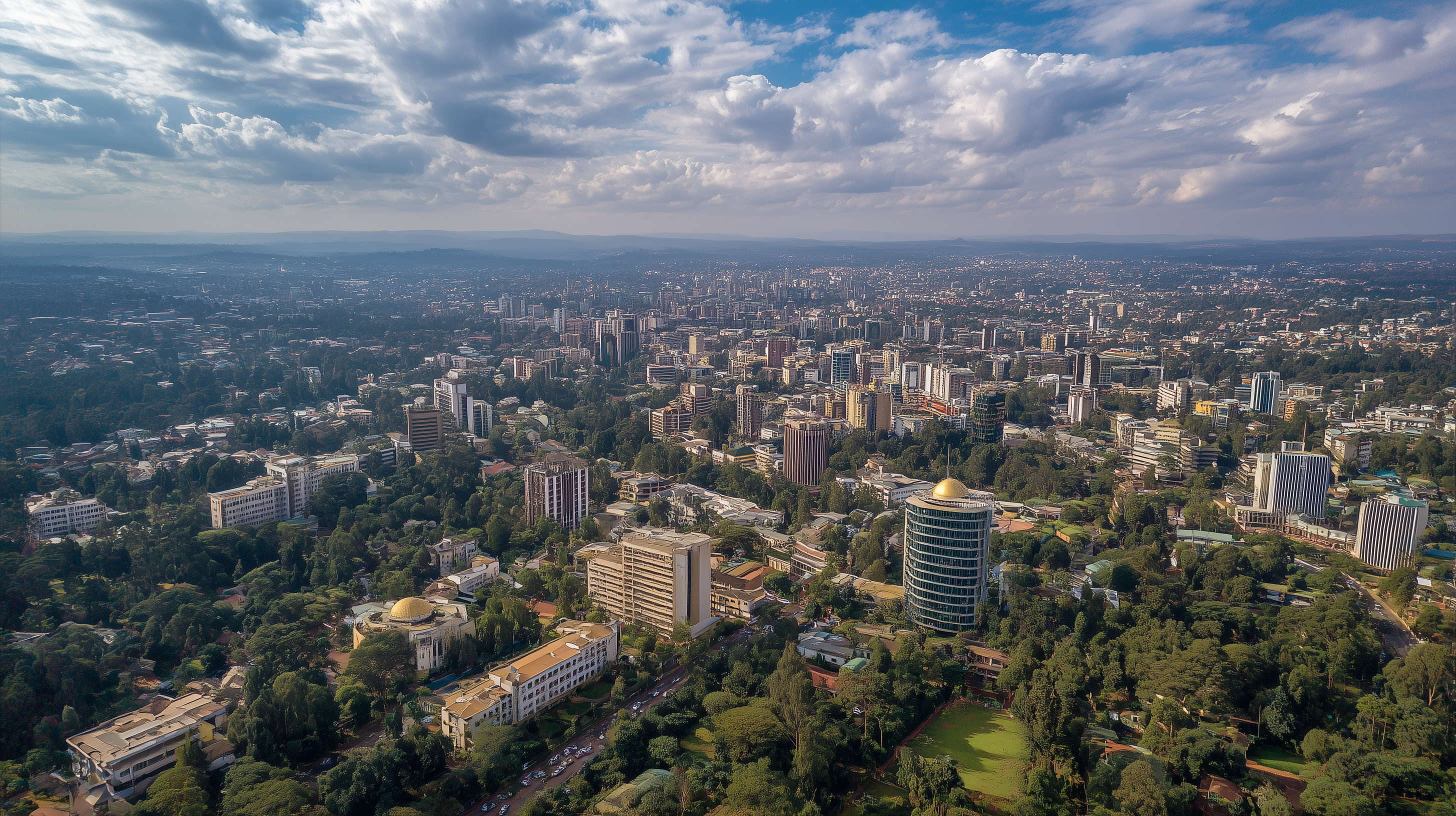
Westlands Property Guide: Prices, Lifestyle & Investment (2026)
Complete guide to Westlands real estate. Apartments from KES 8M, rental yields 6-8%, plus lifestyle amenities. Browse verified Westlands listings today.
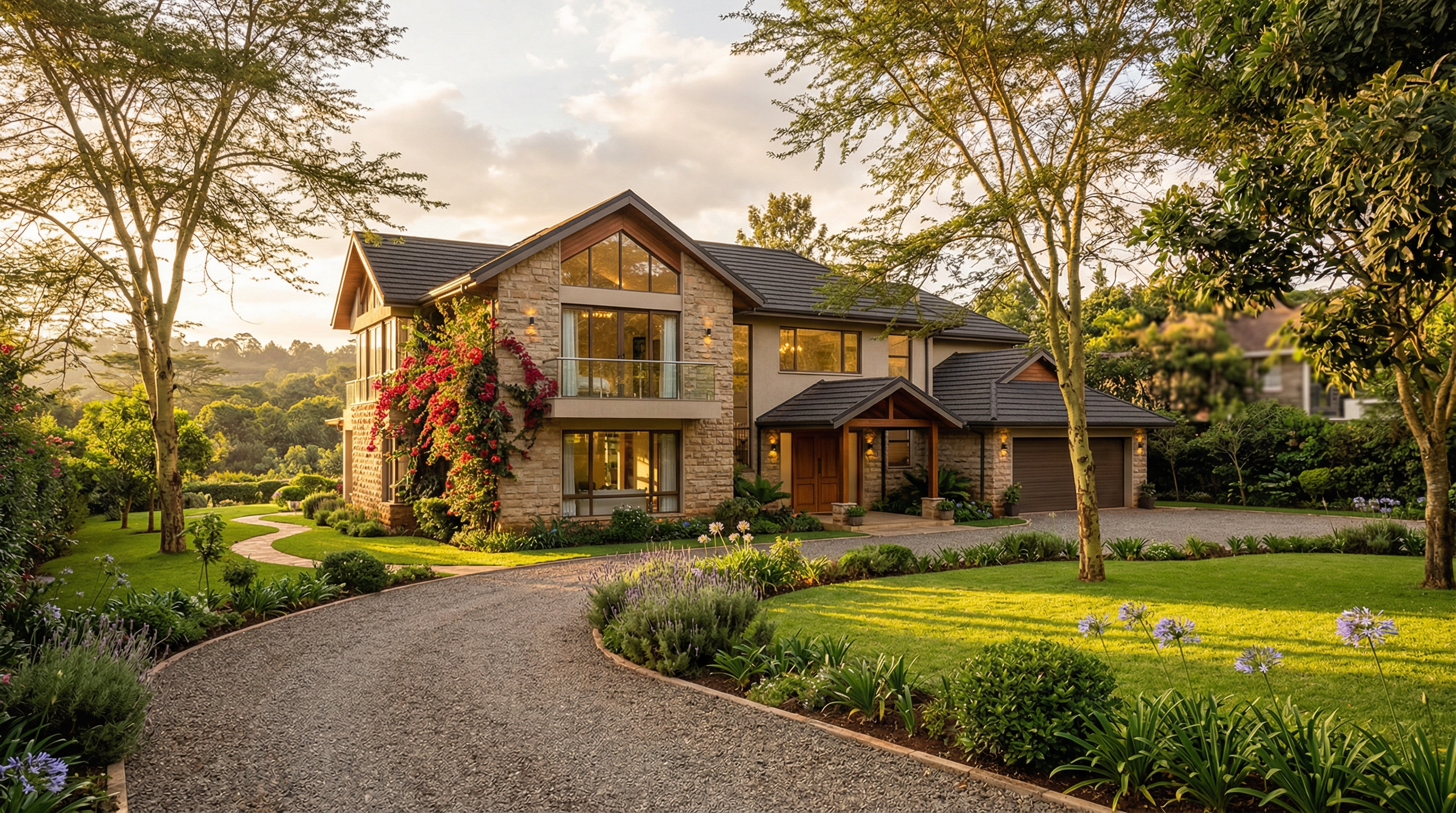
Houses for Sale in Karen: Price Guide 2026
Karen house prices from KES 35M–250M+. 4-bedroom, 5-bedroom, villas. Karen Hardy, Ndege Road, budget breakdown. Updated March 2026.
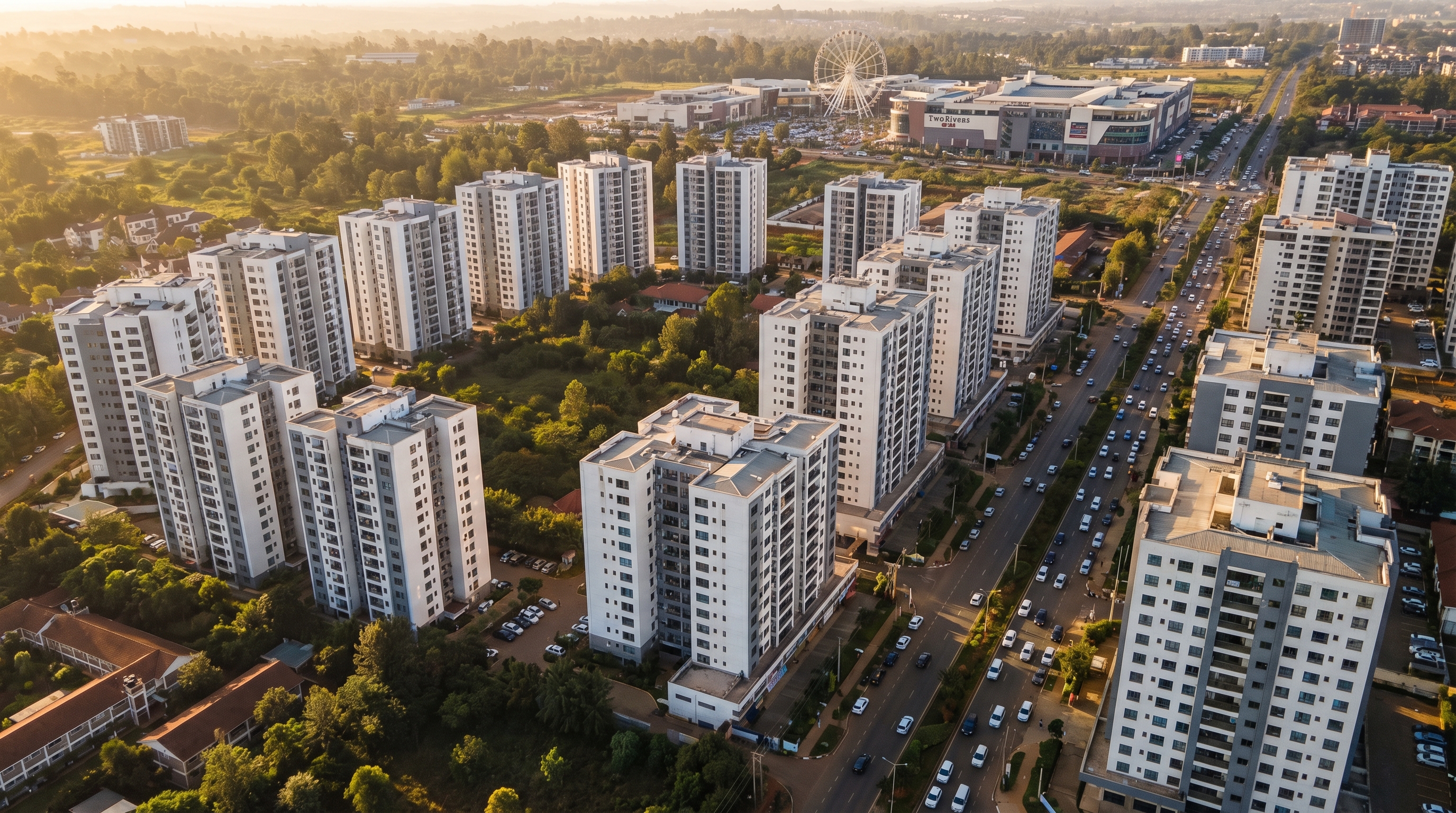
Living in Ruaka: Apartments, Prices, Commute & 2026 Guide
Ruaka rent from KES 8,000/month. 10 min to Westlands, 5 min to Two Rivers Mall. Honest guide: oversupply, yields (8.8%), prices, and what to watch out for.