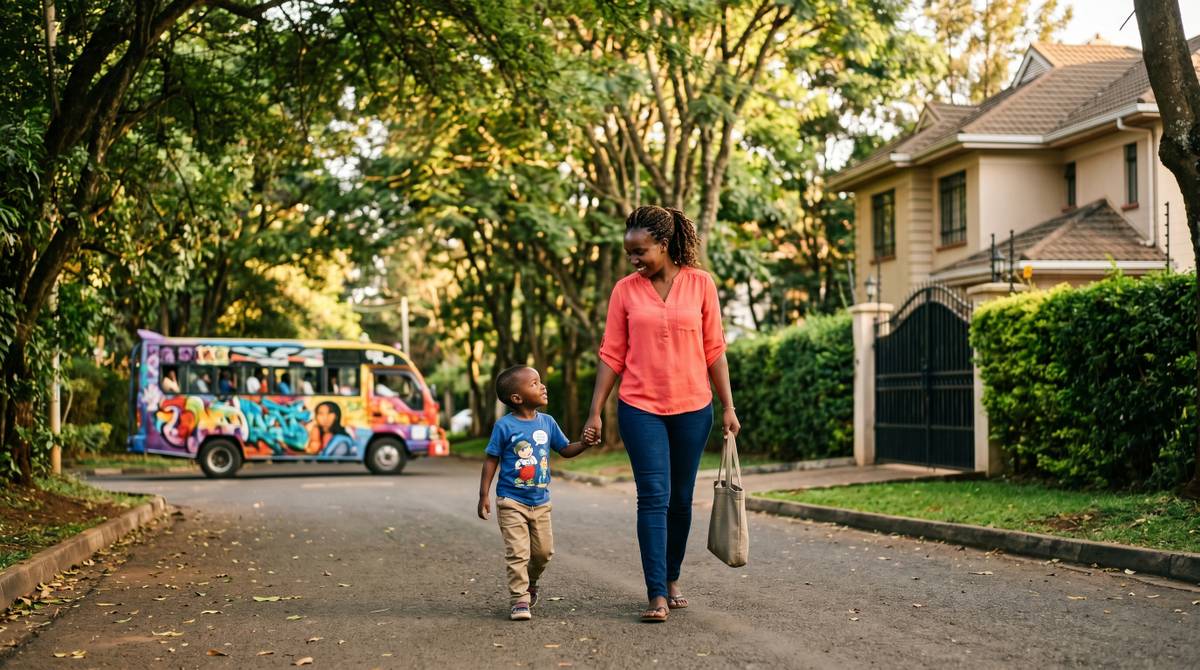
Living in Kasarani, Nairobi: Affordable, Sprawling, and Surprisingly Well-Connected (2026)
Kasarani apartments from KSh 10K rent, houses from KSh 5.5M. Thome, Clay City, Garden Estate. Security, commute times, investment yields.
Living in Kasarani, Nairobi: Affordable, Sprawling, and Surprisingly Well-Connected (2026)
Kasarani is a sprawling sub-county in northeast Nairobi, approximately 12 kilometres from the CBD along the Thika Superhighway. It is one of Nairobi's most populated areas — the broader Kasarani constituency covers 152.6 km² and is home to nearly 800,000 people across five wards (Clay City, Mwiki, Kasarani, Njiru, and Ruai). Apartments rent from as low as KSh 10,000 per month for a 1-bed to KSh 165,000 for a premium 4-bed in Thome. Houses for sale range from KSh 5.5M for a basic 3-bed bungalow to KSh 95M for a standalone home in the leafy Thome estate. The average house price is approximately KSh 14.5M, though this figure masks enormous variation between Kasarani's different neighbourhoods.
What defines Kasarani is its range. Within the same sub-county, you find Clay City's affordable apartment blocks housing young professionals on KSh 15,000/month rent, and Thome's expansive tree-lined avenues where 5-bed mansions sell for KSh 70M+. The Moi International Sports Centre (Kasarani Stadium) gives the area its national identity. Garden City Mall provides modern retail. And the Thika Superhighway connects it all to the CBD in 20–40 minutes off-peak. For Nairobi's growing middle class — priced out of Kilimani and Parklands but needing to stay within the city — Kasarani offers the broadest range of housing options at the most accessible price points.
Quick Facts: Kasarani at a Glance
Detail | Kasarani |
|---|---|
Location | 12 km northeast of Nairobi CBD, along Thika Superhighway |
Sub-county | Kasarani Sub-county, Nairobi County |
Area | 152.6 km² (Kasarani constituency) |
Population | ~780,000 (Kasarani constituency, 2019 census) |
Character | Mixed-income; affordable to mid-range residential with commercial |
Apartment rent | KSh 10,000–165,000/month |
House prices (sale) | KSh 5.5M–95M (avg KSh 14.5M) |
Key landmarks | Kasarani Stadium, Garden City Mall, TRM, Safari Park Hotel |
Commute to CBD | 20–40 min (Thika Superhighway, traffic-dependent) |
Kasarani Property Prices in 2026
Apartments and Houses for Rent
Property Type | Rent (KSh/month) | Notes |
|---|---|---|
Studio apartment | 10,000–15,000 | Maji Mazuri, Clay City; basic finish |
1-bed apartment | 15,000–20,000 | Clay City, Seasons, Kasarani proper; modern builds |
2-bed apartment | 25,000–35,000 | Gorofani, Seasons, Kasarani; master ensuite common |
2-bed apartment (premium) | 55,000–90,000 | New builds near Garden City Mall; all ensuite |
3-bed apartment | 35,000–85,000 | Safari Park area from KSh 85,000; Hunters from KSh 35,000 |
3-bed house (own compound) | 50,000–70,000 | Gated estates, Kasarani–Mwiki Road corridor |
4-bed maisonette | 100,000–165,000 | Thome, ICIPE Road; spacious, gated |
5-bed house (Thome) | 120,000–200,000 | Standalone; DSQ, garden, parking |
Houses for Sale
Type | Price Range (KSh) | Notes |
|---|---|---|
3-bed bungalow | 5.5M–10M | Kasarani proper, Mwiki area; basic to modern |
3-bed maisonette | 8M–15M | Clay City from ~KSh 8M; gated estates |
4-bed maisonette | 12M–27M | Seasons Estate ~KSh 15M; Clay City ~KSh 27M |
4-bed house (Thome) | 25M–50M | Standalone on ¼–½ acre; gated, DSQ |
5-bed house (Thome) | 50M–95M | Premium; Runda-style architecture; half-acre plots |
Land Prices
Plot Size | Price Range (KSh) | Location |
|---|---|---|
30×75 (residential) | 9.5M | Clay Works area |
40×80 (residential) | 6M–9M | Clay City, Kasarani proper |
¼ acre | 15M | Near Kasarani Primary School |
100×100 (commercial) | 45M | Frontage on main tarmac roads |
Context: Kasarani's pricing spectrum is its defining feature. A 2-bed apartment at KSh 25,000/month is accessible to a young professional earning KSh 80,000–100,000 — exactly the demographic that Kilimani (where a similar unit costs KSh 55,000–80,000) prices out. Meanwhile, Thome's KSh 50M+ houses compete with Lavington and Karen on space and finish quality, at lower prices.
Kasarani's Neighbourhoods and Estates
Thome Estate
Kasarani's premium pocket. Located between Thika Road and the Northern Bypass, near Safari Park Hotel, Thome is a low-density residential suburb with single-family homes on generous plots. Originally a coffee estate (owned by an Israeli settler from 1913), it was subdivided in the 1970s. Today, Thome is divided into sub-areas: Thome 1, Thome Mugumoini, Thome Stream Drive, Thome Mukuyu, and Thome Central Close. Houses here are often described as "Runda-style" — spacious, tree-lined, with mature gardens and indigenous trees. 3-bed apartments from KSh 12M; 5-bed standalone homes KSh 70–95M. Rent for a 4-bed starts at KSh 120,000. Proximity to Garden City Mall, USIU-Africa, and Safari Park Hotel adds convenience. This is the estate that surprises people who associate Kasarani only with affordability.
Garden Estate
Located nine kilometres from the CBD, accessible via the Roasters Inn junction off Thika Road or Ridgeways Estate off Kiambu Road. Spacious standalone homes and gated compounds in a leafy, established setting. The estate borders Thome and Marurui and shares Thome's middle-to-upper-middle-class character. Garden Estate residents benefit from proximity to Garden City Mall, which has transformed retail access in the area since it opened. 4-bed houses rent from KSh 100,000–150,000.
Clay City
One of Kasarani's five wards (population ~30,658), Clay City has become a hub for affordable modern apartment development. New-build 1-bed apartments rent from KSh 15,000; 2-bed from KSh 25,000. The area attracts young professionals and young families seeking modern finishes at entry-level prices. A 3-bed maisonette sells from approximately KSh 27M in newer gated developments. Land plots at Clay Works average KSh 9.5M for 30×75. The name derives from the area's historical connection to clay works and brick manufacturing.
Seasons Estate (Kasarani Seasons)
One of the more established residential estates within Kasarani proper. A mix of older apartment blocks and newer developments. Rent for 1-bed from KSh 15,000; 2-bed from KSh 25,000. Close to Kasarani Police Station (regional police headquarters), which provides a notable security advantage. Kasarani Portal — an enterprise directory listing local businesses — is based here. The estate combines affordability with a settled community character.
Kasarani Hunters
A residential area along Kasarani–Mwiki Road with a mix of apartment buildings and standalone houses. 3-bed apartments rent from KSh 35,000. Close to St. Francis Community Hospital — a Level 5 teaching and referral hospital that is Kasarani's most significant healthcare facility. The area is well-served by matatu routes and is within walking distance of commercial services along the Mwiki Road corridor.
Mwiki
A more affordable, denser residential area in Kasarani's Mwiki ward (population ~39,156). One-bedroom apartments from KSh 10,000–12,000/month. The area borders Githurai 45 and Zimmerman. Affordable housing but with higher density and the associated challenges — traffic, noise, and more variable security. Best suited for budget-conscious renters who prioritise low rent over estate-level amenities.
Sunton / Stima
Smaller estates within Kasarani that offer affordable rental options. CFW Clinic in Sunton provides community healthcare. Sunton SDA Church, The Nairobi Korean Church, and various other congregations serve the multi-faith community. Stima (named after Kenya Power housing) has a mix of older company houses and newer builds. Both areas offer the characteristic Kasarani combination of affordable rents and reasonable proximity to Thika Road transport.
What It Is Like to Live in Kasarani
A Brief History
Kasarani's origins trace to the colonial era when the area served as a hunting ground within the larger "Roysambu Estate." The name derives from the Kikuyu word "Gathara-ini," referring to the river flowing through the area. After independence, the land was subdivided and developed into a mixed-use area. The town was established in the 1950s to address Nairobi's housing shortage — making it one of the city's oldest planned suburbs. Before the 2013 redistricting, the original Kasarani constituency encompassed what is now Kasarani, Roysambu, Ruaraka, and parts of Embakasi North. The Thika Superhighway completion in 2012 accelerated development, and Garden City Mall's opening further transformed the area's commercial profile. Today, Kasarani is represented in parliament by Ronald Karauri, the former CEO of SportPesa, reflecting the constituency's increasingly commercially-minded character.
Living in Kasarani is defined by its accessibility and its contradictions. On one hand, you are 20 minutes from the CBD at off-peak, with Garden City Mall providing a modern retail experience, and neighbourhoods like Thome offering genuine suburban comfort. On the other hand, peak-hour traffic on Thika Road can extend that 20-minute commute to 45–60 minutes, parts of the sub-county border informal settlements with associated security concerns, and infrastructure quality varies dramatically from one estate to the next.
The demographic is overwhelmingly working-class and middle-class Kenyan. Unlike Parklands or Runda, where expatriate and diplomatic populations shape the neighbourhood character, Kasarani's culture is authentically Nairobi: a mix of virtually every Kenyan ethnic community, Swahili-English daily conversation, matatu culture, local churches and mosques as social anchors, and a commercial energy that runs from roadside kiosks to modern malls.
Water supply in Kasarani is relatively reliable compared to many Nairobi neighbourhoods — most residential units maintain consistent supply. Modern apartment buildings supplement with boreholes and tanks. Electricity is on the national grid with prepaid meters standard in most rental units; newer estates offer generator backup. Internet fibre is widely available along the Thika Road corridor, with coverage decreasing in more peripheral areas.
The social scene ranges from Kamakis-style restaurant strips (closer to Ruiru) to Thika Road Mall's cinema and dining, Garden City's upscale retail, and Safari Park Hotel's conference/events scene. Kasarani Stadium — the Moi International Sports Centre — hosts major football matches (Harambee Stars international fixtures) and concerts, giving the area a distinctive events-driven energy. Local nightlife includes venues like Club LaViva at Spur Mall and various lounges along Kasarani-Mwiki Road.
Security is the area's most significant variable. The Kasarani Police Station serves as a regional headquarters, providing a meaningful deterrent. Gated estates like Thome, Garden Estate, Seasons, and newer Clay City developments maintain 24/7 private security. However, Kasarani borders several densely populated areas with higher crime rates — Githurai, Dandora, and Kariobangi. The proximity to these areas means that petty crime (phone snatching, pickpocketing, mugging) occurs more frequently than in Nairobi's premium suburbs. Estate-level security is essential; do not rely on the broader neighbourhood's safety profile when evaluating specific properties.
Cost of Living
Kasarani's cost of living reflects its middle-class positioning. Groceries at Naivas or Quickmart are priced for the mass market — significantly cheaper than Chandarana or Zucchini in premium suburbs. Eating out at local restaurants costs KSh 300–800 per meal; Garden City Mall restaurants are KSh 800–2,000. Most landlords charge rent separately from utilities — electricity via prepaid meters, water sometimes included in apartment complexes. Standard security deposits are 1–2 months' rent; some landlords require a "goodwill" payment (typically one month's additional). Service charges in apartment buildings range from KSh 2,000–5,000/month. Pet policies vary — approximately half of properties allow small pets with a deposit of KSh 5,000–10,000. Standard residential leases run for one year with a six-month break clause; shorter-term leases carry a 15–20% premium on monthly rent.
Amenities in Kasarani
Education
USIU-Africa (United States International University) — private university with American accreditation, located near Safari Park Hotel. Zetech University accessible along Thika Road. Kenyatta University main campus borders the sub-county. Kasarani Group of Schools (Junior, Academy, Secondary). Queen of Apostles Seminary — respected boys' boarding secondary. St. Mary's Sportsview Academy. Ruaraka Academy (Thome). Safari Brooks Academy (Thome 5). Mahanaim Educational Institute. Multiple primary and kindergarten options across all estates. The education infrastructure is strong at all levels — particularly for affordable private education that serves the middle-class market.
Healthcare
St. Francis Community Hospital — Level 5 teaching and referral hospital on Kasarani–Mwiki Road. This is Kasarani's primary healthcare anchor. Ruaraka Uhai Neema Hospital. Kasarani Maternity and Nursing Home. Radiant Hospital Kasarani. Cancer Awareness Centre of Kenya. Kasarani Health Centre (government). For major specialist care, Aga Khan University Hospital (Parklands, 20 min) and Kenyatta National Hospital (25 min) are accessible via Thika Road.
Shopping
Garden City Mall — Nairobi's most significant mall development in the Kasarani/Thome area. Cinema, supermarkets, restaurants, retail. Thika Road Mall (TRM) — at Roysambu junction; Carrefour supermarket, cinema, fashion, eateries. Mountain Mall — Naivas supermarket, pharmacy, ATMs, services. Kasarani Portal (Seasons Estate) — enterprise directory for local businesses. Naivas and Quickmart branches throughout the sub-county. Spur Mall along Thika Road adds another retail anchor.
Recreation
Moi International Sports Centre (Kasarani Stadium) — 60,000-capacity stadium, gymnasium, swimming pool, hotel. Hosts international football (Harambee Stars), athletics, rugby, and concerts. The stadium complex is undergoing renovation with plans to transform Kasarani into a comprehensive sports hub with improved transport links and fan amenities. Safari Park Hotel & Casino — 5-star; conference facilities, restaurants, casino, and a lush garden setting that hosts weddings and corporate events. One of Nairobi's most established hotel properties. Garden City Mall entertainment — cinema, restaurants, retail therapy. Karura Forest accessible via Kiambu Road (20 min from Thome). Northern Bypass provides quick access to Muthaiga Golf Club and Windsor Golf Hotel for members. Local sports clubs and gyms serve the middle-class market at accessible pricing.
Pros and Cons of Living in Kasarani
Pros
Affordability across a genuine range. From KSh 10,000/month studios to KSh 200,000 executive homes — Kasarani accommodates virtually every budget level. This range means you can start affordable and upgrade within the same sub-county as income grows.
Thika Superhighway provides fast access. 20–40 minutes to the CBD off-peak on one of Kenya's best highways. The multiple access points (Kasarani interchange, Roasters junction, Mountain Mall) distribute traffic better than single-access suburbs.
Garden City Mall has transformed the retail experience. Modern shopping, cinema, and dining within the sub-county means residents no longer need to drive into central Nairobi for quality retail. TRM adds a second mall option at Roysambu junction.
Kasarani Stadium gives the area identity and infrastructure. National-level sports and entertainment events bring investment, foot traffic, and a sense of place that many suburban areas lack.
Education options are strong and affordable. From primary through university level (USIU, Kenyatta University, Zetech), the education ecosystem supports families at multiple price points. Private schooling is significantly cheaper than in Kilimani or Lavington.
Thome offers genuine premium living. The low-density, tree-lined estate provides a lifestyle comparable to Lavington or Karen at meaningfully lower prices — a well-kept secret in the Nairobi property market.
Cons
Security is inconsistent and estate-dependent. The proximity to Githurai, Dandora, and Kariobangi means petty crime is more prevalent than in Nairobi's premium suburbs. Always evaluate security at the specific estate level, not the sub-county level. Gated communities are strongly recommended.
Peak-hour commuting is a grind. Despite the Superhighway's quality, morning and evening rush traffic routinely extends commutes to 45–60 minutes. If your workplace is in the CBD or Upper Hill, factor this into quality-of-life calculations.
Infrastructure quality varies enormously. Thome and Garden Estate have excellent internal roads and services. Mwiki and peripheral areas may have murram roads, inconsistent drainage, and more variable water supply. The sub-county's size means generalizations are unreliable — always inspect the specific estate.
High population density in some areas. Kasarani's wards like Njiru (64,551 people on 5.2 km²) and Ruai (97,000 on 98 km²) include very dense residential zones. This density affects traffic, noise levels, and the overall residential experience in lower-price areas.
Limited upscale dining and nightlife. Outside of Garden City Mall, Safari Park Hotel, and Thika Road Mall, dining and entertainment options are functional rather than aspirational. If you value restaurant culture, you will drive to Westlands or Kilimani for weekend dinners.
Kasarani Compared to Neighbouring Areas
Factor | Kasarani (general) | Kasarani (Thome) | Roysambu |
|---|---|---|---|
2-bed apartment rent | KSh 25K–35K | KSh 50K–90K | KSh 20K–35K |
4-bed house sale | KSh 12M–27M | KSh 25M–50M | KSh 12M–25M |
Distance to CBD | 12 km | 9.6 km | 12 km |
Nearest mall | Mountain Mall, TRM | Garden City Mall | TRM |
Security | Variable; estate-dependent | Good; low density | Moderate |
Character | Mixed-income, commercial | Leafy, low-density suburban | Mid-density residential |
Best for | Budget renters, young professionals | Families, mid-career professionals | Students, young families |
Getting Around: Commute from Kasarani
Destination | Mode | Estimated Time |
|---|---|---|
Nairobi CBD | Matatu / car | 20–45 min |
Westlands | Car | 25–40 min |
Ruiru | Car / matatu | 15–20 min |
JKIA (airport) | Car | 35–50 min |
Parklands | Car | 20–30 min |
Thika town | Car / matatu | 30–45 min |
Matatus to Kasarani depart from Kenya Bus Station and near St. Peter Clavers Church in the CBD — route 17B. Fares range from KSh 50–100 depending on time of day. The Northern Bypass provides alternative routing to Kiambu Road, Parklands, and Westlands, bypassing Thika Road congestion. Ride-hailing (Uber, Bolt) is widely available. Within Kasarani, boda-bodas provide last-mile transport to estates off the main road.
Investment Outlook for Kasarani
What is working
Kasarani's investment case rests on population density and affordability. Nearly 800,000 people — mostly employed, mostly middle-class — create deep and consistent rental demand. The affordable apartment segment (KSh 15,000–35,000/month) targets exactly the demographic that is growing fastest in Nairobi: young professionals and dual-income families. Rental yields in this segment can reach 8–12% gross — among the highest in Nairobi — because purchase prices remain accessible while rents are sustained by strong demand.
Thome and Garden Estate represent a different thesis: capital appreciation in an undervalued premium neighbourhood. As Nairobi's premium suburbs (Kilimani, Lavington, Karen) approach saturation pricing, Thome's combination of space, security, and proximity will increasingly attract buyers seeking value. The area has already seen significant appreciation as Garden City Mall and infrastructure improvements have enhanced its profile.
What to watch
Oversupply in the affordable segment. The building boom has produced many new apartment blocks along the Thika Road corridor. Quality and location differentiation matters — apartments near Thika Road, Garden City Mall, or USIU will outperform those on poorly-connected secondary roads.
Security perception affects premium potential. Until Kasarani sheds its association with adjacent informal settlements, premium prices will remain constrained relative to Kilimani or Lavington. Thome is the exception — its isolation and low density protect its value.
The 2027 election cycle introduces the standard transaction slowdown.
For Diaspora Investors
Kasarani suits diaspora investors in two brackets. The yield-focused bracket: a 2-bed apartment at KSh 3.5M–5M generating KSh 25,000–35,000/month (7–10% gross yield) provides strong income with minimal capital at risk. The appreciation bracket: a 4-bed house in Thome at KSh 25M–35M ($192K–$270K) offers lifestyle quality comparable to premium suburbs at lower prices, with capital appreciation upside as the area matures.
Key steps: engage a verified agent on Afriqahome, verify the title on Ardhisasa, hire a lawyer for due diligence, and inspect the specific estate's security arrangements before committing. Kasarani's price variation means due diligence on the micro-location matters more here than in uniform neighbourhoods. Use the stamp duty calculator to budget total acquisition costs — stamp duty in Nairobi is 4% of property value, plus legal fees (1–1.5%), valuation, and registration charges. On a KSh 5M apartment, total transaction costs add approximately KSh 300K–400K to the purchase price.
For country-specific buying guidance: USA · UK · UAE · Canada.
Frequently Asked Questions
How much does rent cost in Kasarani, Nairobi?
Rent in Kasarani varies enormously by estate and property type. Studios start from KSh 10,000–15,000/month. 1-bed apartments from KSh 15,000–20,000. 2-bed apartments from KSh 25,000–35,000 (standard) to KSh 55,000–90,000 (premium near Garden City). 3-bed apartments from KSh 35,000–85,000. 4-bed maisonettes in Thome from KSh 100,000–165,000. The sub-county's range means there is genuinely something at every price point.
Is Kasarani safe to live in?
Safety in Kasarani is estate-dependent. Gated communities like Thome, Garden Estate, Seasons, and modern Clay City developments have 24/7 security and are generally safe. Kasarani Police Station serves as a regional headquarters, providing a significant police presence. However, the sub-county borders Githurai, Dandora, and Kariobangi — areas with higher crime rates. Petty crime (phone snatching, pickpocketing) occurs more frequently than in premium Nairobi suburbs. Always evaluate security at the specific property level and choose gated communities.
What is the commute from Kasarani to the CBD like?
Off-peak: 20–30 minutes via Thika Superhighway. Peak hours (7–9 AM, 5–7 PM): 40–60 minutes. Matatu route 17B from Kenya Bus Station costs KSh 50–100. The Northern Bypass provides alternative routing to Westlands and Parklands. Ride-hailing is widely available. The commute is manageable but peak-hour congestion is a real quality-of-life factor.
What is the best estate in Kasarani?
Thome is the premium choice — low-density, leafy, spacious homes, close to Garden City Mall. Garden Estate offers similar character at slightly lower prices. Seasons is the best-established affordable estate with good security (near police station). Clay City is the best for modern affordable apartments. Kasarani Hunters offers mid-range living near St. Francis Hospital. Choose based on your budget and priorities — the estates are genuinely different.
Is Kasarani a good area for property investment?
Yes — Kasarani offers some of Nairobi's strongest rental yields (8–12% gross in the affordable apartment segment) driven by nearly 800,000 residents and sustained middle-class demand. The risks are oversupply in generic apartment stock and security concerns in some areas. Invest near demand anchors (Garden City Mall, USIU, St. Francis Hospital, Thika Road frontage) and in gated developments with strong management. Thome offers a separate appreciation play for larger capital.
What schools and hospitals are near Kasarani?
Universities: USIU-Africa, Kenyatta University (bordering), Zetech University. Schools: Kasarani Group of Schools, Queen of Apostles Seminary, St. Mary's Sportsview Academy, Ruaraka Academy, Safari Brooks Academy. Hospitals: St. Francis Community Hospital (Level 5), Ruaraka Uhai Neema Hospital, Kasarani Maternity, Radiant Hospital. Aga Khan University Hospital (Parklands, 20 min) and KNH (25 min) for specialist care.
Explore Kasarani on Afriqahome
Browse apartments for sale in Nairobi or apartments for rent from verified agents.
Compare Kasarani with neighbouring areas: Living in Ruiru · Living in Parklands · Living in Kilimani · Westlands Property Guide · Best Areas to Live in Nairobi.
For buying process guidance: How to Buy Land in Kenya · First-Time Buyer Guide · Stamp Duty & Closing Costs · Due Diligence Checklist · Verify an Agent.
For diaspora investors: Diaspora Investment Hub · Buy from USA · Buy from UK · Buy from UAE · Buy from Canada.
Other Guides
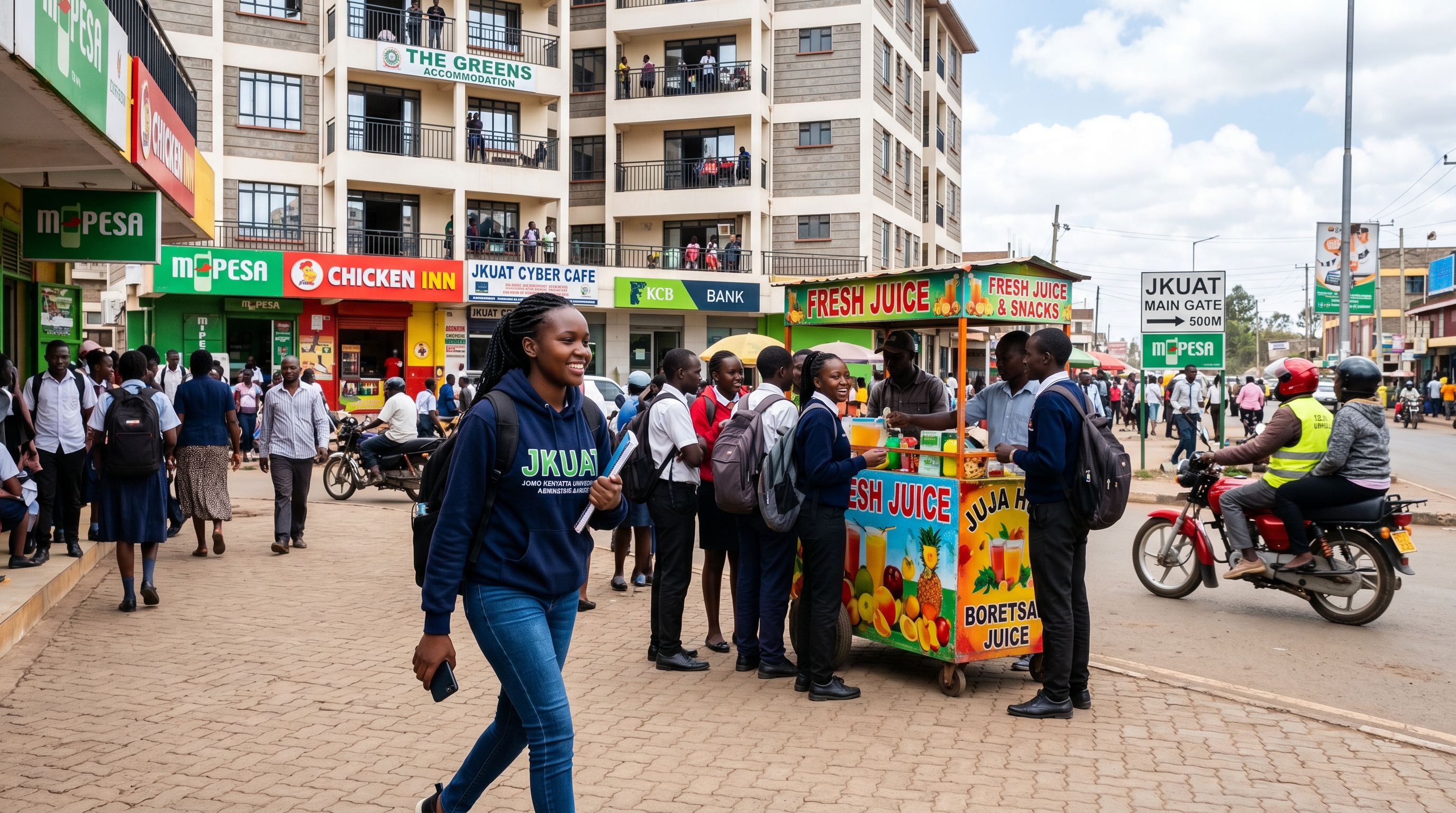
Living in Juja, Kiambu: The University Town That Became a Satellite City — Prices, Estates & Honest Guide (2026)
Juja houses from KSh 1.2M, rent from KSh 2.5K. JKUAT area, Kenyatta Road estates, Kalimoni, Witeithie. Student yields 9-15%.
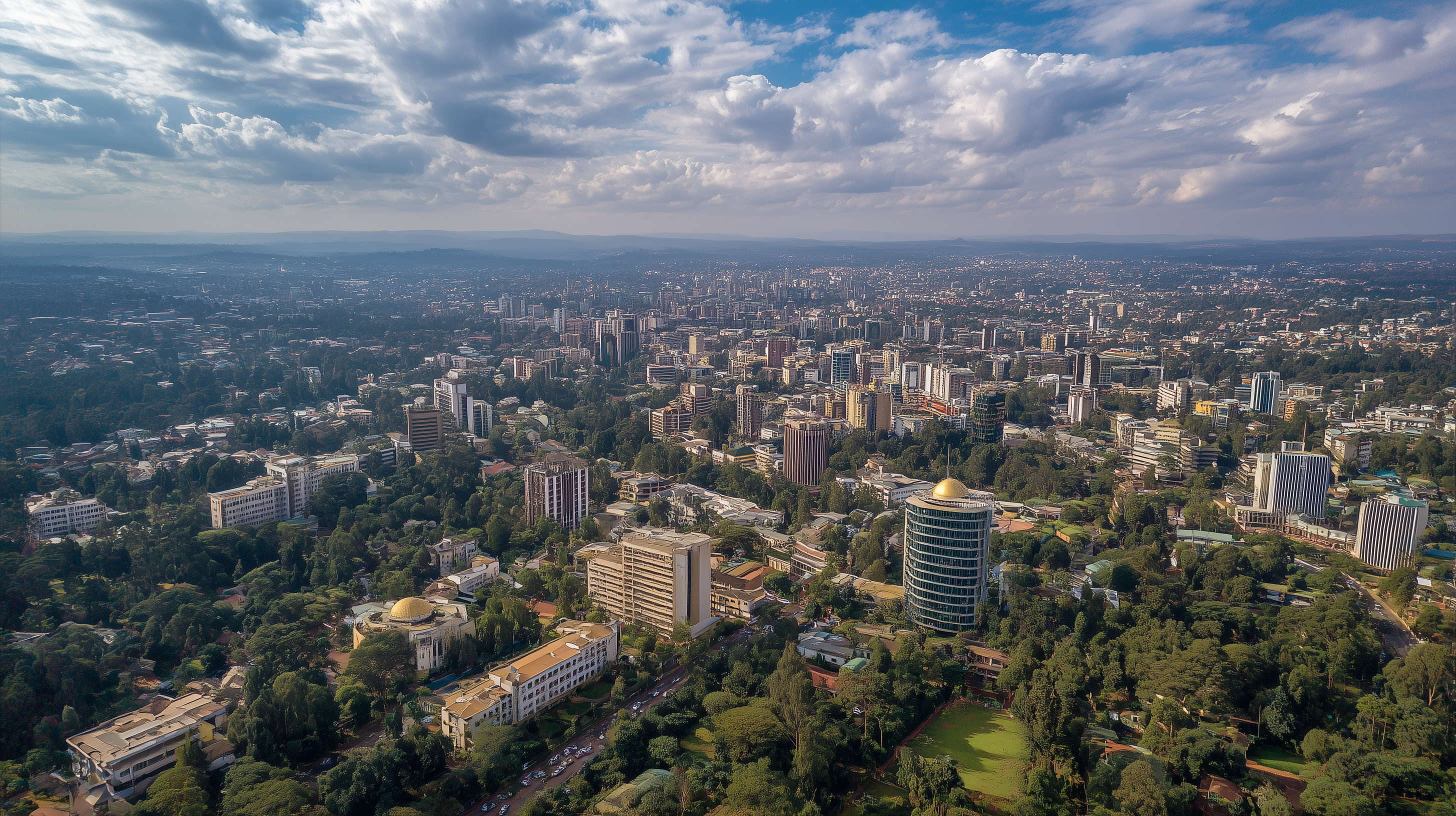
Westlands Property Guide: Prices, Lifestyle & Investment (2026)
Complete guide to Westlands real estate. Apartments from KES 8M, rental yields 6-8%, plus lifestyle amenities. Browse verified Westlands listings today.
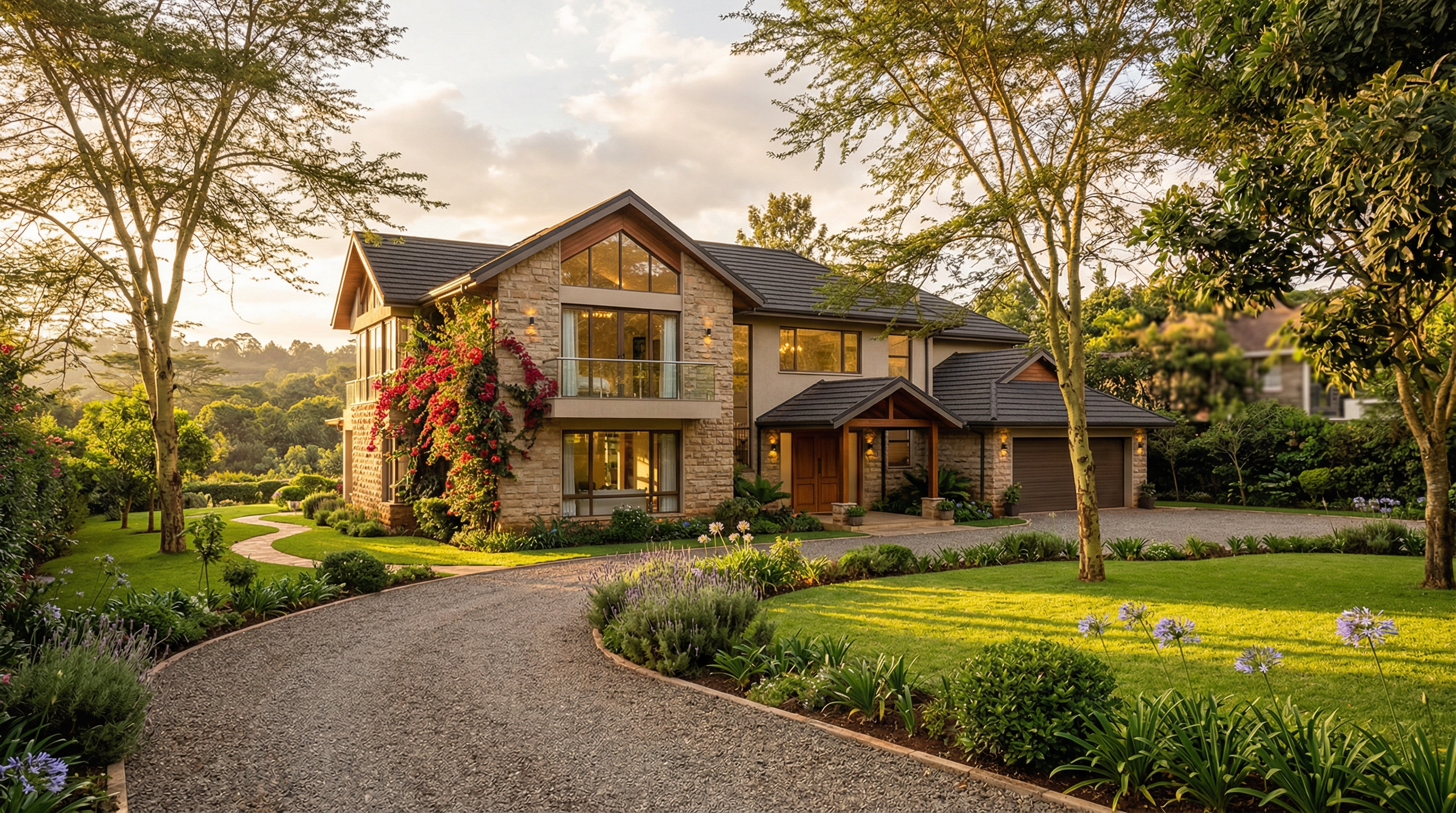
Houses for Sale in Karen: Price Guide 2026
Karen house prices from KES 35M–250M+. 4-bedroom, 5-bedroom, villas. Karen Hardy, Ndege Road, budget breakdown. Updated March 2026.