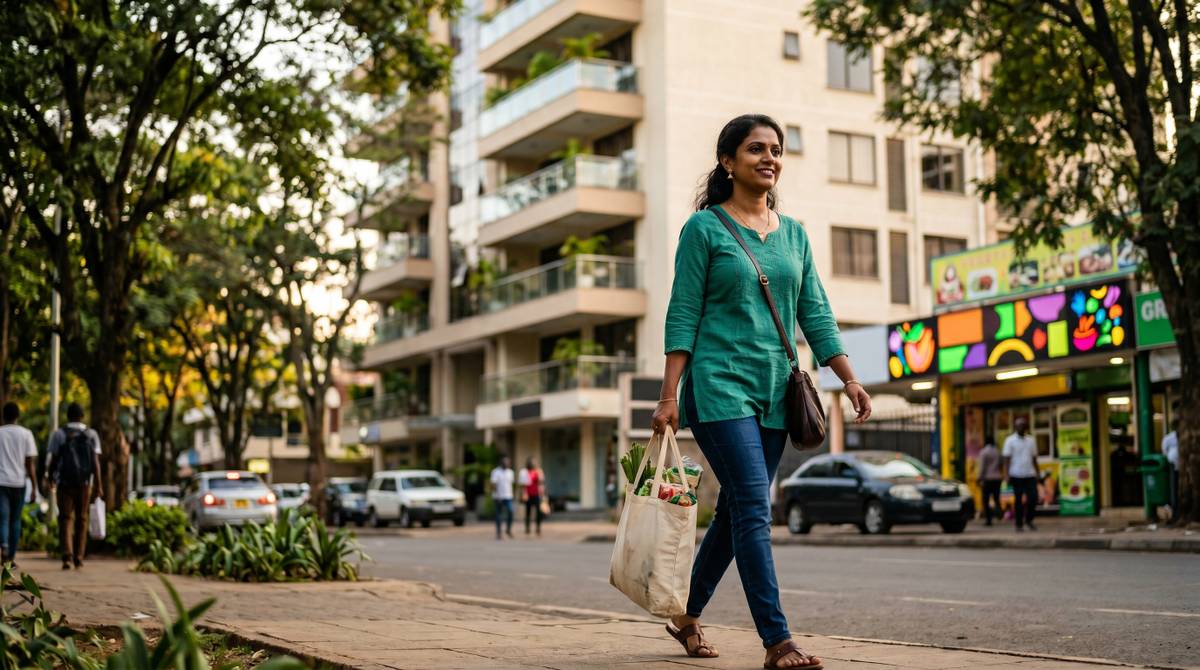
Living in Parklands, Nairobi: Prices, Avenues, Culture & Honest Guide (2026)
Parklands apartments from KSh 5.7M, rent from KSh 25K. Avenue-by-avenue breakdown, 90%+ occupancy, Aga Khan Hospital, honest pros and cons.
Living in Parklands, Nairobi: A Neighbourhood That Refuses to Stand Still
Parklands sits approximately 3–5 kilometres north of Nairobi's Central Business District, named after its proximity to City Park — one of the city's oldest green spaces. It is administratively part of the Westlands sub-county and is divided into numbered avenues, from 1st to 6th Parklands Avenue, each with its own character and price point. Apartments for sale range from KSh 5.7M to KSh 34.5M, with the average 3-bedroom unit selling at approximately KSh 18M. Rentals span KSh 25,000 to KSh 350,000 per month depending on size and finish level, with the neighbourhood-wide average hovering around KSh 130,000.
What makes Parklands distinctive is its cultural identity. Historically home to Nairobi's Kenyan-Indian community — reflected in its temples, mosques, vegetarian restaurants, and community centres like Oshwal Centre — the area is now one of the city's most cosmopolitan neighbourhoods. Somali, East African, and international communities have added layers to the social fabric, creating a density of cuisines, faiths, and languages that few Nairobi neighbourhoods can match. For buyers and investors, Parklands occupies a compelling middle ground: more affordable than Westlands and Kilimani, better located than satellite towns, and supported by occupancy rates above 90% — among the highest in Nairobi.
Quick Facts: Parklands at a Glance
Detail | Parklands |
|---|---|
Location | 3–5 km north of Nairobi CBD, Westlands sub-county |
Ward | Parklands/Highridge (Westlands Constituency) |
Population | ~37,000 (2019 census, Parklands/Highridge ward) |
Character | Multicultural, mid-to-upper-mid residential, mixed commercial |
Apartment prices (sale) | KSh 5.7M–34.5M (avg ~KSh 18M for 3-bed) |
Rental range | KSh 25,000–350,000/month |
Occupancy rate | 90%+ (among Nairobi's highest) |
Rental yield (upper mid-end) | 5.5–7.1% gross |
Key landmarks | Aga Khan University Hospital, Diamond Plaza, City Park, Oshwal Centre |
Commute to CBD | 10–25 min (traffic-dependent) |
Postal code | 00623 |
Parklands Property Prices in 2026
Apartments for Sale
Type | Price Range (KSh) | Notes |
|---|---|---|
2-bed apartment | 5.7M–15M | Older stock from ~6M; new builds with amenities from 12M+ |
3-bed apartment | 15M–25M | Avg ~18M; units with DSQ on 4th/5th Avenue command premium |
3-bed + DSQ (new build) | 18M–25M | Developments near Westlands border; smart tech features from 19.5M |
4-bed apartment | 20M–34.5M | Larger footprints (200+ sqm); upper floors with city views |
5-bed duplex | 25M–40M+ | Top-end penthouses and duplex units in newer developments |
Rental Prices
Unit Type | Rent (KSh/month) | Notes |
|---|---|---|
1-bed apartment | 25,000–50,000 | Older buildings; basic finish |
2-bed apartment | 50,000–130,000 | Modern builds from ~95K; premium 5th Avenue from 105K+ |
3-bed apartment | 75,000–150,000 | Sweet spot for families; most supply in this bracket |
4-bed apartment | 120,000–270,000 | Executive-grade; gated compounds with amenities |
5-bed duplex | 150,000–350,000 | Top-end; city views, rooftop access, multiple parking bays |
Context: Parklands sits below Westlands in price (where equivalent 3-bed apartments start from KSh 20M+) but above mid-market areas like South B/South C (3-bed from ~KSh 8M). The pricing reflects its upper-mid-end positioning — central, well-serviced, and in steady demand.
Parklands Avenues and Micro-Areas: Where to Live
1st Parklands Avenue
The avenue closest to City Park and Parklands Road. A mix of older residential stock and newer apartment complexes like Krishna Residency. Quieter, more established feel. Walking distance to City Park trails and the Botanical Garden. Apartments here tend to be more affordable than deeper avenues — expect 2-bed rentals from KSh 50,000–70,000. Good for buyers who value proximity to green space over commercial convenience.
2nd Parklands Avenue
The commercial spine. Hotels, restaurants, the Parklands Sports Club, supermarkets, and fuel stations line this avenue. Connected to Pramukh Swami Avenue, BatuBatu Road, and Limuru Road. More traffic, more noise, but also more convenience. Rental demand is strong from working professionals who prioritise walkability over quiet. Properties along this avenue command a slight premium for accessibility.
3rd Parklands Avenue
The healthcare corridor. Aga Khan University Hospital — one of East Africa's premier medical institutions — anchors this avenue. Diamond Plaza shopping complex sits nearby. The medical ecosystem (clinics, pharmacies, specialist practices) generates consistent rental demand from healthcare workers, visiting doctors, and patients' families. Apartments here rarely stay vacant long. A 3-bed apartment near Aga Khan rents from KSh 75,000–125,000.
4th Parklands Avenue
A blend of residential and light commercial. Githuri Road runs through this section with newer developments targeting young professionals and families. The 4th Avenue sits in a sweet spot: close enough to commercial activity for convenience, far enough from the main roads for relative quiet. Several modern apartment projects with amenities (gyms, pools, rooftop terraces) have launched here in 2025–2026. Off-plan 3-bed + DSQ from KSh 18–25M.
5th Parklands Avenue
Considered the quieter, more premium end of Parklands. Larger plots, more modern developments, and higher price points. Elite Towers and similar high-rise projects with amenities (heated pools, gyms, concierge) target the executive market. A 2-bed apartment on 5th Avenue rents from KSh 105,000 — notably higher than inner avenues. This is the avenue most comparable to Westlands in terms of quality and pricing.
6th Parklands Avenue and Highridge
The transition zone between Parklands proper and the Highridge estate. Slightly more affordable, with a mix of older family homes and newer apartment blocks. Highridge Shopping Centre — one of Parklands' oldest commercial hubs — is here. Bernard Estate, a quieter residential pocket, borders this area. Good entry point for first-time buyers seeking Parklands addresses at slightly lower prices. The Parklands/Highridge ward covers approximately 12 km² and includes North Highridge, Ring Road Parklands, and Mambao Road.
Key Roads
Limuru Road forms the northern spine, connecting Parklands to Muthaiga and onwards to Kiambu. Ojijo Road links the southern edge to the CBD and Ngara. Parklands Road runs through the heart of the neighbourhood. Githuri Road connects the 4th and 5th avenues. Suswa Road, Iregi Road, and Msanaka Road are important residential streets within the avenue grid. Understanding the road network matters for both commuting and property selection — apartments on quieter internal roads like Karura Avenue or Bulema Road command a livability premium over those directly on high-traffic Limuru Road.
What It Is Like to Live in Parklands
Parklands is one of Nairobi's most walkable neighbourhoods. Diamond Plaza, Oshwal Centre, Chandarana supermarkets, restaurants, temples, and mosques are all within walking distance for most residents. The numbered avenue system makes orientation intuitive — you always know roughly where you are relative to the CBD and Westlands. Limuru Road connects the northern edge of Parklands to Muthaiga and beyond; Ojijo Road and Parklands Road link the southern edge to the CBD and Ngara.
The cultural texture is what sets Parklands apart. Authentic Indian vegetarian restaurants like Maharaja (opposite MP Shah Hospital) sit alongside Chinese spots like Mister Wok, Swahili eateries, and fast-food chains. Oshwal Centre hosts cultural events, weddings, and community gatherings for the Jain community. St. Francis Xavier's Catholic Church, CITAM Parklands, and multiple Hindu temples and mosques reflect the neighbourhood's multi-faith character. The Museum of Illusions at Luxcon Court has added a modern entertainment option. Replay NBO at Broadwalk Mall brings nightlife with themed R&B nights and Kizomba dance classes.
The demographic shift is worth understanding. Parklands has historically been dominated by Kenyan-Indian families — the Oshwal, Jain, and Hindu communities that built its temples, schools, and businesses. Over the past decade, Somali, Ethiopian, and other East African communities have established significant presence, alongside Kenyan professionals drawn by the central location and relatively accessible pricing. This diversity is a strength for rental demand — the tenant pool is broad and consistent — but it does mean the neighbourhood's character is evolving rapidly. Older residents sometimes note the pace of change; newer residents are drawn by exactly the same dynamism.
Security is generally good. Most apartment buildings have 24-hour security guards, CCTV, electric fencing, and controlled access. The area benefits from its proximity to Westlands police infrastructure. As with any urban Nairobi neighbourhood, standard precautions apply: avoid walking alone late at night on poorly lit streets, secure vehicles, and be aware in crowded commercial areas like Diamond Plaza.
Water supply in Parklands is more reliable than in many Nairobi neighbourhoods, but not perfect. Most modern buildings have boreholes and backup water tanks. Older buildings may experience rationing during dry periods — budget KSh 2,000–4,000/month for supplementary water if living in older stock. Electricity is generally stable with the national grid, and most apartment buildings have backup generators for common areas. Internet connectivity is excellent — fibre optic coverage from Safaricom, Zuku, and other providers is widespread across all avenues.
The cost of living beyond rent reflects Parklands' upper-mid-end positioning. Groceries at Chandarana or Diamond Plaza stores are priced for a middle-class market. Eating out at Maharaja or Shangrila costs KSh 500–1,500 per meal — affordable by Nairobi standards for the quality offered. Service charges in modern apartment buildings range from KSh 5,000–15,000/month depending on amenities. City Park Market on Limuru Road offers fresh produce at significantly lower prices than supermarkets for those willing to shop there.
Amenities in Parklands
Healthcare
This is Parklands' standout advantage. Aga Khan University Hospital on 3rd Parklands Avenue is a 300-bed tertiary, teaching, and referral hospital — one of East Africa's best. MP Shah Hospital on Shivachi Road is trusted for maternity, surgery, and outpatient services. Avenue Hospital on 1st Parklands Avenue has 140-bed capacity. Parklands Kidney Centre, Platinum Clinic, and numerous specialist practices ensure that medical care is never far. This healthcare infrastructure is a major driver of rental demand — doctors, nurses, specialists, and their families are a consistent tenant segment.
Education
Parklands is well-served at all levels. Oshwal Academy is the area's most prominent private school. Premier Academy is nearby. Visa Oshwal Primary School offers CBC and 8-4-4 curriculum. Parklands Arya Girls Secondary School and Parklands Boys High School are established public secondaries. Highridge Secondary School serves the northern Parklands/Highridge area. For higher education, University of Nairobi School of Law is on Parklands Road, Aga Khan University School of Nursing & Midwifery is attached to the hospital, and Kenyatta University Parklands Campus covers law programmes.
Shopping and Dining
Diamond Plaza — the area's social and commercial anchor, combining retail, restaurants, and community spaces. Broadwalk Mall — newer commercial centre with entertainment options. Sarit Centre and Westgate Shopping Mall are minutes away in neighbouring Westlands. Chandarana Supermarket branches along 3rd Parklands Avenue and nearby. City Park Market on Limuru Road for fresh produce. The restaurant scene reflects the multicultural character: Indian vegetarian (Maharaja), Chinese (Mister Wok, Shangrila), and increasingly diverse African and international options.
Recreation
City Park — Nairobi's accessible urban green space, adjacent to 1st Avenue. Jogging trails, botanical gardens, monkey colonies. Parklands Sports Club on 2nd Avenue. Karura Forest is a short drive away for more serious nature walks and cycling. Museum of Illusions at Luxcon Court for family entertainment. Replay NBO at Broadwalk Mall for nightlife.
Pros and Cons of Living in Parklands
Pros
Location is difficult to beat. 3–5 km from the CBD, bordering Westlands commercial hub, connected via Limuru Road, Ojijo Road, and Parklands Road. Commutes to the CBD, Westlands, and Upper Hill are among the shortest in Nairobi.
Healthcare ecosystem is unmatched. Aga Khan University Hospital, MP Shah, Avenue Hospital — three major hospitals within the neighbourhood. For families, medical professionals, and anyone who values proximity to quality healthcare, Parklands has no real competitor in Nairobi.
Occupancy rates exceed 90%. Consistent demand from medical professionals, corporate tenants, students, and the multicultural community means vacancies are rare. For investors, this translates to predictable rental income.
Cultural richness adds lifestyle value. The dining, community centres, religious diversity, and neighbourhood character are genuine amenities that residents value — not marketing copy. Parklands has identity in a way that many newer Nairobi developments lack.
Redevelopment is creating modern stock. Older standalone homes are being replaced by apartment towers with amenities — gyms, rooftop pools, smart technology, concierge services. Buyers can choose between established charm and new-build convenience.
More affordable than Westlands. Equivalent 3-bed apartments cost 15–25% less in Parklands than in Westlands proper, with comparable access to amenities and infrastructure.
Cons
Infrastructure is straining under density. Rapid redevelopment — old houses replaced by 10+ storey towers — is outpacing drainage, sewerage, and road capacity. Flooding during heavy rains is a recurring problem in lower-lying sections. The Sh80 billion Nairobi infrastructure pact discussed in February 2026 may address this, but delivery timelines are uncertain.
Traffic congestion is real. Limuru Road, Ojijo Road, and Parklands Road get heavily congested during peak hours. The narrow internal roads between avenues were not designed for current vehicle density. Morning and evening commutes can be frustrating even for short distances.
Parking is a persistent headache. Older apartment buildings were designed for fewer vehicles. Even newer developments sometimes underestimate parking demand. Commercial areas around Diamond Plaza and 2nd Avenue are particularly congested.
Construction noise is constant. With cranes dotting the skyline across multiple avenues, residents in adjacent buildings experience prolonged construction noise. If you are buying or renting, check what is being built on neighbouring plots before committing.
Older buildings have quality issues. Not all apartments are equal. Some older stock has poor maintenance, unreliable water supply, and ageing electrical systems. Always inspect in person — multiple visits, including during rain — before signing a lease or sale agreement.
Green space is limited within Parklands itself. Despite the name, Parklands is increasingly dense. City Park is adjacent but not within the neighbourhood proper. The leafy character that defined older Parklands is giving way to concrete as redevelopment accelerates.
Parklands Compared to Neighbouring Areas
Factor | Parklands | Westlands | Kilimani |
|---|---|---|---|
3-bed apartment (sale) | KSh 15M–25M | KSh 18M–35M | KSh 12M–28M |
3-bed rent | KSh 75K–150K | KSh 90K–200K | KSh 70K–160K |
Occupancy rate | 90%+ | 85–90% | 80–88% |
Rental yield (gross) | 5.5–7% | 5–6.5% | 5–6% |
Distance to CBD | 3–5 km | 4–6 km | 3–5 km |
Healthcare access | Aga Khan, MP Shah, Avenue | Nairobi Hospital nearby | Moderate |
Oversupply risk | Moderate (constrained land) | Low–Moderate | Higher (Ngong Rd corridor) |
Character | Multicultural, food-focused | Commercial, corporate, expat | Mixed residential, younger crowd |
Best for | Families, medical professionals, value investors | Corporates, expats, premium buyers | Young professionals, first-time buyers |
Getting Around: Commute from Parklands
Destination | Mode | Estimated Time |
|---|---|---|
Nairobi CBD | Car / matatu | 10–25 min |
Westlands (Sarit Centre) | Car / walk | 5–15 min |
Upper Hill | Car | 15–30 min |
JKIA (airport) | Car / Expressway | 30–50 min |
Karen | Car | 35–55 min |
Kilimani | Car | 15–25 min |
Muthaiga | Car (via Limuru Rd) | 10–15 min |
Matatus to Parklands depart from the CBD at Khoja bus stop and Ngara bus stop (route 118). Key stops within Parklands include the 2nd Avenue/Oilibya junction, Aga Khan Hospital junction (3rd Avenue), and Westlands terminals. Ride-hailing apps (Uber, Bolt, InDriver) are widely available and generally efficient for the area.
Investment Outlook for Parklands
What is working
Parklands is showing defensive characteristics in a volatile market. While some Nairobi neighbourhoods face oversupply risk (particularly along Ngong Road), Parklands benefits from constrained land supply — the neighbourhood is largely built out, meaning new development replaces old stock rather than adding net supply on greenfield land. This structural constraint supports both prices and occupancy.
The upper mid-end segment that Parklands belongs to delivered total returns of approximately 7.1% in FY2024/25 according to Cytonn Investments — the strongest-performing residential segment in the Nairobi Metropolitan Area. Rental yields in the range of 5.5–7% gross, combined with steady price appreciation and occupancy above 90%, make a compelling income-plus-growth thesis.
Diaspora investment flows are increasingly directed toward structured, professionally managed developments in areas like Parklands rather than speculative land purchases. The combination of clear titles, amenity-rich buildings, and predictable rental demand aligns with what overseas investors are seeking.
What to watch
Infrastructure strain is the primary risk. Drainage, sewerage, and road capacity are not keeping pace with densification. The Sh80 billion Nairobi infrastructure pact — discussed at a public forum at Charter Hall on 26 February 2026 — signals potential upgrades, but delivery timelines are uncertain. Buyers should inspect drainage conditions during rainy season before purchasing in lower-lying sections of Parklands.
The 2027 general election introduces the standard 12–18 month slowdown in Kenyan property transactions. This is not specific to Parklands but affects timing decisions for all Nairobi buyers and sellers.
Quality variance across developments is significant. Not all new builds are equal. Some developers are cutting corners on construction quality, water infrastructure, and parking. Verify the developer's track record, visit completed projects, and check building approvals before committing to any off-plan purchase.
Land prices are prohibitive for individual buyers. A quarter-acre plot in Parklands can cost KSh 100M or more in prime locations. This means most new residential supply comes from developers who acquire plots to build multi-storey apartments — individual land purchase is not a viable strategy for most investors here. This is a developer-driven market.
Short-term rentals (Airbnb)
Parklands has emerged as a viable Airbnb market, supported by hospital visitors, corporate travellers, and diaspora guests. Occupancy is more consistent than in purely tourist-driven areas like Diani or Watamu. However, Nairobi's overall Airbnb median occupancy sits around 46% — significantly below what many investors project. For Parklands specifically, proximity to Aga Khan Hospital and the corporate Westlands market pushes occupancy higher than the city average. A well-managed, furnished 1-bed can generate KSh 4,000–7,000 per night; a 2-bed KSh 7,000–12,000. Budget 20–30% of gross revenue for professional management if operating remotely. KRA is actively tracking Airbnb income as of 2025 — declare all rental revenue.
For Diaspora Investors
Parklands is well-suited for diaspora buyers in the $50K–$200K range (approximately KSh 6.5M–26M). A 2-bed apartment at KSh 12M–15M (roughly $92K–$115K) generates rental income of KSh 80,000–130,000/month with strong occupancy. The healthcare and education infrastructure ensures consistent tenant demand — medical professionals and families with school-age children are a reliable market segment.
Key steps: engage a verified agent on Afriqahome, verify the title on Ardhisasa, hire a lawyer for due diligence, and use professional property management for ongoing oversight. Never rely on verbal commitments — insist on written sale agreements reviewed by your advocate.
For country-specific buying guidance: USA · UK · UAE · Canada. Always use a stamp duty calculator to budget total acquisition costs — stamp duty in Nairobi is 4% of the property value, plus legal fees (1–1.5%), valuation, and registration charges. On an KSh 18M apartment, total transaction costs typically add KSh 1.2M–1.5M to the purchase price.
Frequently Asked Questions
How much does an apartment cost in Parklands, Nairobi?
Apartments for sale in Parklands range from approximately KSh 5.7M (older 2-bed units) to KSh 34.5M (premium 4-bed apartments with amenities). The average 3-bedroom apartment sells at around KSh 18M. New-build 3-bed + DSQ units on 4th and 5th Parklands Avenue are priced from KSh 18M–25M, while older renovated stock offers lower entry points. Rentals range from KSh 25,000/month for a basic 1-bed to KSh 350,000 for a premium 5-bed duplex.
Is Parklands, Nairobi safe to live in?
Parklands is generally considered safe by Nairobi standards. Most apartment buildings have 24-hour security guards, CCTV, electric fencing, and controlled access. The area benefits from proximity to Westlands police infrastructure and active community security arrangements. Standard urban precautions apply: avoid poorly lit streets late at night, secure vehicles, and be alert in crowded commercial areas. The 2013 Westgate attack at the nearby mall prompted significant security upgrades across the wider Westlands/Parklands area.
Which is the best avenue to live in Parklands?
It depends on priorities. 5th Avenue is the quietest and most premium, with modern high-rises and amenities — ideal for executives and families with larger budgets. 3rd Avenue offers excellent convenience near Aga Khan Hospital and Diamond Plaza — best for medical professionals and those who value walkability. 4th Avenue is the emerging sweet spot — newer developments at mid-range prices with good quiet-to-access balance. 1st Avenue suits nature lovers with City Park access. 6th Avenue/Highridge offers the most affordable entry point with a Parklands address.
What schools and hospitals are in Parklands, Nairobi?
Hospitals: Aga Khan University Hospital (300-bed, 3rd Avenue), MP Shah Hospital (Shivachi Road), Avenue Hospital (1st Avenue, 140 beds), Parklands Kidney Centre, Platinum Clinic. Schools: Oshwal Academy, Premier Academy, Visa Oshwal Primary School, Parklands Arya Girls Secondary, Parklands Boys High School, Highridge Secondary School. Universities: University of Nairobi School of Law, Aga Khan University School of Nursing & Midwifery, Kenyatta University Parklands Campus.
Is Parklands a good area for property investment in 2026?
Yes — Parklands offers one of the more compelling risk-return profiles in Nairobi. Occupancy rates above 90%, rental yields of 5.5–7% gross (upper mid-end segment), and constrained land supply support both income and capital appreciation. Cytonn data shows the upper mid-end segment delivered 7.1% total returns in FY2024/25. The main risks are infrastructure strain (drainage, roads) and construction quality variance across developers. Choose developments carefully, verify due diligence, and factor in the 2027 election cycle for timing.
How much rent can I expect from an apartment in Parklands?
Rental income depends on unit size, finish level, and location within Parklands. A 2-bed apartment generates KSh 50,000–130,000/month. A 3-bed generates KSh 75,000–150,000/month. Furnished units and those near Aga Khan Hospital command premiums. On a KSh 18M purchase (3-bed), rent of KSh 100,000/month delivers approximately 6.7% gross yield. Net yields after service charges, management fees, and maintenance typically come in at 4–5.5%. Short-term (Airbnb) rentals can improve returns but require active management.
Explore Parklands on Afriqahome
Browse apartments for sale in Nairobi or houses for sale from verified agents.
Compare Parklands with neighbouring areas: Westlands Property Guide · Living in Kilimani · Living in Kileleshwa · Living in Lavington · Best Areas to Live in Nairobi.
For buying process guidance: How to Buy Land in Kenya · First-Time Buyer Guide · Stamp Duty & Closing Costs · Due Diligence Checklist · Verify an Agent.
For diaspora investors: Diaspora Investment Hub · Buy from USA · Buy from UK · Buy from UAE · Buy from Canada.
Other Guides
Westlands Property Guide: Prices, Lifestyle & Investment (2026)
Complete guide to Westlands real estate. Apartments from KES 8M, rental yields 6-8%, plus lifestyle amenities. Browse verified Westlands listings today.
Houses for Sale in Karen: Price Guide 2026
Karen house prices from KES 35M–250M+. 4-bedroom, 5-bedroom, villas. Karen Hardy, Ndege Road, budget breakdown. Updated March 2026.
Living in Ruaka: Apartments, Prices, Commute & 2026 Guide
Ruaka rent from KES 8,000/month. 10 min to Westlands, 5 min to Two Rivers Mall. Honest guide: oversupply, yields (8.8%), prices, and what to watch out for.