Land Buying Scams in Rural Kenya: 7 Fraud Patterns and How to Avoid Them
Land fraud cases up 67% since 2020. Fake titles, double-sold plots, succession fraud, boundary manipulation — protect yourself when buying rural land in Kenya.
Introduction
Land fraud in Kenya is not limited to Nairobi's apartment market. Some of the most devastating scams target buyers in rural and peri-urban areas — places like Kajiado, Machakos, Murang'a, Nyandarua, Kilifi, and the fast-growing satellite town corridors where plots sell for KSh 500K–3M and due diligence feels less urgent because the prices seem modest. According to the Directorate of Criminal Investigations (DCI), land fraud cases have increased by 67% since 2020, with Kiambu, Machakos, and Mombasa counties among the worst affected alongside Nairobi.
Rural land scams succeed because they exploit a specific set of conditions: buyers who cannot visit the site regularly, community land that lacks clear individual titles, succession land where ownership is disputed, and local intermediaries who operate without any formal accountability. This guide covers the specific fraud patterns that affect rural land purchases in Kenya and what you can do to avoid them.
1. Double-Sold Plots
The most common rural scam is also the simplest: the same plot is sold to two, three, or even five different buyers. The seller presents convincing-looking title documents, collects payment, and repeats the process with the next buyer before anyone realises what has happened. By the time the fraud is discovered — usually when two buyers try to develop the same plot — the seller has disappeared.
This works especially well in rural areas because: plots may not have clear physical markers (no fences, no buildings), buyers often live in Nairobi or abroad and visit infrequently, and local land registries may have backlogs that delay title searches.
Protection: Conduct an official title search on Ardhisasa before paying any money. Visit the physical site and talk to neighbours — they often know if the land has already been "sold" to someone else. Never pay in cash without a traceable receipt.
2. Fake Title Deeds
Fraudsters produce counterfeit title documents that can be surprisingly convincing. Some sophisticated operations have involved collusion with registry officials to create documents that pass a casual inspection. In a documented case in Thika, a syndicate produced fake titles for land in Murang'a and defrauded 87 buyers of an estimated KSh 420 million before being apprehended by the DCI.
Rural plots are particularly vulnerable because many older titles pre-date digitisation and exist only in paper format, making verification harder.
Protection: An official Ardhisasa search (not a photocopy from the seller) confirms whether a title is genuine and who the registered owner actually is. Have your lawyer conduct a physical cross-check at the relevant county land registry. Read our detailed guide on how to spot fake title deeds.
3. Selling Community or Public Land as Private
Kenya has three categories of land under the Constitution: public, community, and private. Only private land can be sold between individuals. Yet fraudsters routinely sell parcels that are actually road reserves, riparian zones (within 30 metres of a river), forest land, or community trust land. Buyers discover months or years later that the "plot" they purchased belongs to the government or a community and cannot be developed or registered.
The Syokimau case is one of the most prominent examples: multiple buyers invested millions in land that turned out to be owned by the Kenya Airports Authority. The developers had forged documentation, and the buyers — many without independent legal advice — lost everything.
Protection: Confirm the land category on Ardhisasa. Ask your lawyer to check with the county physical planning office whether the land is zoned for the intended use. If the land is classified as agricultural, confirm that the Land Control Board (LCB) has given consent for the transfer — without LCB consent, the sale of agricultural land is legally void under the Land Control Act.
4. Succession Land Without Probate
When a landowner dies, their land must go through the legal succession process before it can be sold. This requires a grant of probate or letters of administration from the courts. In rural Kenya, where land is often family-held across generations, succession frequently has not been completed — the deceased's name may still appear on the title deed decades after death.
Fraudsters exploit this by posing as heirs, producing forged succession documents, or simply selling the land before legitimate heirs can establish their claim. This scam is particularly common in areas where elderly landowners have died and their children live in cities or abroad.
Protection: If a title deed shows a registered owner who is deceased, insist on seeing the grant of probate or letters of administration from the courts, plus the certificate of confirmation of grant that names the person authorised to deal with the property. Your lawyer should verify these documents independently at the relevant court registry. Verify death certificates at the Registrar of Births and Deaths (search fee approximately KSh 500).
5. Boundary Manipulation
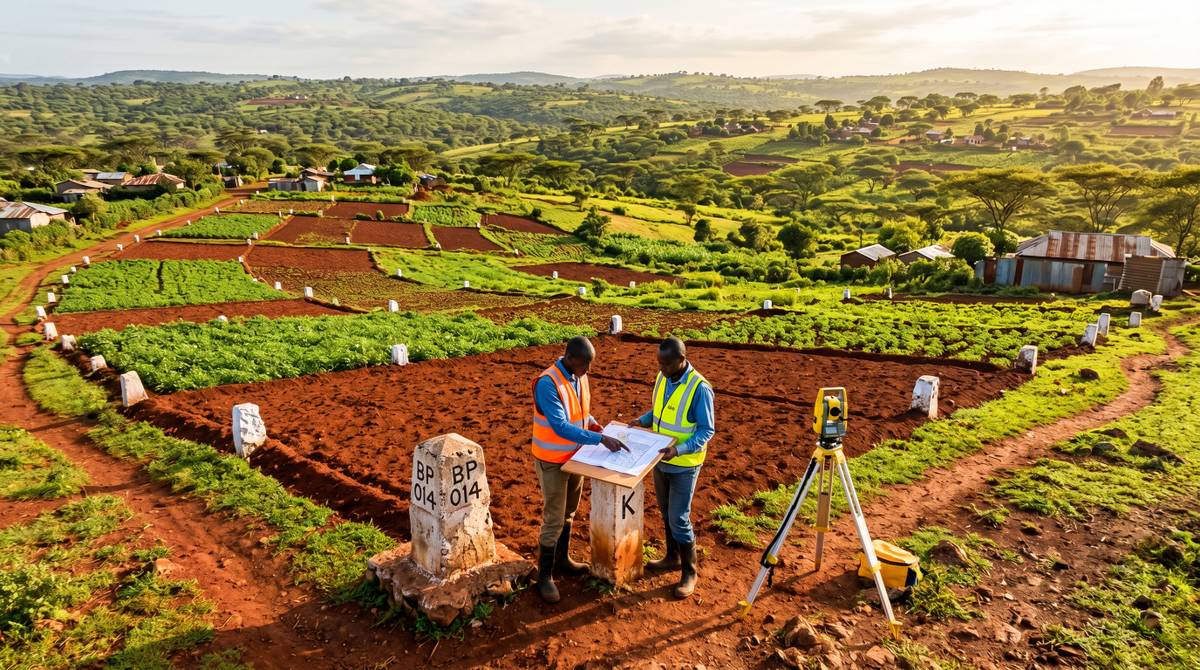
In rural areas where plots are marked by natural features (trees, stones, paths) rather than permanent fences, fraudsters move or remove survey beacons to change plot boundaries. A buyer who does not hire an independent surveyor may end up with a plot that is smaller than advertised, in a different location than shown, or overlapping with a neighbour's land.
Protection: Hire a licensed surveyor registered with the Institution of Surveyors of Kenya to verify boundaries before completing the purchase. The surveyor compares physical markers with the title deed's cadastral map and places permanent beacons. This costs KSh 15,000–50,000 depending on plot size and location — a fraction of the purchase price and the strongest physical proof of what you are actually buying.
6. "Too Good to Be True" Pricing
A plot in a growing area like Juja, Kitengela, or Nanyuki that is priced 30–40% below comparable market rates is not a bargain — it is a warning sign. Fraudsters deliberately underprice to create urgency and attract buyers who want to "lock in the deal" before prices rise. The pressure to act fast is the scammer's most effective tool.
Protection: Research comparable prices on listing platforms like Afriqahome, BuyRentKenya, and Property24 before committing. If a deal seems too good to be true, it almost certainly is. No legitimate seller needs to underprice significantly in a market where demand exceeds supply.
7. Unregistered Brokers and "Briefcase" Agents
Rural land transactions are often facilitated by informal brokers who have no EARB registration, no office, and no accountability. They earn commissions from both buyer and seller, prioritise closing the deal over due diligence, and disappear after the transaction. When something goes wrong, there is no one to hold accountable.
Protection: Work with EARB-registered agents and always engage an independent lawyer — separate from the seller's lawyer — to handle the legal process. On Afriqahome, agents can earn a Verified Agent badge by submitting identity and licence documentation. The badge is optional, so look for it rather than assuming it. This does not eliminate all risk, but it provides a layer of accountability that a "briefcase" broker cannot.
Frequently Asked Questions
How common are land scams in rural Kenya?
The DCI reports a 67% increase in land fraud cases since 2020, with Kiambu, Machakos, Kajiado, and Mombasa counties among the most affected. Rural and peri-urban areas are disproportionately targeted because land is often unmarked, titles may be outdated, and buyers frequently live far from the property.
Can I verify a rural title deed on Ardhisasa?
Most titled land in Kenya is now accessible through Ardhisasa, including rural parcels. However, some older titles — particularly in areas that have not completed digitisation — may require a physical search at the county land registry. Your lawyer should conduct both a digital and physical search to be thorough.
What is Land Control Board consent and why does it matter?
The Land Control Board (LCB) must approve the transfer of any land classified as agricultural under the Land Control Act. Without LCB consent, the sale is legally void — meaning the transfer cannot be registered and you do not legally own the land even if you paid for it. Your lawyer should apply for LCB consent as part of the transaction process.
How much does a surveyor cost for a rural plot?
A licensed surveyor typically charges KSh 15,000–50,000 for boundary verification on a rural plot, depending on size and location. The surveyor confirms the physical boundaries match the title deed, places beacons, and provides a written report. This is one of the most cost-effective due diligence steps for rural land purchases.
What should I do if I have already been scammed?
Report the fraud to the DCI (Directorate of Criminal Investigations) and file a civil suit to recover your money or challenge the fraudulent transfer. If you acted through a lawyer, report them to the Law Society of Kenya if they were negligent or complicit. If you have receipts, agreements, and communication records, your chances of recovery are significantly better than if the transaction was informal.
Is it safe to buy land in rural Kenya at all?
Yes — if you follow the process. Millions of legitimate land transactions occur in rural Kenya every year. The risk is not the location but the shortcuts: buying without a title search, without a surveyor, without a lawyer, or without LCB consent. Follow our due diligence checklist and the risks are manageable.
Protect Yourself
Every scam on this list has a common pattern: the buyer skipped a step that would have revealed the problem. The entire due diligence process for a rural plot — title search, surveyor, lawyer, LCB consent — costs KSh 50,000–100,000. That is 2–10% of a typical rural plot price. Skipping it can cost you the entire investment.
Start with our due diligence checklist and Ardhisasa tutorial. For verified agents who operate in rural and satellite town markets, browse the Afriqahome agent directory.
Related guides: How to Spot Fake Title Deeds · How to Buy Land in Kenya · Freehold vs Leasehold Explained · Stamp Duty & Closing Costs · Common Mistakes Diaspora Buyers Make.
Other Guides

Living in Juja, Kiambu: The University Town That Became a Satellite City — Prices, Estates & Honest Guide (2026)
Juja houses from KSh 1.2M, rent from KSh 2.5K. JKUAT area, Kenyatta Road estates, Kalimoni, Witeithie. Student yields 9-15%.

Westlands Property Guide: Prices, Lifestyle & Investment (2026)
Complete guide to Westlands real estate. Apartments from KES 8M, rental yields 6-8%, plus lifestyle amenities. Browse verified Westlands listings today.

Houses for Sale in Karen: Price Guide 2026
Karen house prices from KES 35M–250M+. 4-bedroom, 5-bedroom, villas. Karen Hardy, Ndege Road, budget breakdown. Updated March 2026.