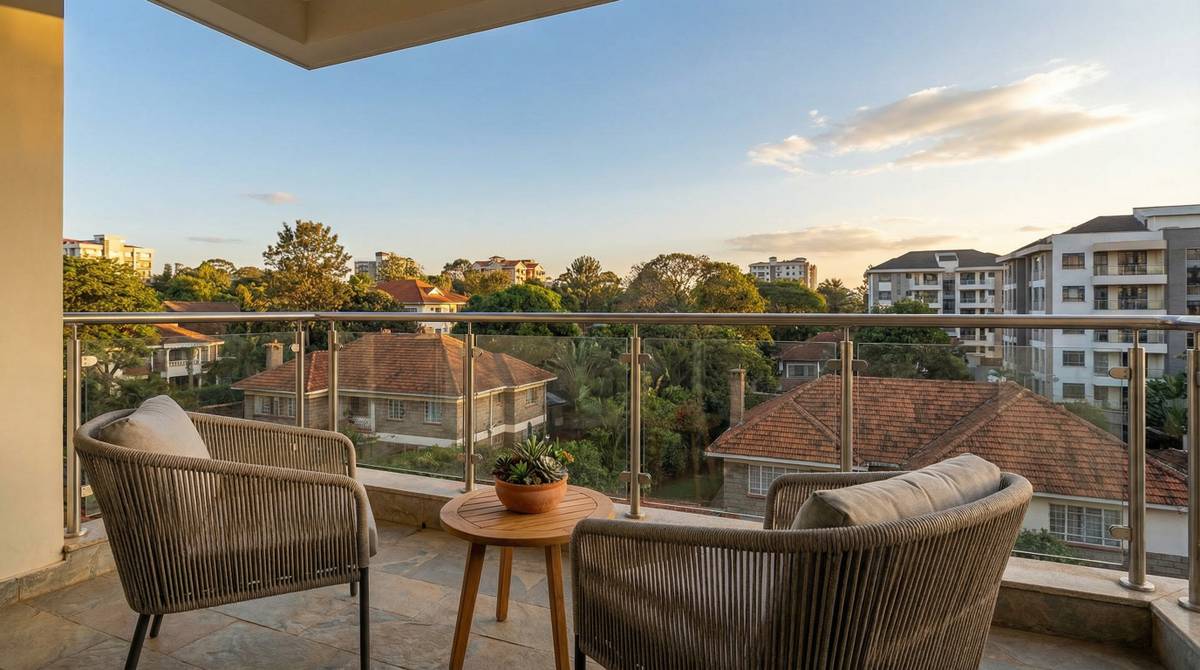
Living in Lavington, Nairobi: Rent, Restaurants & Pros/Cons
Lavington offers quieter living between Kilimani and Karen — rent from KES 55K, great restaurants, and easy CBD access. The honest pros and cons for 2026.
Living in Lavington, Nairobi: The Complete Guide for 2026
Lavington is not the first neighbourhood new arrivals hear about. It does not feature in the headline comparisons between Kilimani and Westlands. It does not have the instantly recognisable name that Karen carries among the diaspora. Ask most first-timers where they want to live in Nairobi and Lavington rarely comes up unprompted.
That is, until they have actually lived in Nairobi for a while.
Talk to someone who has been here two, three, five years — someone who started in a Kilimani apartment and outgrew its noise, or looked at Karen and decided the commute was not compatible with their life — and Lavington comes up reliably. The neighbourhood Nairobi insiders choose. The one that does not make the obvious lists but consistently delivers what the obvious lists promise.
This guide covers what Lavington actually is in 2026: prices anchored to current listings, commute times based on real Nairobi traffic patterns, a straight account of what it offers and where it falls short, and the honest answer to whether it is the right neighbourhood for you.
LAVINGTON AT A GLANCE | |
|---|---|
Location | ~7km northwest of CBD; James Gichuru Road and Gitanga Road as main arteries; bordered by Kilimani, Kileleshwa, Westlands, and Kawangware |
Character | Nairobi's insider pick — leafy, calm, cosmopolitan without the noise; old bungalows and new apartments on the same street |
Best For | Mid-senior professionals, expat couples and small families, NGO workers, diaspora investors seeking stable rental yields |
1BR Apartment Rent | KES 65,000 – 80,000/month unfurnished; KES 80,000 – 120,000 furnished |
2BR Apartment Rent | KES 75,000 – 110,000/month unfurnished; KES 100,000 – 150,000 furnished |
3BR Apartment/House Rent | KES 110,000 – 170,000/month; furnished 3BR up to KES 200,000+ |
Apartment Sale Price | KES 4.5M – 50M; average approximately KES 9.4M (BuyRentKenya, early 2026) |
House Sale Price | KES 30M – 120M+ for standalone houses; freehold plots at significant premium |
Commute to CBD | 15–20 min off-peak via James Gichuru / Valley Road; 35–55 min peak |
Commute to Westlands | 10–15 min off-peak; 20–35 min peak via Waiyaki Way |
Commute to Upper Hill | 10–15 min via Valley Road / Ngong Road interchange |
Public Transport | Matatu routes 48A, 48B, 48K via James Gichuru Road to CBD (Odeon/Kencom); KES 50–80 fare |
What Lavington Actually Feels Like
Lavington is approximately 7 kilometres from Nairobi's CBD by road — close enough to be genuinely convenient, far enough that the city's density does not follow you home. The area was originally the St Austin's Mission established by French Holy Ghost Fathers in the 1860s, and that history shows in its layout: wide-ish residential roads, mature trees, an established institutional presence (Strathmore University, St Mary's School, Loreto Convent Msongari are all here), and a neighbourhood that was designed for people, not for cars.
What makes Lavington distinctive in 2026 is what property people call its 'mixed-use residential' character, which simply means: a 1970s bungalow with a quarter-acre garden can sit next to a new twelve-floor apartment block, which can sit next to a corporate office converted from a colonial-era house, which can sit next to a cafe. On the same block. This mixture — which would be chaotic in some cities — works in Lavington because the underlying street scale is human and the tree canopy keeps the whole thing from feeling overbearing.
The neighbourhood's social character is cosmopolitan but quiet. The largest resident communities are UN agency staff (UNEP and UN-Habitat at Upper Hill are 10–15 minutes away), NGO programme managers, senior Kenyan professionals, and a growing number of expat couples and young families who want access to a good school corridor without committing to Karen's distance. It is a neighbourhood where people know their neighbours by sight without necessarily knowing their names — the urban equilibrium that most Nairobi middle-class professionals actually want.
The James Gichuru Road strip between Lavington Green and the Waiyaki Way junction is the social and commercial spine. It has the walkability that most Nairobi neighbourhoods aspire to but rarely achieve: a stretch of road where you can feasibly get a coffee, pick up dry cleaning, have lunch, and stop at the supermarket without getting in a car. Not everything is on this strip — for a big supermarket run or a proper night out you will need to move — but the daily rhythm of life is manageable on foot for those who live close enough to James Gichuru Road.
Streets and Estates to Know
James Gichuru Road is the artery everything else organises around. It runs from the Waiyaki Way junction in the north to the Valley Road / Ngong Road interchange in the south, carrying both the neighbourhood's commercial activity and its heaviest traffic. Properties on James Gichuru Road itself are convenient but noisier. The better residential choices are the side streets off it — Muthangari Drive, Vanga Road, Mandera Road — which get the location benefit without the road noise.
Gitanga Road is the quieter residential spine running roughly parallel to James Gichuru on the eastern side. Properties on and off Gitanga tend to be a mix of older houses and newer apartment developments. The Aga Khan Valley Arcade Medical Centre is on Gitanga — a useful landmark that anchors the road's practical value.
Lavington Green — the neighbourhood shopping centre — is the low-key anchor at the James Gichuru / Gitanga intersection area. It is not a large mall by Nairobi standards: a mid-sized supermarket, a few pharmacies, service businesses, and a handful of cafes and restaurants. Most Lavington residents use it for daily convenience rather than destination shopping. For larger runs, The Junction Mall (on Ngong Road, 5–10 minutes from most of Lavington) and Valley Arcade (on Gitanga Road) both serve the area well.
The Junction Mall area is technically just outside Lavington's core but functions as the neighbourhood's big-retail node. Several Lavington apartment developments specifically market their proximity to The Junction as a feature — and it is a genuine one. Carrefour, restaurants, a cinema, and reliable parking make it the defacto larger shopping destination for the neighbourhood.
Muthangari Drive is one of Lavington's more established residential roads — a quiet single carriageway lined with older bungalows and newer townhouse developments. It represents the Lavington that older residents remember: tree-lined, low-traffic, genuinely residential.
The apartment corridors along the upper James Gichuru Road section have seen the most new development in recent years. New blocks with pools, gyms, backup generators, and fibre internet have gone up with regularity, targeting the professional and expat market. Quality varies significantly — some are excellently finished and managed; others have cut corners on common areas. Visit in person and ask specifically about water supply, generator fuel policies, and service charge breakdowns before committing.
Valley Arcade on Gitanga Road is a small but well-established retail strip — cafes, an Aga Khan medical centre, reliable parking — that functions as Lavington's second commercial node after James Gichuru Road.
Property Prices in Lavington 2026
Lavington is one of the few Nairobi neighbourhoods with a genuinely mixed market — apartments and houses at different price points, both for rent and sale. This makes it more accessible than Karen (where the apartment supply is very thin) while offering more residential quality than pure Kilimani apartment living.
Rental Market — as of early 2026
1-bedroom apartments: KES 65,000 – 80,000/month unfurnished; KES 80,000 – 120,000 furnished. Some older-stock 1BRs on Jiji list below KES 70,000; newer builds with pools and gym tend toward KES 80,000+
2-bedroom apartments: KES 75,000 – 110,000/month unfurnished; KES 100,000 – 150,000 furnished. This is Lavington's most competitive segment — strong supply, strong demand
3-bedroom apartments: KES 110,000 – 170,000/month unfurnished; furnished 3BRs in managed estates up to KES 200,000+. BuyRentKenya shows a range of KES 60,000 – 350,000 for 3BRs (wide range reflects old stock vs luxury penthouses)
Standalone houses: KES 150,000 – 350,000+/month depending on plot size, condition, and gating. Heritage bungalows on quarter-acre plots start around KES 150,000; larger houses with gardens and DSQ range up to KES 300,000+
The overall average for Lavington apartments across all sizes sits at approximately KES 110,000 – 120,000/month (Kenya Property Centre / BuyRentKenya, February 2026). This is modestly more than Kileleshwa equivalents and broadly comparable to similarly specified Kilimani apartments — but Lavington often delivers more space and a quieter setting at similar price points.
Sales Market — as of early 2026
1–2 bedroom apartments: KES 4.5M – 13.5M. BuyRentKenya shows apartments starting from KES 3M in the wider area; mid-market 2BR apartments (pool, gym, fibre) around KES 9–14M
3–4 bedroom apartments: KES 15M – 35M for well-finished units in managed developments
Apartment average: KES 9.39M across all sizes (BuyRentKenya, early 2026)
Standalone houses: KES 30M – 120M+. Genuine freehold bungalows on larger plots are rare and command significant premiums when they come to market
Luxury villas and gated communities: New off-plan and completed developments (such as those off James Gichuru Road) list from KES 50M into the hundreds of millions for bespoke builds
For diaspora buyers, the Lavington apartment market represents a solid rental yield play: apartments in the KES 9–15M purchase range typically rent for KES 75,000 – 110,000/month, giving gross yields of 6–9% before costs — broadly consistent with or better than Kilimani for comparable spend, with a more stable and less speculative tenant base.
Who Lives in Lavington
Lavington's resident profile has been fairly stable for a decade and shows no signs of shifting significantly. It is not a neighbourhood that has been discovered and therefore transformed. It is a neighbourhood that continues to attract a specific kind of person and keeps attracting more of the same.
The largest identifiable communities in Lavington are UN agency and INGO staff. The corridor between Lavington, Kileleshwa, and Upper Hill is the UN worker's preferred residential band in Nairobi. UNEP and UN-Habitat sit in Upper Hill; the Upper Hill to Lavington commute via Argwings Kodhek or Valley Road is among the more manageable Nairobi commutes even at peak hours.
Senior Kenyan professionals — lawyers, executives, senior civil servants — are the second major segment. Lavington is an address that says you have arrived without requiring you to be dramatic about it. The older bungalow stock on streets like Muthangari Drive and Vanga Road houses families that have been in the neighbourhood for twenty or thirty years and have no intention of leaving.
Expat couples without children — or with very young children — represent a growing segment, drawn by the apartment quality, the walkable strip, and the proximity to Westlands nightlife without having to live in Westlands. Many use Lavington as their Nairobi base before deciding whether to commit to Karen for a growing family's school years.
Diaspora buyers are becoming more active in Lavington's sales market. The neighbourhood is beginning to appear on investment shortlists that were previously Kilimani-only, partly because the rental yield story is sound and partly because Lavington does not carry the same off-plan development risk as some oversupplied Kilimani corridors.
What Lavington is not: it is not a starter neighbourhood for fresh university graduates on tight budgets (Ngong Road corridor or South C serves them better), and it is not a place for people who want to walk to a club on a Friday night without thinking about it.
The Honest Pros of Living in Lavington
Location sweet spot. Approximately 7km from the CBD — close enough for a 15–20 minute off-peak commute, far enough that the CBD's density is not your problem. Westlands is 10–15 minutes; Upper Hill is 10–15 minutes; even Karen is reachable in 30–40 minutes. Lavington is the only Nairobi neighbourhood that is genuinely close to all of them without belonging to any of them.
Mixed-use character that Kilimani lacks. You can rent an apartment or buy a house in Lavington within a few streets of each other. This matters for investors (apartment rental income alongside capital growth in the house market) and for residents who want residential variety rather than wall-to-wall apartment towers.
Strong, stable tenant base. For investors, Lavington's NGO and UN staff tenant base is among the most reliable in Nairobi. These tenants tend to be longer-term, more careful with properties, and on contracts that provide income stability. Vacancy periods tend to be short in the well-priced 2–3BR apartment segment.
A genuinely walkable strip. The James Gichuru Road section between Lavington Green and the Westfield Mall area gives Lavington a pedestrian usefulness that most Nairobi residential areas lack entirely. Coffee, lunch, pharmacy, dry cleaning — manageable on foot for those in the right location.
Quieter than Kilimani, closer than Karen. The noise gap between Lavington and Kilimani is significant for anyone who has lived in both. Lavington does not have the construction, the weekend traffic, or the ground-floor bar scene that characterises denser Kilimani addresses. At the same time, the commute is a fraction of Karen's.
Green and leafy, established infrastructure. Mature trees, lower average development density than Kilimani, and generally better water supply reliability than some other Nairobi suburbs (the area has established borehole infrastructure and relatively stable county water supply in most parts).
Good schools within range. St Austin's Academy, Braeburn Gitanga Road, St Mary's, Strathmore School, Loreto Convent Msongari — all in or immediately adjacent to Lavington. ISK and Rosslyn are reachable in 20–25 minutes via Ngong Road for families considering Karen's international school corridor.
The Honest Cons of Living in Lavington
James Gichuru Road at peak hours. The road is a key crosstown connector and it shows. Morning and evening peak traffic on James Gichuru Road — particularly the junction with Waiyaki Way and the stretch toward the CBD via Valley Road — is consistently heavy. Peak-hour commutes to the CBD can reach 40–55 minutes. Plan your timings or work from home when possible.
Car-dependent for most residents. Despite the walkable James Gichuru strip, Lavington is not a genuinely walkable neighbourhood for daily life. Matatu routes 48A, 48B, and 48K connect to the CBD (20–30 minutes off-peak, KES 50–80), but the internal Lavington road network is not built for pedestrians and Uber/Bolt are the dominant last-mile options. Budget accordingly.
Limited nightlife and evening entertainment on-doorstep. For Friday nights and social evenings, Lavington residents typically drive to Westlands (10–15 min) or Kilimani. The James Gichuru strip has restaurants and some bars, but Lavington is a residential neighbourhood, not an entertainment district. This is a pro and a con depending on what you want.
Apartment stock quality varies significantly. New and well-managed developments exist alongside older blocks that have not been properly maintained. Before renting or buying any apartment in Lavington, inspect in person, verify that the backup generator is functional, check water supply arrangements (borehole vs city water), and review service charge policies in writing.
No large supermarket within walking distance. Lavington Green's supermarket is sufficient for daily top-ups but not for a weekly family shop. Most residents use Carrefour at The Junction (5–10 minutes by car) or Chandarana at Valley Arcade for their larger runs. This is a minor inconvenience rather than a dealbreaker, but worth knowing.
Lavington vs Nearby Neighbourhoods
Lavington | Kilimani | Kileleshwa | |
|---|---|---|---|
Distance to CBD | ~7km | ~5km | ~6km |
Character | Leafy, mixed, cosmopolitan | Dense, apartment-heavy, urban | Quieter, more residential |
Property Type | Apartments + houses mixed | Apartments dominant | Apartments + houses mixed |
2BR Apt Rent | KES 75K – 110K/mo | KES 80K – 130K/mo | KES 60K – 90K/mo |
Apt Sale (avg) | KES ~9.4M | KES ~10–15M | KES ~7–12M |
Nightlife Access | Limited on-doorstep | Strong — walkable | Very limited |
Traffic Peak | Moderate-heavy (JGR) | Heavy (Argwings Kodhek) | Light-moderate |
Lavington Edge | Quieter + mixed | — | More amenities, closer |
Lavington vs Kilimani is the comparison most buyers make. The honest summary: Kilimani has more density, more apartment supply, and more nightlife on the doorstep. Lavington has more residential quiet, more mixed property types, and a slightly lower decibel reading on a typical Wednesday evening. In some price segments the per-square-metre cost is similar, which means the choice comes down entirely to lifestyle preference rather than budget.
Lavington vs Kileleshwa: Kileleshwa is Lavington's quieter, slightly more affordable cousin. It has less commercial activity, fewer restaurant options, and lighter traffic — but also fewer amenities. Professionals who like Lavington's character but want an even more residential setting should look at Kileleshwa seriously.
Lavington vs Karen: Karen wins on space, plot size, prestige, and the school cluster. Karen loses on commute time and price. Lavington is the answer for the buyer who wants residential quality and a reasonable commute without paying the Karen premium or accepting the Lang'ata Road daily reality.
→ Link to: Article #33 (Living in Kilimani) | → Link to: Article #36 (Living in Karen) | → Link to: Article #42 (Living in Kileleshwa) [coming soon]
Schools, Hospitals, and Daily Amenities
Schools
St Austin's Academy — long-established Catholic school in the heart of Lavington; primary and junior secondary
Braeburn Gitanga Road — part of the Braeburn group; Cambridge curriculum; well-regarded by the expat community
St Mary's School — one of Nairobi's most established private schools; history going back to Holy Ghost Fathers era
Strathmore School — junior and senior school on the Strathmore campus; Lavington's educational anchor
Loreto Convent Msongari School — historic girls' school; strong academic reputation
Rusinga School — modern school with multiple campuses; Lavington location
ISK and Rosslyn Academy — reachable in 20–25 minutes via Ngong Road for families considering the international school corridor
Hospitals and Medical Facilities
Columbia Africa Healthcare Lavington Clinic — on James Gichuru Road; outpatient and general practice; consistently well-reviewed by residents
Aga Khan Valley Arcade Medical Centre — on Gitanga Road; Aga Khan quality diagnostics and outpatient care
AAR Healthcare Lavington Clinic — at Westfield Mall on Gitanga Road
MP Shah Hospital — approximately 10 minutes via Waiyaki Way; major referral hospital
Nairobi Hospital — approximately 15 minutes via Valley Road; one of Nairobi's premier hospitals
Aga Khan University Hospital (main campus) — 15–20 minutes; full specialist and emergency care
Shopping and Daily Needs
Lavington Green — daily convenience; supermarket, pharmacy, service businesses
The Junction Mall (Ngong Road) — 5–10 min drive; Carrefour, cinema, restaurants — primary big-shop destination
Valley Arcade (Gitanga Road) — Chandarana supermarket, cafes, Aga Khan medical; second commercial node
Lavington Mall and Lavington Curve Mall — fashion, retail, dining on James Gichuru Road
Glovo and Uber Eats — strong coverage in Lavington; most restaurants in Westlands and Kilimani deliver here
Sports and Recreation
Jaffrey's Sports Club — running track, football, volleyball; open access, no fee for the track
Karura Forest — 15–20 minutes; cycling, running, hiking
Nairobi Arboretum — 10–15 minutes; weekend picnics and outdoor fitness
Arena One Indoor Football — on Mbaazi Avenue, Lavington; five-a-side and training
Getting Around from Lavington
Driving to CBD: 15–20 minutes off-peak via James Gichuru / Valley Road / Uhuru Highway. Peak hours (7–9am, 5–7pm) add 20–35 minutes. Avoid James Gichuru Road at the Waiyaki Way junction on weekday mornings if possible — it is the primary bottleneck.
Driving to Westlands: 10–15 minutes via Waiyaki Way off-peak; 20–30 minutes peak. One of Lavington's strongest location advantages.
Driving to Upper Hill: 10–15 minutes via Valley Road / Ngong Road interchange. The corridor that makes Lavington particularly attractive for UN and NGO staff.
Driving to Karen: 30–45 minutes off-peak via Ngong Road. Not convenient for daily commutes to Karen, but manageable for occasional trips.
Driving to JKIA: 25–35 minutes via Ngong Road / Mombasa Road off-peak. Not as clean as Karen's Southern Bypass route, but entirely workable.
Matatu: Routes 48A, 48B, and 48K run along James Gichuru Road and connect to the CBD at Odeon and Kencom. Fare: KES 50–80. Off-peak journey time: 20–30 minutes. These routes are reasonably reliable for off-peak travel. For last-mile within Lavington, boda-boda or Uber are the practical options.
Uber and Bolt: Consistently available in Lavington. Typical CBD–Lavington Uber at standard rates: KES 400–700 off-peak; higher during surge pricing in peak hours.
Is Lavington Right for You?
Lavington works for people whose priorities align with what it actually offers — not what people assume residential Nairobi should offer.
You are likely in the right place if:
You have a car and will use it for most journeys beyond the immediate James Gichuru strip
Your work is in Upper Hill, Westlands, Kilimani, or a location reachable in 15–25 minutes — Lavington's commute advantage evaporates if you work in Thika Road or Mombasa Road areas
You want a 2–3 bedroom apartment or a modest house, and would like to have the option of renting either depending on budget
You value quiet evenings and a residential feel over walking distance to bars and clubs
You are an investor looking for stable rental demand and a more predictable yield than speculative Kilimani off-plan
Lavington is probably not right for you if:
Your social life runs on being able to walk to bars and restaurants on a whim — Kilimani or Westlands serve you better
You are on a tight budget and need the cheapest decent rental — Kileleshwa or the Ngong Road corridor gives better value at the lower end
You need a 4+ bedroom house on a large plot at a prestige address — Karen is the answer, not Lavington
The neighbourhood's strongest quality is exactly what makes it hard to describe in a headline: it is the right combination of things for the right person. Not flashy. Not the most affordable. Not the most prestigious. But, for mid-to-senior professionals who want residential quality, manageable commute times, and a neighbourhood with real character — Lavington tends to be the answer people settle on and are glad they found.
Explore Further
See also: Compare all Nairobi neighborhoods →
Other Guides

Living in Juja, Kiambu: The University Town That Became a Satellite City — Prices, Estates & Honest Guide (2026)
Juja houses from KSh 1.2M, rent from KSh 2.5K. JKUAT area, Kenyatta Road estates, Kalimoni, Witeithie. Student yields 9-15%.

Westlands Property Guide: Prices, Lifestyle & Investment (2026)
Complete guide to Westlands real estate. Apartments from KES 8M, rental yields 6-8%, plus lifestyle amenities. Browse verified Westlands listings today.
Houses for Sale in Karen: Price Guide 2026
Karen house prices from KES 35M–250M+. 4-bedroom, 5-bedroom, villas. Karen Hardy, Ndege Road, budget breakdown. Updated March 2026.