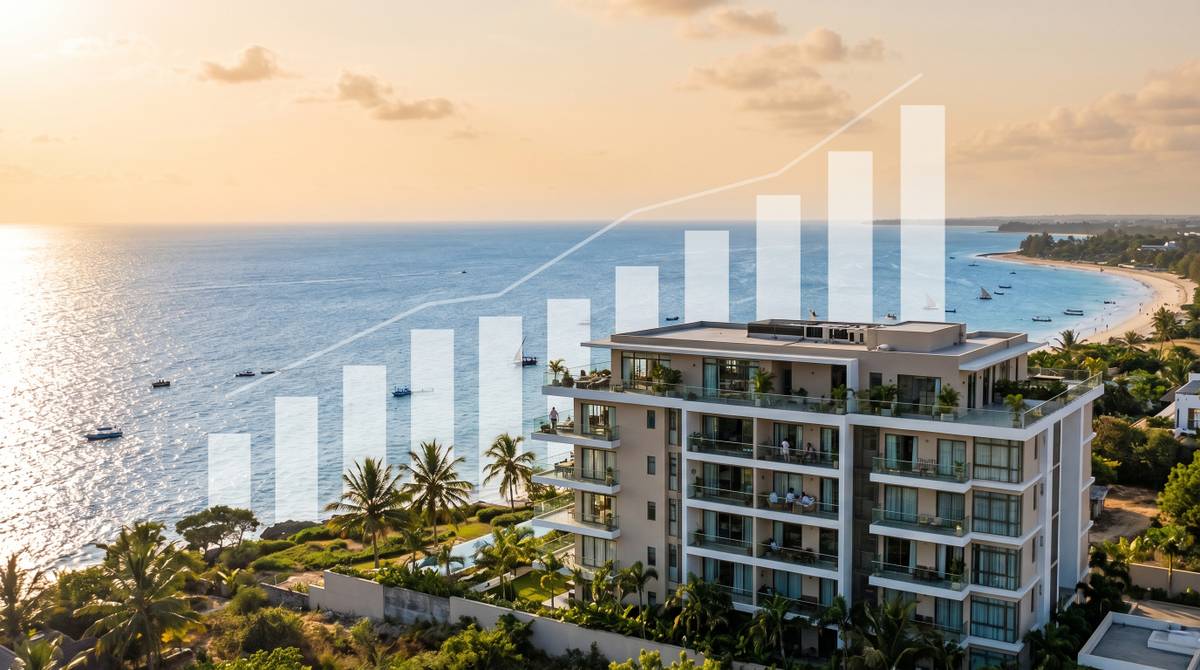
Mombasa Property Market Report 2026: Yields, Prices, Risks & Investment Outlook
Mombasa residential yields avg 6.2%, price appreciation 7.2%. Lower-mid segment outperforms at 89% occupancy. High-end oversupplied. Full data report.
Key Findings
Mombasa's real estate sector recorded average rental yields of 6.2% and price appreciation of 7.2% across all segments in the most recent reporting period. The lower-mid-end residential segment (Tudor, Bamburi, select Nyali areas) delivered the strongest performance with total returns of 6.7% and occupancy rates of 89%. The high-end segment (premium Nyali, Kizingo) recorded the lowest returns at 4.1%, weighed down by occupancy of just 62% — a clear signal of oversupply at the top end of the market.
Land prices in Mombasa's prime areas have grown at a 2-year compound annual rate of 12.6%, with Kizingo at KSh 244.6M per acre and Nyali at KSh 134M per acre. Knight Frank's latest coastal market update indicates that coastal properties offer rental yields as high as 8% annually, particularly in the mid-range segment targeting both local professionals and tourism-driven short-term rentals.
Macroeconomic Context
Mombasa's economy is anchored by three pillars: the Port of Mombasa (East Africa's busiest, serving Kenya, Uganda, Rwanda, DRC, and beyond), tourism (beach hotels, Fort Jesus UNESCO site, marine parks), and the service sector. The port handles millions of tonnes of cargo annually and is undergoing expansion at Kilindini Harbour — investment that directly supports employment and property demand in surrounding areas.
The county faces structural challenges. Population density is 5,532 persons per km² (versus the national average of 83), making it the most densely populated county in Kenya. Water supply is chronically insufficient. The last comprehensive spatial plan was drawn in 1971. These factors constrain development quality and limit where new residential investment can be directed safely.
Kenya's broader macroeconomic environment — CBR, shilling stability, and the government's affordable housing programme — affects Mombasa's market alongside national trends. The shilling stabilised through late 2024 and into 2025, restoring some investor confidence. Property prices nationally rose 7.8% in the year to June 2025. Diaspora remittances exceeded $5 billion in 2025, with a meaningful portion directed at coastal property purchases.
Residential Market by Segment
Lower-mid-end (Tudor, Bamburi, select New Nyali)
Metric | Value |
|---|---|
Average total return | 6.7% |
Average occupancy | 89.2% |
Best-performing unit type | 2-bedroom (7.4% return) |
Typical rent (2-bed) | KSh 20,000–35,000/month |
Typical sale price (2-bed) | KSh 3.5M–7M |
Demand driver | Working population, young families, Airbnb conversion |
This is the strongest-performing segment in Mombasa. High occupancy reflects genuine demand from the city's working population — port employees, civil servants, teachers, healthcare workers. Two-bedroom units outperform because they attract both long-term tenants (young families) and short-term rental conversion (Airbnb operators). Investors entering the Mombasa market should start here.
Upper-mid-end (Nyali, Kizingo, Shanzu)
Metric | Value |
|---|---|
Average total return | 7.9% |
Average occupancy | 82.6% |
Best-performing unit type | 3-bedroom (23.8% annual uptake) |
Typical rent (3-bed) | KSh 48,000–120,000/month |
Typical sale price (3-bed) | KSh 9.5M–17M |
Demand driver | Middle-class professionals, investors, some expats |
The upper-mid-end recorded the highest total returns (7.9%), driven by relatively strong capital appreciation (2.3%) alongside solid rental yields. Three-bedroom apartments showed the highest annual uptake (23.8%), indicating investor demand. This segment benefits from Mombasa's growing middle class and the trend of converting larger units to furnished short-stay accommodation.
High-end (Premium Nyali, Old Nyali, beachfront Shanzu)
Metric | Value |
|---|---|
Average total return | 4.1% |
Average occupancy | 62.2% |
Rental yield | 2.7% |
Typical rent (4-5 bed villa) | KSh 150,000–350,000/month |
Typical sale price (5-bed villa) | KSh 45M–265M |
Demand driver | High-net-worth individuals, diplomats, holiday homes |
The high-end segment significantly underperforms. Occupancy of 62% means nearly 4 in 10 premium properties sit empty — a clear oversupply signal. Rental yields of just 2.7% are below inflation, meaning real returns are negative on a rental-income basis. Capital appreciation provides some offset, but investors in this segment should have a long time horizon and not depend on rental income. Beachfront villas at KSh 45M–265M are lifestyle purchases, not yield-optimised investments.
Land Market
Area | Price per Acre (KSh) | 2-Year CAGR | Notes |
|---|---|---|---|
Kizingo | 244.6M | ~12.6% | Highest in Mombasa; prime island location, limited supply |
Nyali | 134.0M | ~12.6% | Development density driving prices up |
Shanzu | 80M–120M (est.) | Moderate | Beach proximity; resort zone premium |
Likoni / Port Reitz | High demand | Variable | Port-adjacent; infrastructure-dependent |
Bamburi / Kisauni | Lower than Nyali | Growing | More affordable; development expanding |
Kikambala (Kilifi border) | ~8M/acre (freehold) | Growing | Affordable entry; northern coastal expansion |
Land supply in Mombasa is structurally constrained — the county covers just 230 km² (Kenya's smallest). Densification is the primary growth mechanism in areas like Nyali, Kizingo, and Tudor, where developers are building vertically on expensive but accessible plots. Outer areas like Kikambala (technically in Kilifi County) offer more affordable land but with infrastructure trade-offs.
Short-Term Rental / Airbnb Market
Mombasa's tourism economy creates a short-term rental opportunity that does not exist at scale in Nairobi. Key metrics:
Metric | Value |
|---|---|
Peak season (Dec–Mar, Jul–Aug) | KSh 5,500–15,000/night for furnished 2-3 bed |
Low season (Apr–Jun) | 50–70% lower rates; higher vacancy |
Estimated blended annual yield (furnished) | 7–10% gross (assuming 60–70% occupancy) |
Key areas for Airbnb | Nyali (beach proximity), Shanzu, Bamburi (budget tourists) |
Management cost | 20–30% of gross income (professional manager) |
The Airbnb market is attractive but requires realistic modelling. Investors who project based on peak-season rates alone will be disappointed. Low season can see occupancy drop to 30–40% in some buildings. The blended annual yield — averaging peak and low seasons — is the relevant metric. Professional property management is essential for remote investors; managing guest turnovers, cleaning, and platform listings from Nairobi or abroad is not practical without local support.
Infrastructure and Development
Project | Status | Impact on Property |
|---|---|---|
Mombasa Gate Bridge | Planned — no confirmed completion date | Would transform Likoni/south coast access; currently ferry-dependent |
Mombasa West Roads Network | Ongoing | Opening up Changamwe, Miritini for development |
Port expansion (Kilindini) | Ongoing | Increased employment; some displacement of adjacent communities |
Bagamoyo-Malindi Road | Planned | Would improve north coast connectivity |
SGR (Mombasa–Nairobi) | Operational | Enables dual-city living/investing; 4.5-hour link |
The Mombasa Gate Bridge is the single most impactful infrastructure project for the property market. If completed, it would eliminate the Likoni Ferry bottleneck and open the south coast (Diani, Kwale) to direct road access from Mombasa Island — potentially transforming property values on both sides. However, the project has no confirmed completion timeline, and investors should not price in its effects until construction is visibly underway.
Risk Assessment
Risk | Severity | Notes |
|---|---|---|
High-end oversupply | High | 62% occupancy in premium segment; new off-plan projects launching into weak demand |
Tourism seasonality | Medium | Airbnb income swings 50–70% between peak and low season |
Water supply | High | Chronic county-level challenge; adds KSh 36K–96K/year to operating costs |
Humidity/maintenance | Medium | Salt air corrosion adds 15–20% to annual maintenance vs Nairobi |
Transport bottlenecks | Medium | Nyali Bridge, Likoni Ferry, Makupa Causeway congestion |
Election cycle (2027) | Medium | Kenyan markets slow 12–18 months before elections |
Title/land disputes | Medium | Squatter settlements and unclear tenure in parts of Kisauni, Likoni |
Investment Guidance by Buyer Type
Buyer Type | Recommended Segment | Budget (KSh) | Expected Yield |
|---|---|---|---|
First-time investor | Lower-mid-end 2-bed apartment (Tudor, Bamburi, New Nyali) | 3.5M–7M | 6–7.5% gross |
Airbnb/tourism investor | Furnished 2-3 bed in Nyali (beach proximity) | 7.9M–14.5M | 7–10% blended (requires management) |
Diaspora (holiday + rental) | 2-bed furnished Nyali or Shanzu | 7.9M–14.5M | Use personally + Airbnb when absent |
High-net-worth / lifestyle | Premium villa in Old Nyali or Shanzu | 45M+ | 2–4% (lifestyle asset, not yield play) |
Land investor | Kikambala / outer Bamburi | 8M+/acre | Long-term appreciation; minimal yield |
Frequently Asked Questions
What are the average rental yields in Mombasa in 2026?
Mombasa's residential sector averages 5.3% gross rental yield, with the lower-mid-end segment (Tudor, Bamburi) performing at 6.7% total returns and the upper-mid-end (Nyali, Kizingo) at 7.9%. The high-end segment yields just 2.7% due to oversupply. Furnished short-term rentals can achieve 7–10% blended annual yields with professional management.
Is Nyali still a good investment in 2026?
Yes — particularly in the lower-mid and upper-mid segments. Three-bedroom apartments in Nyali showed 23.8% annual uptake, indicating strong demand. The key is avoiding the premium end (KSh 15M+) where occupancy is just 62%. Off-plan developments from KSh 5.8M–10M targeting both long-term tenants and Airbnb guests represent the strongest value proposition.
How does Mombasa compare to Nairobi for investment?
Nairobi's residential market averages 5.4% rental yield with more stable demand (not tourism-dependent). Mombasa offers higher potential yields through Airbnb/tourism income but with seasonal volatility. Nairobi is better for consistent rental income; Mombasa is better for blended income (personal use + rental) and lifestyle-oriented investment. Entry prices in Mombasa are generally 20–40% lower than equivalent Nairobi areas.
What is the biggest risk for Mombasa property investors?
For the high-end segment: oversupply (62% occupancy). For Airbnb investors: tourism seasonality (income drops 50–70% in low season). For all segments: water supply costs and humidity-driven maintenance. Model conservatively, budget for water (KSh 36K–96K/year) and maintenance (15–20% above Nairobi), and hire professional management if investing remotely.
Will the Mombasa Gate Bridge affect property prices?
If completed, the Gate Bridge would transform south-coast access and potentially boost property values in Likoni and the Diani corridor significantly. However, the project has no confirmed completion date. Do not price in its effects until construction is visibly underway. Current investment decisions should be based on existing infrastructure, not planned projects with uncertain timelines.
Where should a diaspora investor start in Mombasa?
A 2-bed furnished apartment in Nyali at KSh 7.9M–14.5M (approximately $60K–$112K) is the strongest entry point — it can serve as a personal holiday home during visits and generate Airbnb income during absences. Use verified agents on Afriqahome, verify titles on Ardhisasa, and hire professional property management. See our Living in Mombasa guide for neighbourhood details.
Data Sources and Methodology
This report draws on data from Cytonn Investments (residential market performance, occupancy rates, yield calculations), Knight Frank (coastal market update, land price data), BuyRentKenya (listing prices), Kenya Property Centre (listing prices), Jiji (rental listings), the Kenya National Bureau of Statistics (2023/2024 Real Estate Survey Report), and the Central Bank of Kenya (diaspora remittances, macroeconomic data). Price ranges represent asking/listing prices from multiple platforms and may differ from transacted prices. Rental yields are gross unless otherwise stated.
Related guides: Living in Mombasa · Kenya Real Estate Market Report 2026 · Best Areas to Live in Nairobi · Stamp Duty & Closing Costs · Due Diligence Checklist · Diaspora Investment Hub.
Other Guides
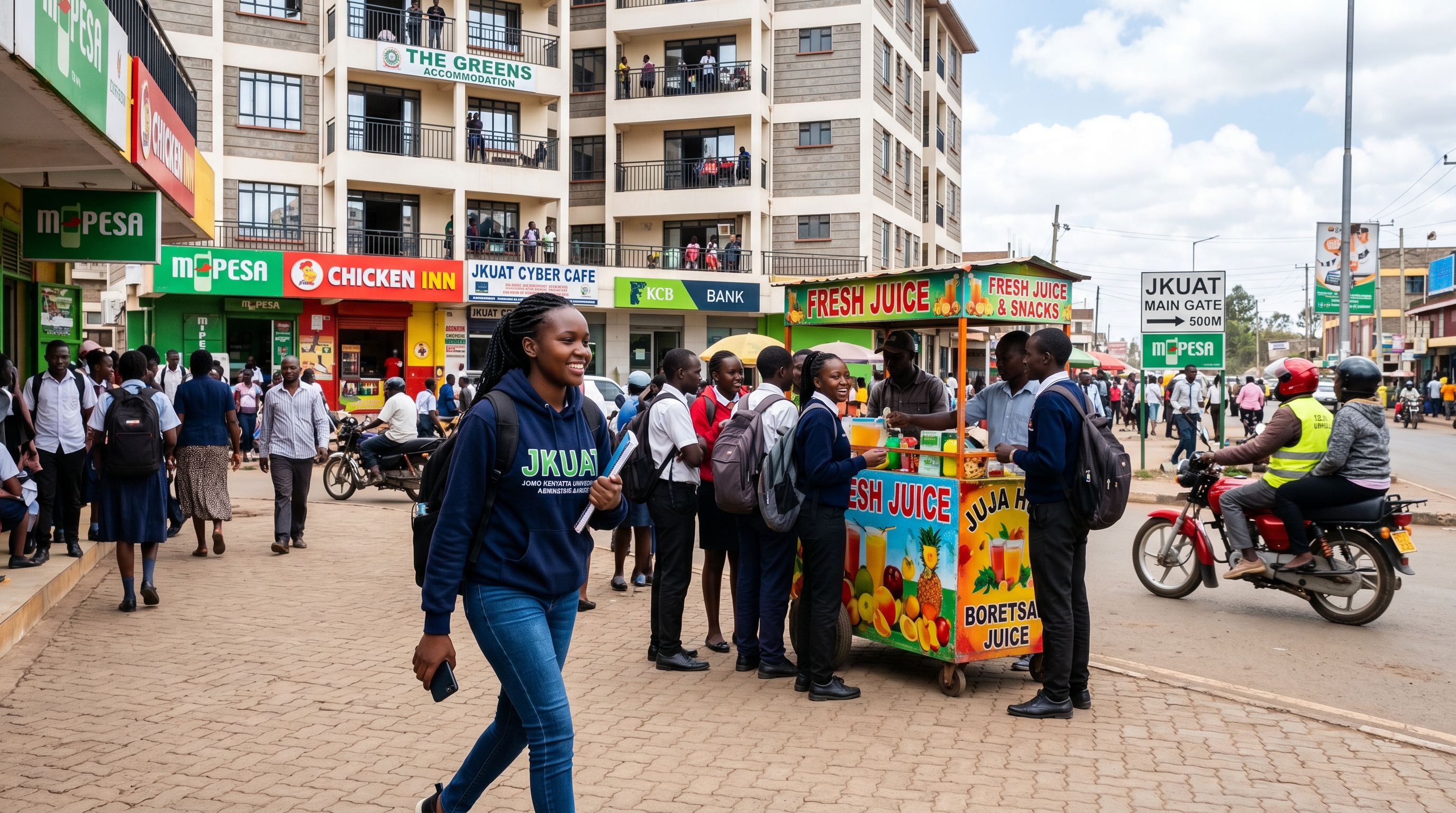
Living in Juja, Kiambu: The University Town That Became a Satellite City — Prices, Estates & Honest Guide (2026)
Juja houses from KSh 1.2M, rent from KSh 2.5K. JKUAT area, Kenyatta Road estates, Kalimoni, Witeithie. Student yields 9-15%.
Westlands Property Guide: Prices, Lifestyle & Investment (2026)
Complete guide to Westlands real estate. Apartments from KES 8M, rental yields 6-8%, plus lifestyle amenities. Browse verified Westlands listings today.
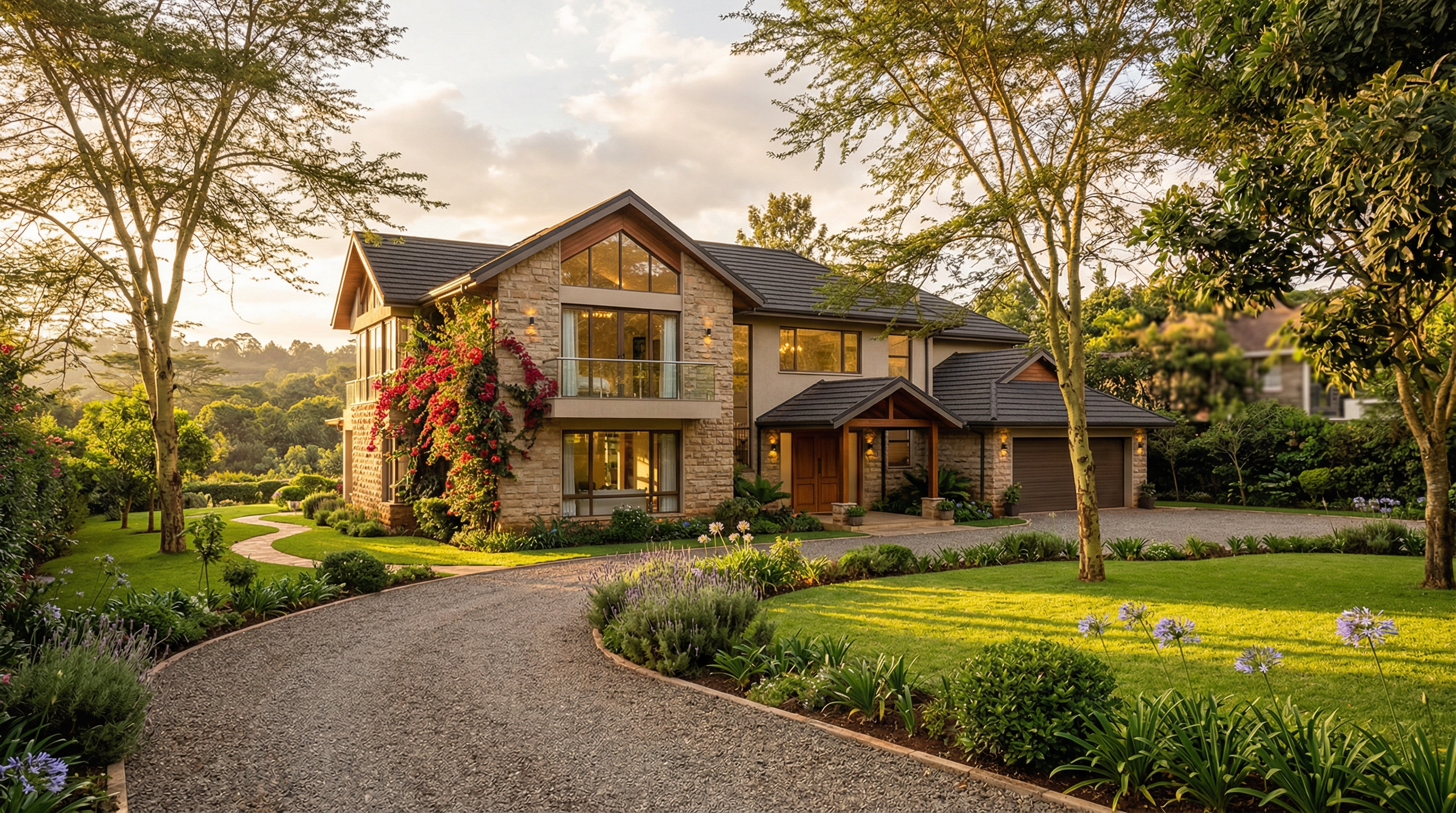
Houses for Sale in Karen: Price Guide 2026
Karen house prices from KES 35M–250M+. 4-bedroom, 5-bedroom, villas. Karen Hardy, Ndege Road, budget breakdown. Updated March 2026.