
Kenya Real Estate 2026: Prices, Yields & Market Trends
Prices up 7.8%, Nairobi suburbs correcting 7-11%, satellite towns surging 15%. Rental yields hit 7.4%. Full 2026 data for buyers and investors.
Kenya Real Estate Market Report 2026
Published March 2026 by Afriqahome. Data from HassConsult Q4 2025, Cytonn FY2024/25, Knight Frank H1 2025, BuyRentKenya H2 2025 Property Index, and verified listing data. This report covers residential property across Kenya's key markets.
Kenya's residential property market in 2025 told two stories at once. Nationally, property prices rose 7.8% year-on-year to June 2025 - the highest capital appreciation among nine global markets analysed by HassConsult. Since 2000, Kenyan residential prices have climbed 425%, outpacing the USA (201%), France (151%), and Singapore (122%).
But zoom in, and the picture fractures. Nairobi's premium apartment suburbs - Westlands, Kileleshwa, Parklands - saw prices fall 7-11.5% as oversupply from years of construction hit the market. Meanwhile, satellite towns like Juja, Syokimau, and Ruiru delivered 13-15% annual land appreciation. Mombasa's coastal market quietly recorded 7-9% rental yields on the strength of tourism and diaspora demand.
This report breaks down what actually happened, where the data points, and what it means for buyers and investors entering 2026.
The Macro Picture: Kenya's Economy and Property
Understanding Kenya's property market requires understanding the forces pushing it. Three macro factors shaped 2025 - and will shape 2026.
Interest Rates Are Falling
The Central Bank of Kenya's Monetary Policy Committee cut the Central Bank Rate (CBR) six times in 2025, bringing it from 11.25% to 9.0% by December - a total reduction of 225 basis points. For the property market, lower rates mean cheaper mortgage financing and improved developer access to capital. The interbank rate dropped from 13.0% to 9.9% over the year, reflecting improved liquidity. The MPC is expected to take a more cautious approach in 2026, but the direction favours buyers - borrowing is getting cheaper.
The Shilling Has Stabilised
After years of depreciation that accelerated during the pandemic, the Kenyan shilling stabilised in 2024-2025. Kenya refinanced urgent Eurobond debt with World Bank support and converted $3.5 billion in Chinese loans to yuan, saving approximately $215 million per year in interest. Forex reserves recovered. For diaspora investors, a stable shilling reduces the currency risk that has historically eroded returns on Kenyan property investments priced in KES.
Housing Deficit Remains Structural
Kenya's housing deficit exceeds 2 million units and continues to grow. Urbanisation runs above 4% annually - among the highest rates globally. Only 4% of Kenyans can afford a mortgage above KES 10 million, and 73% of urban dwellers currently rent. The government's Affordable Housing Programme aims to address the shortfall, but the gap between supply and demand remains the fundamental driver of property values across all segments.
Nairobi Residential Market: Neighbourhood by Neighbourhood
Nairobi remains the centre of Kenya's property market. But 2025 demonstrated that "Nairobi" is not a single market - it is a collection of micro-markets with diverging trajectories.
The Oversupply Correction: Westlands, Kileleshwa, Parklands
Westlands apartment prices fell 11.5% year-on-year - the largest decline in Nairobi. Kileleshwa dropped 10.3%. Langata, Upper Hill, and Parklands fell 7.3-7.8%. The cause was clear: successive waves of apartment construction, triggered by the Westlands rental boom in 2013 (when average rents jumped from KES 91,000 to over KES 115,000 in a single year), had been building for a decade and finally hit absorption limits.
But the Q4 2025 data showed stabilisation. Westlands' quarterly decline narrowed to just 0.5%. Kileleshwa posted a 1.3% Q4 recovery. Rents in Westlands stabilised at around KES 134,000/month from May onwards. The correction appears to be ending, but recovery will be selective - quality stock with amenities and location premium will recover first.
Nairobi Suburb | Annual Price Change (2025) | Q4 Trend | Signal |
|---|---|---|---|
Westlands | -11.5% | -0.5% (stabilising) | Correction ending. Entry window. |
Kileleshwa | -10.3% | +1.3% (recovering) | Value opportunity in quality stock. |
Langata | -7.8% | Stabilising | Mixed - houses outperforming apartments. |
Upper Hill | -7.5% | Stabilising | Commercial shift. Limited residential appeal. |
Parklands | -7.3% | Stabilising | Oversupply in apartment segment. |
Source: HassConsult Property Index Q4 2025
The Resilient Performers: Kilimani, Karen, Lavington
Not all Nairobi suburbs suffered. Kilimani house sales grew 9.3% annually, driven by strong demand for its walkable urban lifestyle. Karen and Runda - low-density, house-dominated suburbs - saw detached house prices rise, with Runda posting 15.3% appreciation. Lavington recorded strong rental growth in the premium segment.
The pattern is clear: suburbs with genuine residential character, limited apartment oversupply, and strong lifestyle appeal held or gained value.
Nairobi Suburb | Key Metric | Source |
|---|---|---|
Kilimani | +9.3% house sales; 7-9% rental yield | HassConsult Q2 2025 |
Karen | +5-8% house prices; 4.5-6% yield | Knight Frank H1 2025 |
Runda | +15.3% detached house appreciation | HassConsult Q3 2025 |
Lavington | Strong rental growth, premium segment | HassConsult Q4 2025 |
Rental Yields: Nairobi's Quiet Strength
While apartment prices corrected in several suburbs, Nairobi's rental market strengthened. HassConsult's Q4 2025 data recorded overall rental yields at 7.4% - the highest since 2007. Apartments now dominate 71.1% of the Nairobi sales market (up from 23.5% in 2001) and 66.1% of the rental market (up from 45.3% in 2001).
Neighbourhood | Avg Rental Yield | Notes |
|---|---|---|
Westlands | 6.5-8.5% | Highest premium-segment yields. Serviced apartments = 40.3% of Nairobi total. |
Kilimani | 7-9% | Best balanced yields. Strong demand across all unit sizes. |
Kileleshwa | 5-7% | Upper-middle segment 7.1% total returns (best in Nairobi per Cytonn). |
Karen | 4.5-6% | Lower yields but strong capital appreciation. House-dominated. |
Lavington | 5-7% | Stable. Premium residential character supports consistent demand. |
Sources: Sarabi Realty 2025, Cytonn FY2024/25, HassConsult Q4 2025
Satellite Towns: The Quiet Outperformers
The most striking data in Kenya's 2025 property market was not in Nairobi's premium suburbs. It was in the satellite towns ringing the capital.
HassConsult's Land Price Index shows satellite town land values growing at double-digit rates across almost every market. Juja led with 15.5% annual appreciation. Syokimau posted 14.4%. Ruiru grew 13.1%. All ten surveyed satellite towns reported gains in property sales prices.
The drivers are structural, not speculative. Affordability is the primary force: a 2-bedroom apartment that costs KES 12-14 million in Westlands or Kilimani can be matched with a 3-4 bedroom townhouse in Kitengela or Ruiru at KES 4-7 million. BuyRentKenya's H2 2025 Property Index confirmed that infrastructure-rich satellite towns appreciated 4-6% in house values during H2 2025 alone.
Satellite Town | Annual Land Price Growth | Land Price (per acre) | Key Driver |
|---|---|---|---|
Juja | +15.5% | KES 25.1M | JKUAT university, Eastern Bypass, affordability |
Syokimau | +14.4% | KES 34.9M | SGR terminus, JKIA proximity, Express Rd |
Ruiru | +13.1% | KES 32.9M | Eastern Bypass, industrial expansion, Thika corridor |
Kitengela | +13.3% | KES 17.2M | Namanga Road, gated community growth |
Ruaka | +14.3% | KES 111M | Northern Bypass, proximity to Westlands/Gigiri |
Ngong | +14.2% | - | Ngong Road expansion, lifestyle appeal |
Ongata Rongai | +14.0% | KES 26.7M | Magadi Road, affordable housing demand |
Athi River | +12.0% (house prices) | - | Mombasa Road corridor, industrial/residential mix |
Source: HassConsult Q2 2025 Land Price Index, BuyRentKenya H2 2025
What this means for investors: Satellite towns are outperforming Nairobi's premium suburbs on both appreciation and yield. Properties in the KES 3-6 million range in Syokimau, Ruiru, Kitengela, and Juja are generating 7-10% rental yields with strong occupancy. The tenant base - young professionals, airport workers, university staff, growing families - has steady employment and genuine housing needs.
Risks to monitor: Developer quality varies enormously. Resale liquidity is lower than in Nairobi's prime suburbs. Rush-hour traffic between satellite towns and the CBD remains a friction point despite road improvements.
Mombasa and the Coastal Market
Mombasa operates on different fundamentals from Nairobi - tourism, the port economy, and lifestyle-driven demand rather than corporate tenant flows.
Knight Frank's latest analysis placed coastal rental yields at up to 8% annually. RE/MAX Kenya's Nyali market assessment recorded annual capital appreciation of 8-12% with gross rental yields of 6-9% in Mombasa's premier residential suburb.
Nyali: The Coastal Premium
Nyali remains Mombasa's most desirable residential area. It combines beach access with modern retail infrastructure (City Mall, Nyali Centre), international schools, and healthcare facilities.
Property Type | Rent (KES/month) | Sale Price (KES) |
|---|---|---|
Studio (Nyali) | 22,000-50,000 | - |
1-Bedroom (Nyali) | 32,500-70,000 | 5M-10M |
2-Bedroom (Nyali) | 42,000-100,000 | 5M-15M |
3-Bedroom (Nyali) | 48,000-180,000 | 14M-40M |
Townhouse/Villa | - | 30M-60M (gated) |
Land (beach-adjacent, 0.1 acre) | - | From 20M |
Sources: Kenya Property Centre, Property24, BuyRentKenya, RE/MAX Kenya Feb 2026
Other Coastal Markets
Bamburi: North of Nyali; more affordable; strong Airbnb market. The most popular area for short-term rental bookings in Mombasa. Entry prices for 2-bedroom apartments from KES 5 million.
Shanzu: Between Nyali and Bamburi; scenic coastal plots with resort and holiday home potential. Land from KES 3.5-8 million per 1/8 acre depending on beach proximity.
Mombasa Island (Old Town / Tudor / Kizingo): Commercial heart. Office spaces, warehouses, and refurbishment opportunities. Commercial land from KES 30 million and up in CBD areas.
Diani Beach (Kwale County): Kenya's premier beach tourism destination. Vacation rentals deliver up to 10% yields. Popular with diaspora investors for holiday home-cum-rental strategies.
Key infrastructure: Mombasa port expansion drives commercial demand. The planned Nairobi-Mombasa Expressway (482km) will reduce intercity travel time and boost corridor property values. The Dongo Kundu Bypass has improved south coast accessibility. The SGR connects Mombasa to Nairobi in under 5 hours.
The Off-Plan Market
Off-plan purchases remain the primary entry point for many Kenyan investors. HassConsult's analysis of eight prime off-plan developments reported an average ROI in 2025 of 18.06%. The discounts and instalment payment plans create gains that exceed most other investment vehicles accessible to Kenyan buyers.
The risk is real: developer delays, quality shortfalls, and outright fraud remain concerns. In 2026, verify the developer's track record, confirm title deed status through Ardhisasa, and engage a lawyer before signing.
The Serviced Apartment Boom
Nairobi's serviced apartment market continues to expand. Westlands alone accounts for 40.3% of the total Nairobi serviced apartment market. Furnished apartments in premium suburbs can generate 20-40% higher rental income than unfurnished long-term lets. Nairobi's overall Airbnb occupancy averages 46%, with daily rates around $46.
For diaspora investors considering this model, the critical question is not yield - it is management. Either invest in a market you can actively oversee, or budget for a property manager who will take 15-25% of gross revenue.
What This Means for Buyers in 2026
For Kenyan Buyers (Nairobi-Based)
The 2025 correction in Westlands, Kileleshwa, and Parklands has created entry opportunities that did not exist 18 months ago. Quality apartments are priced 10-15% below their 2023 peaks while rental demand has stabilised. Focus on quality differentiation: views, amenities, building management, and proximity to commercial nodes.
For First-Time Buyers
With the CBR at 9.0% and potentially falling further, mortgage affordability is improving. The KES 3-7 million range - targeting satellite town townhouses in Syokimau, Ruiru, and Kitengela - offers the best value entry point. See our First-Time Buyer Guide.
For Diaspora Investors
The combination of a stabilised shilling, the 2025 price correction, and 7.4% national rental yields creates favourable entry conditions. But success hinges on three factors: verification (use Ardhisasa and a verified agent), realistic management plans, and market selection matching your involvement level. Hands-off: Lavington, Kileleshwa, Karen. Active: Westlands serviced apartments. Read our Diaspora Investment Guide.
For Land Investors
Satellite town land remains the highest-appreciation asset class in Kenyan real estate at 10-15% annual gains. Buy in infrastructure growth corridors 2-3 years before mainstream recognition. Verify title through Ardhisasa. Accept lower liquidity and longer holding periods.
Key Risks for 2026
Risk | Severity | What to Watch |
|---|---|---|
Apartment oversupply (Nairobi premium) | HIGH | Pipeline projects in Westlands, Kileleshwa. More supply entering corrected markets. |
Debt and fiscal pressure | MEDIUM-HIGH | IMF programme negotiations. Potential tax increases on property transactions. |
Currency risk (diaspora) | MEDIUM | Shilling stabilised but chronic current account deficit persists. |
Developer fraud / quality | HIGH | Off-plan market lacks strong consumer protection. Always verify track record. |
Satellite town infrastructure gaps | MEDIUM | Some estates develop faster than water, sewer, and road infrastructure. |
Interest rate reversal | LOW-MEDIUM | If inflation returns, MPC could reverse course. Currently unlikely. |
Data Summary: Kenya Real Estate at a Glance
Metric | Figure | Source |
|---|---|---|
National property price growth (YoY to June 2025) | +7.8% | HassConsult |
Property price growth since 2000 | +425% | HassConsult |
Nairobi average rental yield | 7.4% (highest since 2007) | HassConsult Q4 2025 |
Apartments as % of Nairobi sales market | 71.1% (from 23.5% in 2001) | HassConsult |
Central Bank Rate (Dec 2025) | 9.0% (from 11.25%) | CBK MPC |
Total CBR cuts in 2025 | -225 bps (6 cuts) | CBK |
Housing deficit | 2 million+ units | Government estimates |
Urban renters | 73% of urban dwellers | BuyRentKenya H2 2025 |
Off-plan average ROI (8 prime projects) | 18.06% | HassConsult 2025 |
Top satellite town appreciation (Juja) | +15.5% annual | HassConsult Q2 2025 |
Westlands serviced apartment share | 40.3% of Nairobi | Cytonn 2025 |
Coastal rental yields (Nyali) | 6-9% gross; 8-12% appreciation | RE/MAX, Knight Frank |
Knight Frank sector growth | +5.6% | Knight Frank H1 2025 |
Infrastructure investment | KES 217 billion+ | Knight Frank H1 2025 |
Prime office occupancy | 77.7% | Knight Frank H1 2025 |
Frequently Asked Questions
Is 2026 a good time to buy property in Kenya?
For many segments, yes. The combination of falling interest rates (CBR at 9.0%), a stabilised shilling, and price corrections of 7-11% in Nairobi's premium suburbs creates favourable entry conditions. The key is selecting the right market segment: satellite towns for appreciation, corrected Nairobi suburbs for value entry, coastal markets for tourism yields.
What rental yields can I expect on Kenyan property?
Nairobi's average stands at 7.4% - the highest since 2007. Specific neighbourhoods range from 4.5% (Karen houses) to 8.5% (Westlands premium apartments). Satellite towns generate 7-10% on mid-range properties. Coastal markets (Nyali) deliver 6-9%. Furnished apartments can achieve 20-40% higher income but require active management.
Where are Kenya's best property investment locations in 2026?
Best value entry: Syokimau, Ruiru, Juja, Kitengela. Best yield: Westlands serviced apartments (active investors) or Kilimani long-term rentals. Best appreciation: satellite town land. Diaspora hands-off: Lavington or Kileleshwa. Coastal: Nyali for rentals, Diani for vacation homes.
What are the biggest risks in Kenya's property market?
Apartment oversupply in Nairobi premium suburbs, developer fraud in off-plan, infrastructure gaps in satellite towns, and currency risk for diaspora investors. Mitigate with title verification via Ardhisasa, verified agents, and selecting quality stock.
How do I verify a property purchase in Kenya?
Use Ardhisasa to verify title deed authenticity. Engage a lawyer. Work with EARB-registered agents. See our Ardhisasa Tutorial and Agent Verification Guide.
Can I buy property in Kenya from abroad?
Yes. Kenyan citizens have unrestricted property rights regardless of residence. Foreign nationals can purchase leasehold (up to 99 years). Requires Power of Attorney and title verification. See our Diaspora Investment Guide and UK Guide.
Methodology and Sources
This report synthesises data from Kenya's leading property research firms and verified listing platforms. All figures are as reported by original sources. Where sources conflict, both figures are noted. Rental yields are gross unless stated otherwise. Sale prices reflect asking prices which may differ from transaction prices.
HassConsult Property Index Q4 2025 - Nairobi suburb prices, rental yields, land prices
HassConsult Land Price Index Q2 2025 - Satellite town land valuations
HassConsult Special Report 2025 - Global comparison, off-plan returns
Cytonn Annual Markets Review 2025 - Sector GDP, CBR analysis, serviced apartments
Cytonn FY2024/25 Real Estate Report - Rental yields by segment
Knight Frank H1 2025 Kenya Market Report - Sector growth, office occupancy
BuyRentKenya H2 2025 Property Index - Listing prices, satellite town trends
RE/MAX Kenya Nyali Market Assessment - Coastal yields and appreciation
Central Bank of Kenya MPC Reports 2025 - Interest rate decisions
Explore Further
Kilimani | Kileleshwa | Lavington | Karen | Westlands
Other Guides

Living in Juja, Kiambu: The University Town That Became a Satellite City — Prices, Estates & Honest Guide (2026)
Juja houses from KSh 1.2M, rent from KSh 2.5K. JKUAT area, Kenyatta Road estates, Kalimoni, Witeithie. Student yields 9-15%.

Westlands Property Guide: Prices, Lifestyle & Investment (2026)
Complete guide to Westlands real estate. Apartments from KES 8M, rental yields 6-8%, plus lifestyle amenities. Browse verified Westlands listings today.
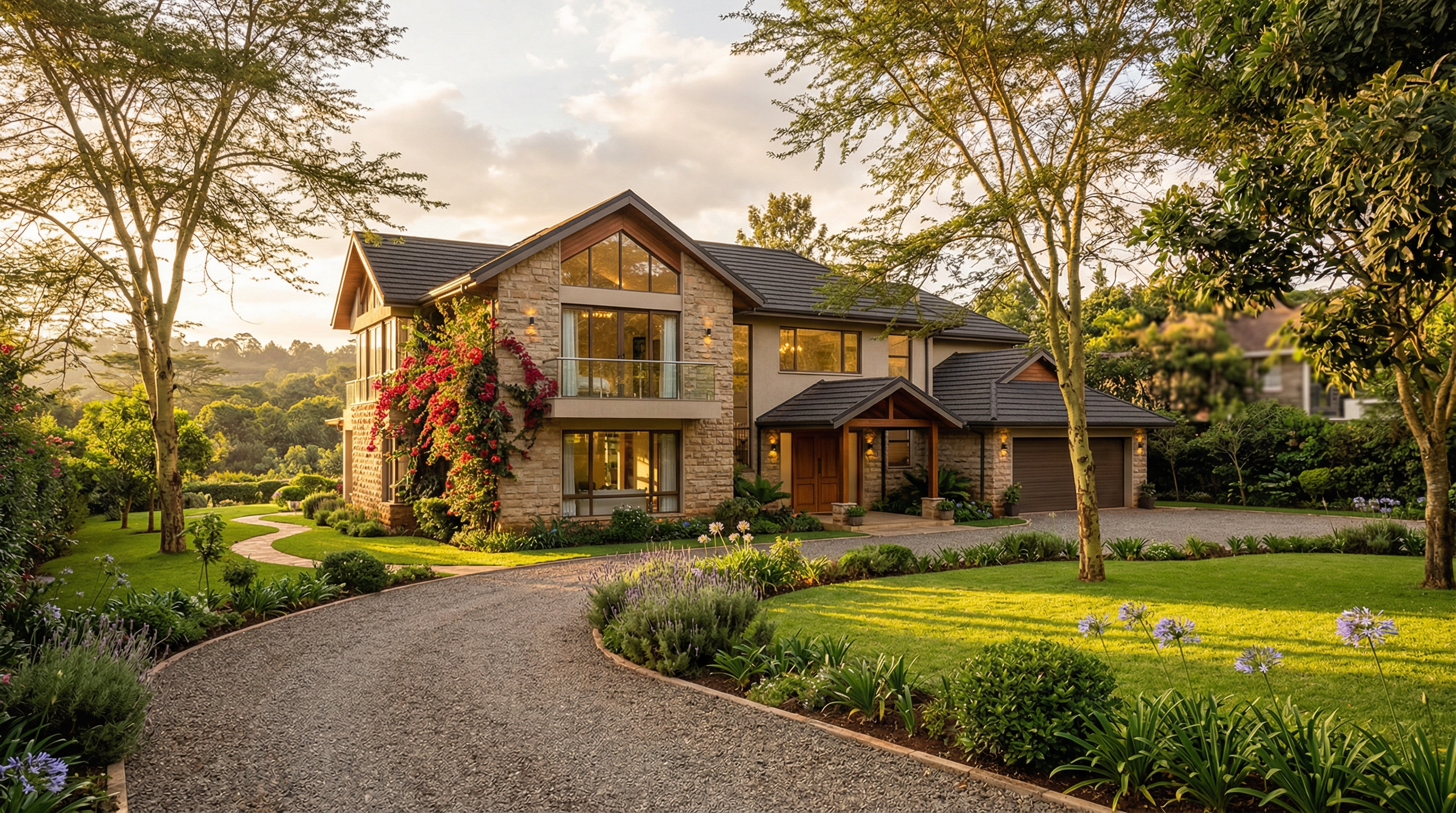
Houses for Sale in Karen: Price Guide 2026
Karen house prices from KES 35M–250M+. 4-bedroom, 5-bedroom, villas. Karen Hardy, Ndege Road, budget breakdown. Updated March 2026.