Ruaka vs Ruiru vs Juja: Where to Invest in 2026 — Prices, Returns & Honest Guide
Ruaka at KSh 112M/acre, Juja plots from KSh 500K. HassConsult shows 10–14% returns in Ruiru and Juja. Honest comparison of yields, risks, and entry points.
Introduction
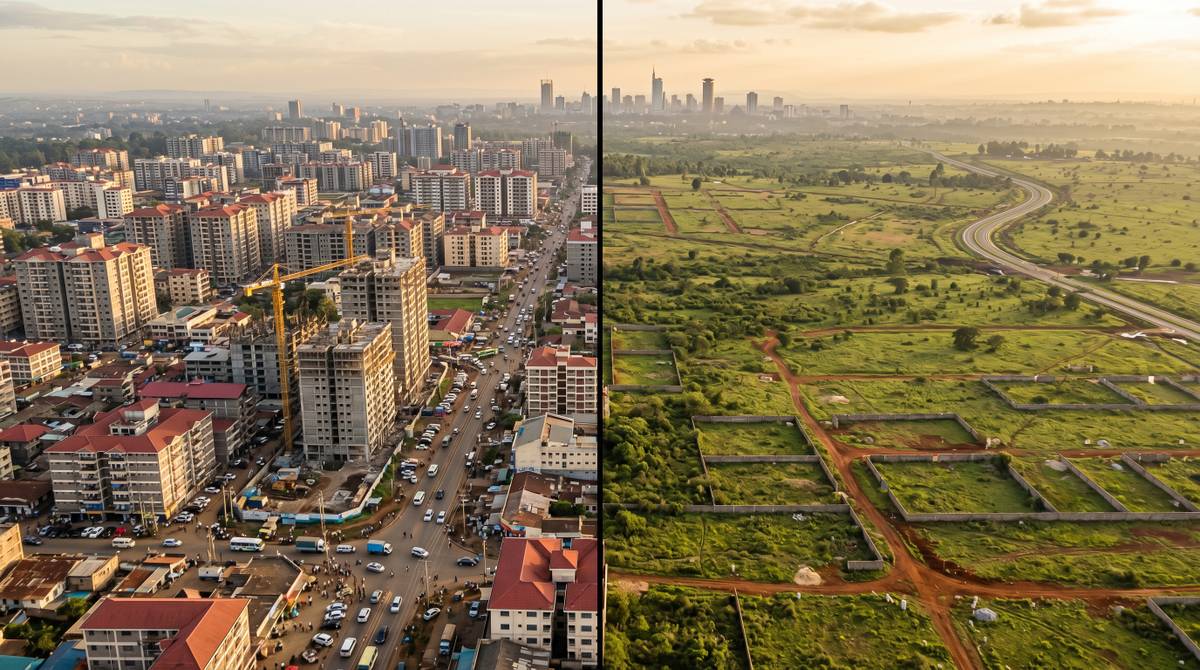
Ruaka, Ruiru, and Juja sit along Nairobi's northern expansion corridor — all within Kiambu County, all connected by the Thika Superhighway or Northern Bypass, and all delivering some of the strongest property returns in Kenya. According to HassConsult's latest data, Juja and Ruiru are recording double-digit annual returns of 10–14% on both land and houses, while Ruaka's land prices have crossed KSh 111 million per acre — surpassing established high-end areas like Runda and Karen.
But these three towns serve fundamentally different investment strategies. Ruaka is a dense, mature apartment market with some of the highest land values in Kenya's satellite towns. Ruiru is a sprawling corridor with options ranging from affordable Juja Farm plots at KSh 800K to Tatu City's premium smart-city vision. Juja, anchored by JKUAT university, offers the lowest entry prices of the three with strong rental demand from the student population.
This guide compares all three across property prices, infrastructure, rental demand, development activity, and risk — so you can decide where your money works hardest.
Quick Facts: Ruaka vs Ruiru vs Juja
Factor | Ruaka | Ruiru | Juja |
|---|---|---|---|
County | Kiambu | Kiambu | Kiambu |
Distance to Nairobi CBD | ~16 km (Northern Bypass) | ~25 km (Thika Superhighway) | ~35 km (Thika Superhighway) |
Key access road | Northern Bypass, Limuru Road | Thika Superhighway, Eastern Bypass | Thika Superhighway |
Land price per acre | KSh 89M–112M | KSh 8M–40M (varies by micro-area) | KSh 2M–26M |
50×100 plot | KSh 5M–15M (rare) | KSh 800K–5M | KSh 500K–3M |
2-bed apartment (sale) | KSh 4M–8M | KSh 3M–7M | KSh 2.5M–5M |
Property appreciation (2025) | ~6% (land slowing from peak) | 10–14% (land + houses) | 10–14% (land + houses) |
Primary demand driver | Apartments, UN/Gigiri proximity | Gated communities, families, Tatu City | Student housing, affordable plots |
Best for | Apartment investors, rental income | Families, mixed investors | Land banking, student rentals, budget buyers |
Property Prices Compared (April 2026)
Land Prices
Location | Per Acre (KSh) | 50×100 Plot (KSh) | Appreciation (annual) |
|---|---|---|---|
Ruaka (central) | 89M–112M | 5M–15M (very scarce) | ~6% (slowing from 12.5% peak in 2024) |
Ruiru CBD | 20M–30M | 2M–4M | 10–14% |
Ruiru – Kamakis (Eastern Bypass) | 8M–15M | 1.5M–3M | 8–12% |
Ruiru – Murera / Juja Farm | 2M–6M | 800K–2M | High (early-stage) |
Ruiru – Tatu City area | 15M–40M | Serviced plots from 15M+ | Premium pricing |
Juja town | 20M–26M | 1.5M–3M | 10–14% (275% since 2015) |
Juja Farm (outer) | 2M–6M | 500K–1.5M | High (early-stage) |
Key insight: Ruaka's land has essentially maxed out for budget investors — at KSh 112M per acre, it is now more expensive than Runda (KSh 101M) and Karen (KSh 76M). The growth story has shifted to Ruiru and Juja, where HassConsult data shows 10–14% annual returns and significantly lower entry points. Juja in particular has seen land values jump 275% since 2015.
Apartment and House Prices
Property Type | Ruaka | Ruiru | Juja |
|---|---|---|---|
Bedsitter | KSh 2M–3M | KSh 1.5M–2.5M | KSh 1M–2M |
1-bed apartment | KSh 3M–5M | KSh 2M–4M | KSh 1.5M–3M |
2-bed apartment | KSh 4M–8M | KSh 3M–7M | KSh 2.5M–5M |
3-bed maisonette/townhouse | KSh 8M–15M | KSh 8M–15M (gated estates) | KSh 5M–10M |
Rental Prices
Unit Type | Ruaka (KSh/month) | Ruiru (KSh/month) | Juja (KSh/month) |
|---|---|---|---|
Bedsitter | 10,000–18,000 | 6,000–12,000 | 4,000–7,000 |
1-bed apartment | 18,000–30,000 | 12,000–20,000 | 8,000–15,000 |
2-bed apartment | 25,000–45,000 | 18,000–35,000 | 12,000–25,000 |
3-bed house/townhouse | 40,000–70,000 | 30,000–55,000 | 20,000–40,000 |
Neighborhoods and Character
Ruaka
Ruaka has transformed from a small trading centre into one of Nairobi's densest apartment markets. The town sits at the junction of Limuru Road and the Northern Bypass, giving it direct access to both the CBD (~25 min off-peak) and the UN complex in Gigiri (~10 min). This proximity to Gigiri has made Ruaka a popular choice for UN staff, NGO workers, and expatriates — which drives higher rental prices than other satellite towns.
The housing stock is overwhelmingly apartments — 5, 8, 12-storey towers dominate the landscape. Gated maisonette communities exist but are increasingly rare as land values push developers toward high-density. Two Rivers Mall (one of East Africa's largest shopping centres) is minutes away, and Ruaka town itself has a growing commercial strip with banks, supermarkets, and restaurants.
The challenge: Ruaka's rapid growth has outpaced infrastructure. Traffic congestion at the Limuru Road/Bypass junction is severe during peak hours. Water supply is inconsistent in some buildings, and Kiambu County is now introducing stricter zoning regulations after years of relatively lax oversight allowed dense development without corresponding infrastructure.
Ruiru
Ruiru is not one place — it is a 20-km corridor stretching from the Thika Superhighway interchange through Kamakis on the Eastern Bypass to Tatu City and outward to Murera and Juja Farm. Each micro-area has a different character and price point.
Ruiru CBD (along Thika Superhighway) is dense and commercial, with land at KSh 20M–30M per acre. Kamakis, accessed via the Eastern Bypass, is the gated-community hub — ready-built 3-bed maisonettes sell from KSh 8M–15M in secure estates. Tatu City is Rendeavour's 5,000-acre integrated city with its own infrastructure, schools, and commercial zones — a premium product at premium prices (serviced plots from KSh 15M). Murera and Juja Farm on the outskirts offer the cheapest entry points (50×100 plots from KSh 800K) with high appreciation potential but limited current infrastructure.
The Northern Bypass connecting Ruiru to Ruaka has catalysed commercial development — Ciata City Mall and new apartment blocks are emerging rapidly along this route. The planned World Bank-funded commuter rail upgrade (USD 500M for the Nairobi–Thika corridor) could further boost the area.
Juja
Juja's identity is defined by Jomo Kenyatta University of Agriculture and Technology (JKUAT), Kenya's largest university campus. The student population creates constant demand for bedsitters and 1-bed apartments, making Juja one of Kenya's best markets for small-unit rental income. Bedsitters near JKUAT rent for KSh 4,000–7,000/month with near-zero vacancy during academic terms.
Beyond student housing, Juja town itself is growing commercially with banks, supermarkets, and business services. Land prices in central Juja have reached KSh 26M per acre — a 275% increase since 2015 according to HassConsult. The cheaper frontier is Juja Farm, further out from the highway, where 50×100 plots start from KSh 500K–1M with improving road access.
Juja's distance from Nairobi (35 km) is its main disadvantage — the commute via Thika Superhighway can take 45–90 minutes during rush hour. For owner-occupiers who work in Nairobi CBD, this is a significant consideration. For investors focused on the local rental market (students + JKUAT staff), the distance is irrelevant.
Water and infrastructure: Central Juja has piped water and electricity, but outer Juja Farm areas often depend on boreholes and may lack tarmac road access. Before buying in any Juja location, physically visit the site and confirm that water, electricity, and road access are actually present — not just "planned." Developer promises of "water coming soon" are common but not always reliable. Check our land buying guide for the full verification process.
The student rental model: Juja's proximity to JKUAT creates a specific investment opportunity — multi-unit rental blocks (4–6 bedsitters or 1-bed apartments on a single plot) designed for the student market. Construction costs for a basic 4-unit bedsitter block run approximately KSh 2M–3.5M. Combined with land costs of KSh 500K–1.5M, total investment of KSh 3M–5M can generate monthly income of KSh 20,000–35,000 during term time. The caveat: vacancy rates spike during university breaks (April, August, December), and rental prices are low — this is a volume play, not a premium play.
Infrastructure and Commute
Factor | Ruaka | Ruiru | Juja |
|---|---|---|---|
Distance to CBD | ~16 km | ~25 km | ~35 km |
CBD commute (off-peak) | 20–30 min | 25–40 min | 35–50 min |
CBD commute (rush hour) | 45–90 min | 50–90 min | 60–120 min |
Key roads | Northern Bypass, Limuru Road | Thika Superhighway, Eastern Bypass | Thika Superhighway |
Matatu fare to CBD | KSh 70–100 | KSh 80–120 | KSh 100–150 |
Rail access | None (planned) | Ruiru commuter rail station | None (planned extension) |
Upcoming infrastructure | Zoning regulations tightening | World Bank rail upgrade, Tatu City buildout | Thika corridor rail extension (future) |
Ruiru has the best transport mix — the Thika Superhighway provides fast off-peak access, the Eastern Bypass connects to Mombasa Road without going through the CBD, and the Ruiru commuter rail station offers a rail alternative. The World Bank's USD 500M commitment to upgrade the Nairobi–Thika commuter rail line will significantly improve Ruiru's rail connectivity.
Ruaka's traffic problem is real. The Limuru Road/Northern Bypass junction experiences severe congestion, and the town's narrow internal roads were not designed for the density of development that has occurred. If you work in Gigiri or Westlands, Ruaka's commute is manageable. If you commute to the CBD or Upper Hill, expect frustrating peak-hour delays.
Amenities
Category | Ruaka | Ruiru | Juja |
|---|---|---|---|
Shopping | Two Rivers Mall (5 min), Ruaka town centre, Rosslyn Riviera | Ciata City Mall, Ruiru town centre, Tatu City commercial | Juja town centre, small malls |
Supermarkets | Naivas, Quickmart, Carrefour (Two Rivers) | Naivas, Quickmart, local markets | Naivas, Quickmart, local dukas |
Schools | Rosslyn Academy, Braeburn, ISK nearby | Tatu City schools, multiple private schools | JKUAT, Juja Preparatory, private schools |
Healthcare | MP Shah (~15 min), Gigiri clinics | Ruiru Sub-County Hospital, private clinics | JKUAT Health Centre, private clinics |
Unique feature | Proximity to Gigiri/UN complex | Tatu City integrated living | JKUAT university ecosystem |
Ruaka wins on lifestyle amenities — Two Rivers Mall (one of East Africa's largest malls with ice rink, cinema, and over 100 shops) is minutes away, and the proximity to Gigiri brings international restaurants, cafes, and services. Ruiru's amenity base is catching up fast, particularly around Kamakis and the Northern Bypass commercial strip. Juja's amenities are more basic — functional for daily needs but not a lifestyle destination.
Security
Ruaka: Security within apartment complexes is generally good — most buildings have 24/7 guards, CCTV, and controlled access. The town centre can feel crowded and slightly less secure at night, particularly along poorly lit side roads. The boda boda hub near the stage requires standard precautions.
Ruiru: Security varies dramatically by micro-area. Gated estates in Kamakis and Tatu City offer excellent security with perimeter walls, electric fences, and community management. Outer areas like Murera and Juja Farm are less secure — isolated plots without nearby neighbours carry higher risk, and construction-site theft is a known issue for developers building in remote areas.
Juja: The area around JKUAT is generally safe during the day due to foot traffic and commercial activity. Student housing areas have reasonable security. Further out toward Juja Farm, the security profile is similar to outer Ruiru — gated developments are safe, isolated plots require more caution.
Pros and Cons
Ruaka
Pros | Cons |
|---|---|
Highest rental demand (Gigiri/UN proximity) | Land at KSh 112M/acre — no longer affordable |
Two Rivers Mall access, strong amenities | Severe traffic congestion |
Established apartment market with proven yields | Oversupply risk — too many apartment towers |
Northern Bypass connectivity | Infrastructure lagging behind density |
Expatriate and NGO tenant base | Stricter zoning regulations incoming |
Ruiru
Pros | Cons |
|---|---|
Wide price range (KSh 800K plots to premium estates) | Sprawling — quality varies dramatically by micro-area |
10–14% annual appreciation (HassConsult) | Outer areas (Murera) still lack basic infrastructure |
Tatu City as a premium anchor project | Thika Superhighway traffic at peak hours |
Commuter rail station + World Bank upgrade | Water supply unreliable in some developments |
Eastern Bypass connecting to Mombasa Road | Title fraud risk in cheaper outer areas |
Juja
Pros | Cons |
|---|---|
Lowest entry prices of the three (plots from KSh 500K) | Furthest from Nairobi CBD (35 km) |
275% land appreciation since 2015 | Peak-hour commute can exceed 90 minutes |
JKUAT drives constant rental demand | Rental market dominated by low-rent student units |
Young, growing commercial centre | Infrastructure still developing in outer areas |
Affordable entry for first-time investors | Seasonal rental vacancy during university breaks |
Which Area Is Right for You?
Choose Ruaka if you... | Choose Ruiru if you... | Choose Juja if you... |
|---|---|---|
Work in Gigiri, Westlands, or the UN | Want a family home in a gated community | Want the lowest entry price for land |
Want proven rental demand for apartments | Need a wide range of price points (KSh 800K–40M+) | Are investing in student rental units |
Prioritise amenities (Two Rivers, restaurants) | Value transport options (highway + rail + bypass) | Have a 5–10 year land appreciation horizon |
Accept high land costs for location premium | Want Tatu City's planned-city approach | Work at JKUAT or in the Thika corridor |
The three areas serve fundamentally different strategies. Ruaka is for investors who want established rental income in a mature market, accepting that the explosive growth phase is over. Ruiru is for buyers who want optionality — a corridor wide enough to accommodate budget land banking AND premium gated living AND commercial investment. Juja is for those willing to accept distance from Nairobi in exchange for the highest appreciation potential and the cheapest entry points.
Whichever area you choose, the fundamentals of safe buying remain the same: verify the title on Ardhisasa, work with a verified agent, and never rush due diligence — particularly in the cheaper outer zones where fraud risk is highest.
Investment Outlook
For land appreciation
Juja and outer Ruiru (Murera, Juja Farm) offer the strongest upside. These areas are at an earlier stage of their growth cycle, with entry prices of KSh 500K–2M per 50×100 plot. The HassConsult data showing 10–14% annual returns applies primarily to these zones. Ruaka's land appreciation has decelerated from its 2024 peak of 12.5% to approximately 6% — it is now a mature market where further gains will be slower.
For rental income
Ruaka offers the highest absolute rents due to its expatriate and Gigiri-proximate tenant base. However, yields are compressing as apartment supply continues to outpace demand growth. Juja offers the highest yields on a percentage basis — a KSh 2M bedsitter renting at KSh 5,000/month delivers a gross yield of 3%, but multi-unit blocks (4–6 bedsitters on a single plot, total construction cost KSh 3M–5M) can deliver combined yields of 8–12%. Ruiru's gated community market (Kamakis) offers stable family tenancies at KSh 30,000–55,000/month with low vacancy.
For diaspora investors
Goal | Best Area | Budget (KSh) |
|---|---|---|
Land banking (5–10 year hold) | Juja Farm / outer Ruiru | 500K–2M per plot |
Rental apartment (hands-off) | Ruaka (2-bed) | 4M–8M |
Student rental block | Juja (near JKUAT) | 3M–5M (land + construction) |
Family home / gated estate | Ruiru – Kamakis | 8M–15M |
Premium / smart city | Ruiru – Tatu City | 15M+ |
Due diligence is critical — particularly in the cheaper outer areas of Ruiru and Juja where title fraud, double-sold plots, and boundary disputes are documented risks. Always conduct an independent title search on Ardhisasa, hire a licensed surveyor for boundary verification, and work with a verified agent on Afriqahome. Read our due diligence checklist and fake title deed warning signs guide before committing.
For country-specific buying guidance: USA · UK · UAE · Canada.
Risks across all three areas
Title fraud: Particularly acute in cheaper outer areas of Ruiru and Juja where land has changed hands multiple times from the original group ranch subdivisions. Double-sold plots and forged title deeds are documented risks. Independent verification on Ardhisasa is non-negotiable.
Water scarcity: Kiambu County's water infrastructure has not kept pace with development. Many Ruaka buildings experience water rationing. Outer Ruiru and Juja Farm areas may lack piped water entirely. Budget KSh 2,000–5,000/month for borehole water in areas without county supply.
Zoning changes: Kiambu County is tightening zoning regulations, particularly in Ruaka where dense development proceeded with minimal oversight. New regulations could affect what can be built on land you purchase — confirm current zoning status with the county planning office before buying.
Oversupply (Ruaka): The number of apartment towers in Ruaka has grown faster than tenant demand. Vacancy rates are rising in some buildings, particularly older or less well-maintained ones. New investors should target buildings with competitive amenities and management.
2027 election cycle: Kenyan property markets historically slow in the 12–18 months before elections. Transaction volumes may decrease from late 2026.
Frequently Asked Questions
Is Ruaka still a good property investment in 2026?
Ruaka remains a strong rental market due to its proximity to Gigiri and the UN complex, with 2-bed apartments yielding KSh 25,000–45,000/month. However, land prices have crossed KSh 112M per acre — making it more expensive than Runda — and apartment supply is growing faster than demand. For rental income, Ruaka is still solid. For land appreciation, the growth has decelerated from 12.5% (2024 peak) to approximately 6%. Investors looking for high appreciation should consider Ruiru or Juja instead.
Which is better for investment — Ruiru or Juja?
It depends on your strategy. Ruiru offers a wider range of options — from affordable Murera plots (KSh 800K) to premium Tatu City — and has better transport infrastructure including a commuter rail station. Juja offers the lowest entry prices and strong rental demand from JKUAT students, but the commute to Nairobi (35 km) limits its appeal for owner-occupiers. Both areas are recording 10–14% annual returns on land and houses according to HassConsult. Ruiru is better for mixed-use investment; Juja is better for budget land banking and student rental.
How much does a plot cost in Juja in 2026?
Prices vary dramatically by location. In central Juja town, a 50×100 plot costs KSh 1.5M–3M. In outer Juja Farm areas, plots start from KSh 500K–1.5M. Land per acre in Juja town averages KSh 26M — a 275% increase since 2015. The cheaper frontier areas (Juja Farm, Gatong'ora) offer lower entry prices but have less developed infrastructure. Always verify the title deed on Ardhisasa and confirm water, electricity, and road access before purchasing.
What is Tatu City and is it worth investing in?
Tatu City is a 5,000-acre mixed-use development by Rendeavour, located between Ruiru and Kenyatta Road. It is designed as an integrated city with its own roads, schools, commercial zones, and residential estates. Serviced plots start from KSh 15M. It is a premium product aimed at buyers who want planned, self-contained living — similar to satellite cities in South Africa or the Middle East. The development is well-funded and progressing, but it is a long-term play. Entry prices are significantly higher than surrounding Ruiru areas.
Is the commute from Juja to Nairobi manageable?
During off-peak hours, the drive from Juja to Nairobi CBD via the Thika Superhighway takes approximately 35–50 minutes. During morning and evening rush hours, this can extend to 60–120 minutes due to congestion at the Ruiru, Kahawa, and Kenyatta University sections. The planned World Bank-funded commuter rail upgrade will help when completed, but as of 2026, the commute is a significant factor. Juja works best for people who work locally (JKUAT, Thika) or who do not commute daily to Nairobi.
What are the risks of buying land in outer Ruiru or Juja Farm?
The main risks are title fraud (fake or double-sold title deeds), lack of infrastructure (no piped water, poor road access), zoning uncertainty (agricultural land that cannot legally be subdivided for residential use), and difficulty reselling if the area does not develop as expected. Always conduct an independent title search, hire a surveyor, confirm county zoning approvals, and check whether water and electricity are actually available on site — not just "nearby." Work with a verified agent and follow our complete due diligence checklist.
Explore Further
Browse plots for sale near Nairobi — all from verified agents
Find a verified agent — every agent on Afriqahome has submitted documentation for review
Related guides:
Other Guides
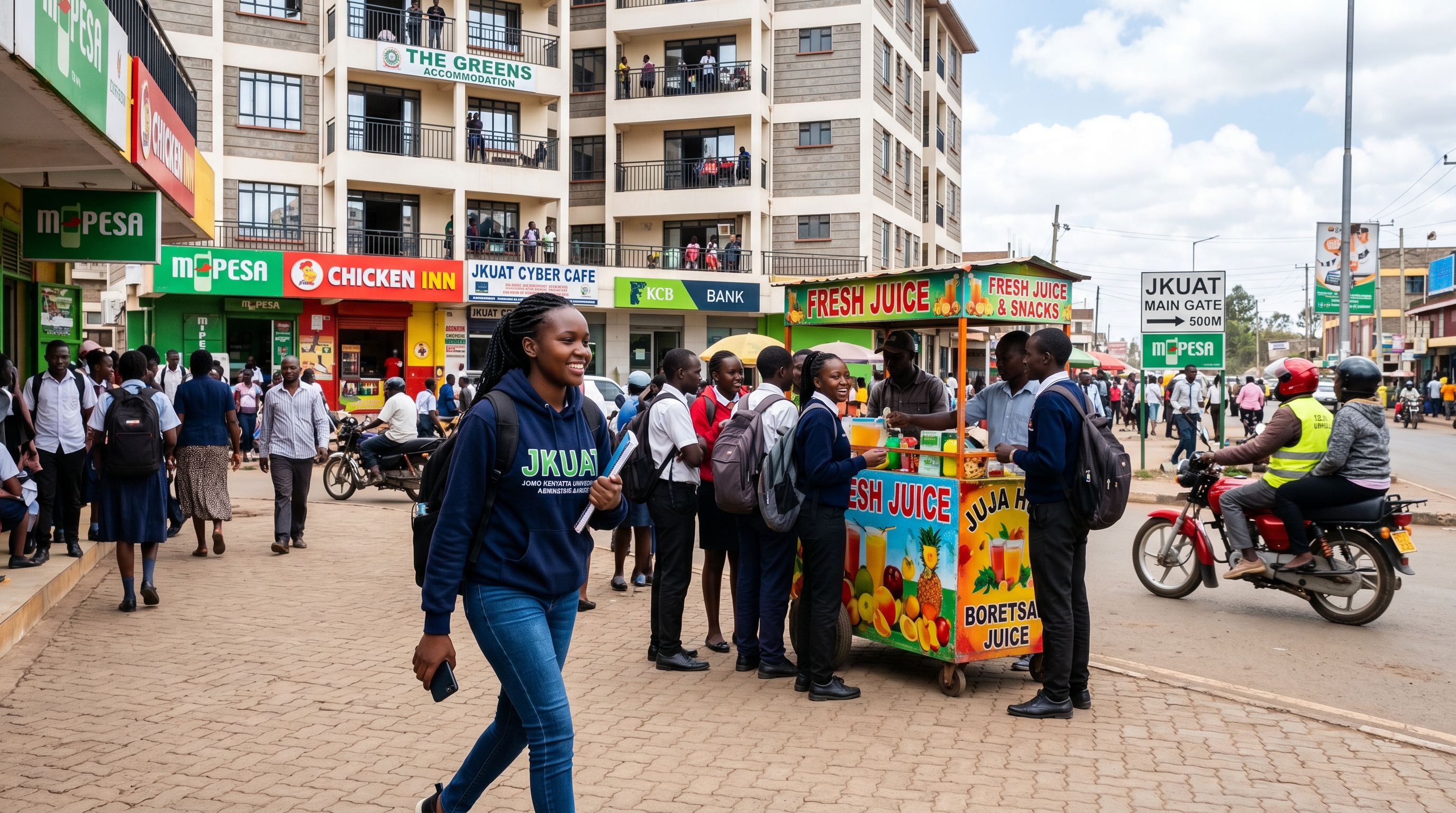
Living in Juja, Kiambu: The University Town That Became a Satellite City — Prices, Estates & Honest Guide (2026)
Juja houses from KSh 1.2M, rent from KSh 2.5K. JKUAT area, Kenyatta Road estates, Kalimoni, Witeithie. Student yields 9-15%.
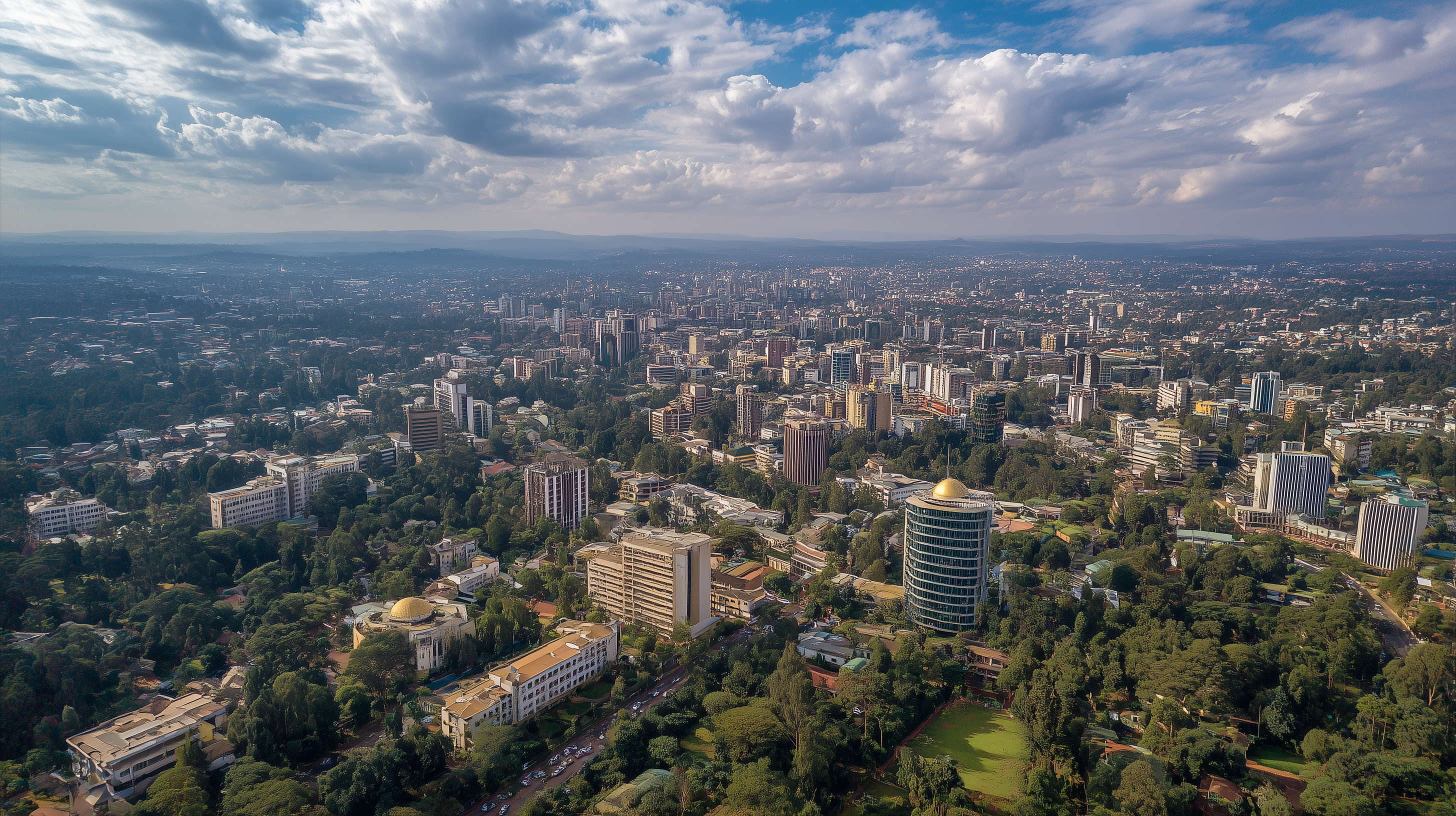
Westlands Property Guide: Prices, Lifestyle & Investment (2026)
Complete guide to Westlands real estate. Apartments from KES 8M, rental yields 6-8%, plus lifestyle amenities. Browse verified Westlands listings today.
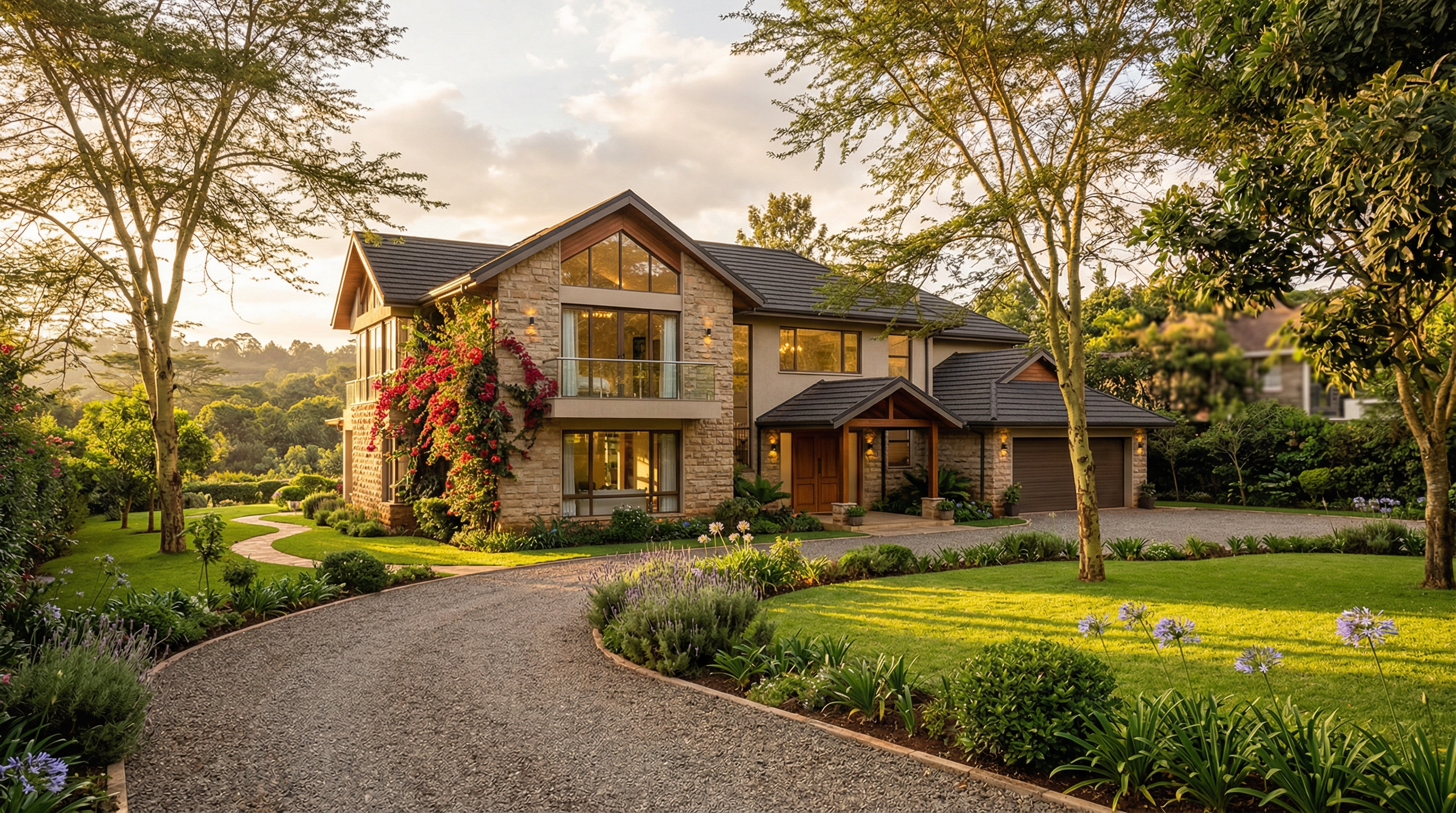
Houses for Sale in Karen: Price Guide 2026
Karen house prices from KES 35M–250M+. 4-bedroom, 5-bedroom, villas. Karen Hardy, Ndege Road, budget breakdown. Updated March 2026.