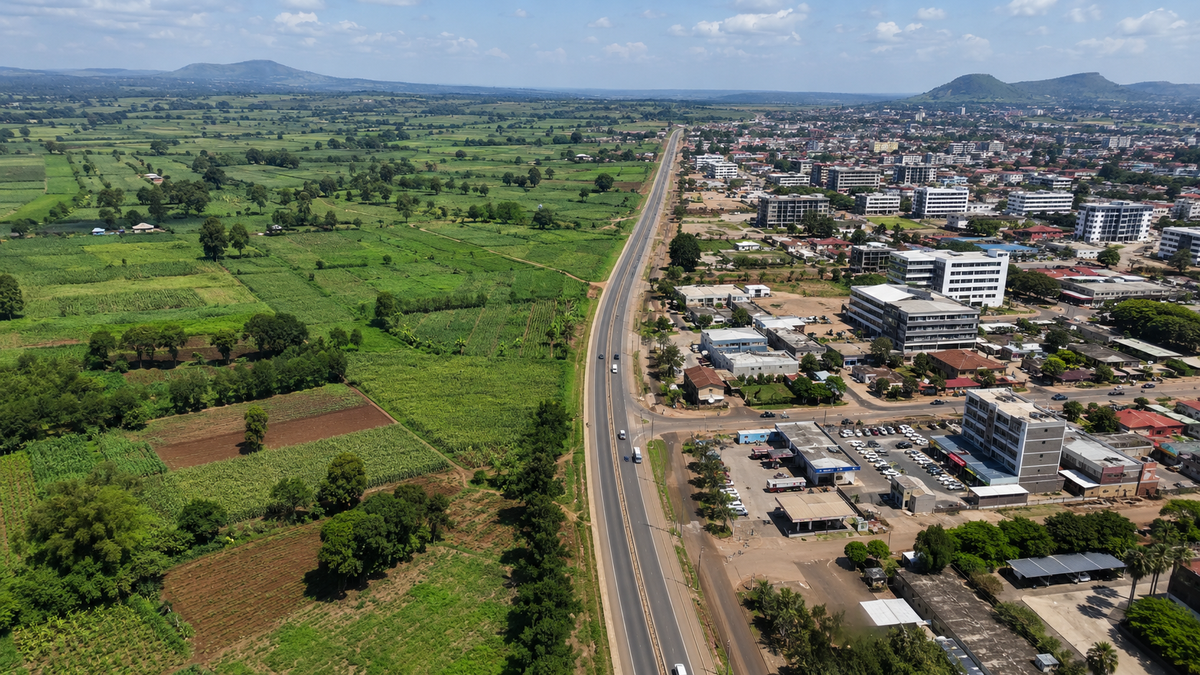
Agricultural vs Commercial Land in Kenya: Differences, Rules & Change of User
Agricultural vs commercial land in Kenya: zoning, LCB consent, land rates, stamp duty, prices, and how change of user turns farmland into developable land.
When buying land in Kenya, one of the first questions to settle is its classification — because whether land is agricultural or commercial decides what you can build on it, what you'll pay in taxes and consents, and ultimately what it's worth. Buyers who ignore this distinction can end up with land they can't legally develop, surprise consent requirements, or a transaction that's void in the eyes of the law. This guide explains the difference between agricultural and commercial land in Kenya, the legal rules that apply to each, and how the "change of user" process bridges the two.
Land use in Kenya is regulated through zoning under the Physical and Land Use Planning Act, 2019 (PLUPA). Zoning categories — residential, commercial, industrial, agricultural, and mixed-use — control how land may be used and how densely it can be developed. You can only build in line with the registered user on the parcel and the approved zoning of the area.
Agricultural vs Commercial Land: Quick Comparison
Factor | Agricultural land | Commercial land |
|---|---|---|
Primary use | Farming, livestock, horticulture, agro-processing | Offices, retail, malls, business premises |
Typical tenure | Mostly freehold (rural) | Often leasehold (urban, 99 years) |
Typical location | Rural areas, outside gazetted towns | Towns, cities, urban corridors |
LCB consent | Required for sale, subdivision, long lease | Not required within urban planning areas |
Land rates | Freehold agricultural land is generally exempt | Higher county rates apply |
Stamp duty | 2% (rural areas) | 4% (urban/municipal areas) |
Price per unit | Lower | Higher |
Income potential | Lower, slower | Higher, income-generating |
What Is Agricultural Land?
Agricultural land is designated for farming, plantations, livestock keeping, horticulture, and agro-processing. Most rural land in Kenya falls into this category and is typically held on freehold title, meaning you own it indefinitely. It's generally cheaper per acre than urban land, and freehold agricultural land is usually exempt from county land rates under the National Rating Act — a meaningful saving.
The catch is that you cannot simply build a shop, office, or housing estate on agricultural land. Doing so without authorisation risks fines or even demolition by county authorities. To develop it for non-farming use, you must first go through a change of user — more on that below.
What Is Commercial Land?
Commercial land is zoned exclusively for business use — offices, retail outlets, shopping malls, and similar income-generating premises. Because of that earning potential, it carries the highest values among the main land categories, and it's concentrated in towns, cities, and fast-growing urban corridors. Commercial parcels in urban areas are frequently leasehold rather than freehold, and they attract higher county land rates, often assessed on the unimproved site value of the land.
A related and increasingly popular category is mixed-use development (MUD), which blends residential, commercial, and retail uses on one site. Mixed-use zoning is common in areas like Upper Hill, Kilimani, Westlands, and along Mombasa Road, and often delivers the strongest returns thanks to diversified income.
The Key Legal Difference: Land Control Board Consent
The single most important legal distinction is the Land Control Board (LCB). Under the Land Control Act (Cap 302), dealings in agricultural land — any sale, transfer, subdivision, or lease longer than six years — are "controlled transactions" that require LCB consent before registration. Without that consent, the transaction is null and void. This is one of the most common ways buyers of rural land lose their purchase.
Commercial land within an urban planning framework does not require LCB consent. So a deal that would be straightforward for an urban commercial plot carries an extra mandatory step — and a hard legal deadline — for agricultural land.
LCB consent has a time limit. Consent for an agricultural land transaction must generally be obtained within six months of the agreement, or the transaction becomes void. The application fee is around KES 3,000, with a special consent fee of about KES 10,000. Confirm whether your parcel is "controlled" before signing anything.
Price and Value Differences
Agricultural land is almost always cheaper per unit than commercial land, reflecting its lower immediate income potential and rural location. Commercial land commands a premium because it can generate rental income from businesses and supports higher-density, higher-value development. That price gap is exactly what creates investment opportunity: many high-growth corridors — areas like Thigio near Kikuyu — are still legally agricultural but are urbanising fast, so the land is priced as farmland while heading toward urban value. For how this plays out in Nairobi's growth rings, see our satellite towns ROI comparison.
Land Rates and Tax Differences
The tax treatment differs in two ways that affect your running costs. First, land rates: freehold agricultural land is generally exempt from county land rates, while commercial land attracts rates that can be substantial, increasingly assessed on site value. Second, stamp duty on purchase: it's 4% of value in urban and municipal areas (where most commercial land sits) and 2% in rural areas (where most agricultural land sits). Budget for these with the stamp duty calculator, and remember that in 2026 unpaid land rates can effectively freeze a property, with arrears passing to the new owner.
Change of User: Turning Agricultural Into Commercial
Change of user is the legal process of altering land's designated use — for example, from agricultural to commercial or residential. It's governed by PLUPA and is what allows a farmland parcel to be lawfully developed for business or housing. The process runs through the county's Physical Planning Department: you submit an application (PPA2), a planning brief, and a newspaper notice, obtain an Environmental Impact Assessment from NEMA if required, gather officer comments, and pay the applicable fees. For agricultural land, LCB consent is also needed.
Done well, this is where significant value is created — buying agricultural land cheaply, securing a change of user, and unlocking commercial or residential value. But it isn't automatic or guaranteed. Change of user typically takes two to nine months depending on the county and complexity, approval depends on the area's zoning and planning policies, and developing before approval invites fines or demolition. Treat any seller's promise that a change is "guaranteed" with caution.
Which Should You Buy?
Buy agricultural if... | Buy commercial if... |
|---|---|
You want lower entry cost and land-banking | You want income-generating property now |
You plan to farm or hold long-term | You're developing offices, retail, or rentals |
You're targeting a future change of user upside | You want clear, urban, developable zoning |
You can manage LCB consent and patience | You can fund higher prices and rates |
Neither is "better" — it depends on your goal, budget, and timeline. The investor playing the change-of-user game takes on process risk and time for a bigger upside; the buyer who wants developable land today pays more for certainty.
Always confirm the classification yourself. Don't rely on a seller's description of what land "can be used for." Confirm the registered user on the title and the area's zoning with the county physical planning office before you buy — and verify ownership through an official land search. This reduces, though never fully eliminates, the risk of buying land you can't use as intended.
Frequently Asked Questions
Can you build on agricultural land in Kenya?
Not for non-farming use without authorisation. Agricultural land is zoned for farming, livestock, and related uses, and building a home, shop, or commercial premises on it requires a change of user approval first. Developing without it risks fines or demolition by county authorities. You can carry out farming-related activities, but for residential or commercial development you must legally reclassify the land.
What is the difference between agricultural and commercial land?
Agricultural land is zoned for farming and related uses, is mostly rural and freehold, is cheaper, generally exempt from land rates, and requires Land Control Board consent for transactions. Commercial land is zoned for business — offices, retail, malls — is usually urban and often leasehold, carries higher value and higher rates, and does not need LCB consent within urban planning areas. The classification determines what you can build and what it's worth.
How do I change agricultural land to commercial in Kenya?
Through a change of user under the Physical and Land Use Planning Act. Apply to the county's Physical Planning Department with a PPA2 application, a planning brief, and a newspaper notice, obtain an Environmental Impact Assessment from NEMA if required, and pay the fees; for agricultural land you also need Land Control Board consent. The process typically takes two to nine months and approval depends on the area's zoning — it is not guaranteed.
Do I need Land Control Board consent for commercial land?
No, not for commercial land within an urban planning framework. LCB consent under the Land Control Act applies to "controlled transactions" involving agricultural or rural land outside gazetted cities, towns, and municipalities — sales, subdivisions, and leases over six years. Commercial, residential, or industrial land that is legally designated as such within an urban plan does not require LCB consent.
Is agricultural land cheaper than commercial land?
Generally, yes. Agricultural land is priced lower per unit because of its rural location and lower immediate income potential, while commercial land commands a premium for its business and rental earning capacity. This price gap is what creates the change-of-user investment opportunity — buying farmland in an urbanising corridor at agricultural prices, then unlocking higher value, though that upside carries process risk and time.
Does agricultural land pay land rates in Kenya?
Freehold agricultural land is generally exempt from county land rates under the National Rating Act, which is one of its cost advantages. Commercial and other rateable urban land does attract rates, increasingly assessed on the unimproved site value. Note that rate rules are tightening in 2026, with automated enforcement and arrears passing to new owners, so always confirm a parcel's rate status before buying.
Explore Further
Before buying any land, confirm what you're getting: run an online land ownership search, work through the due diligence checklist, and understand the buyer's burden under caveat emptor. Follow the full land buying process, verify documents with the title verification guide, and protect yourself with the property scams guide. When you're ready, browse plots for sale or connect with a verified agent; diaspora investors can start at the diaspora hub.
Data sources: Physical and Land Use Planning Act 2019 (PLUPA); Land Control Act (Cap 302); National Rating Act; county planning and conveyancing guidance (2025–2026). Fees, timelines, and zoning rules vary by county and change over time — confirm current details with the relevant county before transacting. Verification reduces but does not eliminate risk.
Other Guides

Living in Juja, Kiambu: The University Town That Became a Satellite City — Prices, Estates & Honest Guide (2026)
Juja houses from KSh 1.2M, rent from KSh 2.5K. JKUAT area, Kenyatta Road estates, Kalimoni, Witeithie. Student yields 9-15%.

Westlands Property Guide: Prices, Lifestyle & Investment (2026)
Complete guide to Westlands real estate. Apartments from KES 8M, rental yields 6-8%, plus lifestyle amenities. Browse verified Westlands listings today.
Houses for Sale in Karen: Price Guide 2026
Karen house prices from KES 35M–250M+. 4-bedroom, 5-bedroom, villas. Karen Hardy, Ndege Road, budget breakdown. Updated March 2026.