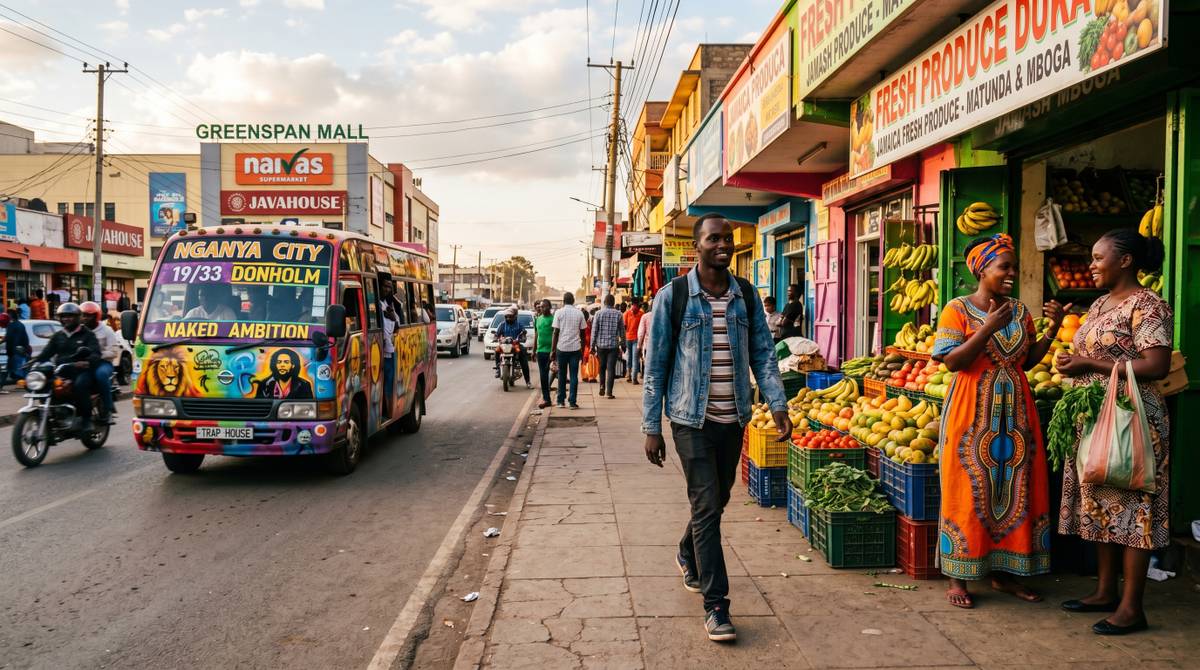
Living in Donholm & Umoja Nairobi: Prices & Guide (2026)
Donholm apartments from KSh 10K rent, Umoja from KSh 5K. Greenspan Mall, Phases 1-8, Jacaranda Estate. Affordable Eastlands living guide.
Living in Donholm & Umoja, Nairobi: The Eastlands Where Nairobi Started — Prices, Phases & Honest Guide (2026)
Donholm and Umoja are adjacent Eastlands neighbourhoods in Nairobi's Embakasi area, approximately 8–10 kilometres east of the CBD along Outer Ring Road and Jogoo Road. Together they house a combined population exceeding 200,000 people — a dense, vibrant, working-class-to-lower-middle-class urban fabric that has shaped Nairobi's culture for five decades. Apartments in Donholm rent from KSh 10,000 for a 1-bed to KSh 60,000 for a 5-bed maisonette. In Umoja, bedsitters start from KSh 8,000 and 2-bed apartments average KSh 18,000–25,000. Houses for sale in Donholm range from KSh 6.8M (3-bed apartment) to KSh 18M (4-bed Jacaranda Estate), while Umoja properties average KSh 21M with the premium end reaching KSh 45M.
These are not aspirational neighbourhoods. They are functional ones — places where Nairobi's essential workforce lives, commutes, raises families, and builds modest wealth. The appeal is straightforward: proximity to the CBD (20–40 minutes), affordable rents that leave room in the budget for school fees and savings, established community infrastructure, and the social energy of East Africa's most densely lived-in residential areas. The trade-offs are equally clear: density, noise, inconsistent infrastructure, security that requires vigilance, and a built environment where decades of unregulated construction have overwhelmed the original urban plans.
Quick Facts
Detail | Donholm | Umoja |
|---|---|---|
Distance to CBD | ~10 km | ~8.4 km |
Sub-county | Embakasi (Embakasi West) | Embakasi (Embakasi West) |
Population | ~60,000 | ~140,000 (Umoja I: 64,256 + Umoja II: 75,960, 2019 census) |
Character | Lower-middle-class; apartments, maisonettes, commercial | Working-class to lower-middle; dense residential |
Median rent | KSh 18,750 | KSh 15,000–20,000 |
House prices (sale) | KSh 6.8M–28M (avg KSh 28M) | KSh 8M–45M (avg KSh 21M) |
Key landmarks | Greenspan Mall, Outer Ring Road | Umoja Market, Mama Lucy Hospital |
Commute to CBD | 20–40 min | 20–40 min |
Matatu fare | KSh 50–80 | KSh 50–150 |
Property Prices in 2026
Donholm — Rent
Type | Rent (KSh/month) | Notes |
|---|---|---|
1-bed apartment | 10,000–16,000 | Phase 8, Phase 1; basic finish; water/electricity available |
2-bed apartment | 14,000–26,000 | Phase 8 from KSh 17K; executive builds from KSh 25K |
3-bed maisonette | 28,000–40,000 | With extensions; gated compounds |
4-bed maisonette | 35,000–40,000 | DSQ; older stock; Jacaranda Estate from KSh 35K |
5-bed maisonette | 50,000–60,000 | Premium Donholm; spacious compounds |
Umoja — Rent
Type | Rent (KSh/month) | Notes |
|---|---|---|
Bedsitter | 5,000–8,000 | Basic; shared amenities in some buildings |
1-bed apartment | 8,000–15,000 | Umoja I and II; variable quality |
2-bed apartment | 15,000–35,000 | Avg KSh 20–25K; renovated units command premium |
3-bed apartment | 18,000–35,000 | Proximity to main roads affects pricing |
Houses for Sale
Area | Type | Price Range (KSh) |
|---|---|---|
Donholm (Greenspan) | 3-bed apartment | 6.8M |
Donholm (Jacaranda) | 4-bed maisonette | 18M |
Donholm (Greenfields) | 5-bed maisonette | 13M–28M |
Umoja (Nasra Gardens) | 7-bed townhouse (duplex) | 15M |
Umoja (general) | Mixed residential | 8M–45M |
Land Prices
Plot | Price Range (KSh) | Location |
|---|---|---|
60×30 | 15M | Near Greenspan Mall |
90×100 (¼ acre) | 30M | Donholm general |
100×100 | 36M | Greenfields |
Plots in Umoja | 18M (two plots) | Near Kifaru/Ndovu Primary |
Context: A 2-bed apartment in Donholm at KSh 18,000/month costs roughly a third of what the same unit costs in Kilimani (KSh 55,000–80,000). For a family earning KSh 60,000–100,000 combined, Donholm and Umoja allow rent to stay within the recommended 30% of income — something that is increasingly difficult in central Nairobi.
Neighbourhoods and Phases
Donholm
Donholm Phase 1 — The older, more established section. Mix of original maisonettes (some now extended into multi-unit buildings) and newer apartment blocks. Close to Caltex junction, a key commercial node. 2-bed apartments from KSh 17,000–20,000. More settled, with a slightly quieter character than outer phases.
Donholm Phase 8 — The most active rental market. Adjacent to Greenspan Mall, which has transformed convenience in the area. Modern apartment builds attract young professionals and families. 1-bed from KSh 12,000; 2-bed from KSh 17,000–20,000. Naivas Eastgate provides grocery shopping. Phase 8 is where most new tenants look first.
Jacaranda Estate — A gated residential pocket within Donholm. Spacious maisonettes with compounds. 4-bed houses from KSh 18M for sale; rent from KSh 35,000. The estate offers more space and privacy than standard Donholm apartments and is the preferred option for families who want to own rather than rent.
Greenfields / Greenspan / Lower Savannah — Sub-areas within Donholm's broader geography. Greenfields is structured as a gated community with maisonettes. Greenspan is the commercial hub around the mall. Lower Savannah includes Dakar Road — a mix of older residential and new developments. These areas represent Donholm's commercial evolution from a purely residential estate to a mixed-use neighbourhood.
Umoja
Umoja I — The original phase, developed in the 1970s under the Tenant Purchase Scheme (TPS). Originally comprised exclusively of one-bedroom houses with signature asbestos roofs. Most original houses have been demolished and replaced by apartment blocks. Population ~64,256 (2019 census). Dense, busy, and affordable. This is the most congested phase — unregulated building on every available space has overwhelmed the original urban plan.
Umoja II — Developed under the site-and-service scheme in the 1980s. Owners were allowed to build extensions, which led to progressive densification beyond original plans. Population ~75,960. Slightly more organised than Umoja I in some sections. 1-bed townhouses from KSh 12,000; 2-bed apartments from KSh 15,000–25,000.
Umoja Innercore — An enclave between Umoja I and II that was historically considered the more "refined" section. Tena estate borders the Innercore. Slightly better infrastructure and wider roads than the outer phases. This is where Umoja's more established middle-class families settled — and where property values have held up better than in the denser phases.
Nasra Gardens — A gated community near the Umoja/Donholm border. Modern townhouses and duplexes. A 7-bed townhouse (two units) recently listed at KSh 15M with rental income of KSh 90,000/month. Close to Mama Lucy Hospital. This represents the investment-grade segment of the Umoja market.
A Brief History
Understanding Donholm and Umoja requires understanding Nairobi's housing history. Both estates were planned by the Nairobi City Commission (later Nairobi City Council) to address the post-independence urban housing crisis. Donholm was developed as a middle-class estate with maisonettes and proper infrastructure — roads, drainage, green spaces. Umoja I followed in the 1970s with the Tenant Purchase Scheme: standardised one-bedroom units where residents paid rent-to-own monthly instalments.
The turning point came when the council ran out of capital. Residents in Umoja were permitted to build their own extensions, provided they paid annual land rates. This policy — combined with corruption, weak enforcement, and relentless population pressure — transformed Umoja from a planned estate into one of Nairobi's most densely built environments. Open spaces became building sites. Road reserves became extensions. The asbestos-roofed one-bedrooms became multi-storey apartment blocks. A 2026 Citizen Digital report described the transformation as "the fall and fall of Umoja estate" — a direct consequence of allowing urban planning to collapse under financial and political pressures.
Donholm experienced similar but less extreme densification. The original maisonettes remain in some sections (particularly Jacaranda), but much of the estate has been redeveloped into apartment blocks. Greenspan Mall's arrival in the 2000s marked a commercial upgrade that Umoja has not yet experienced at the same scale.
What It Is Like to Live in Donholm & Umoja
Living in Donholm and Umoja is a study in pragmatism. You are close to the CBD — matatus to town cost KSh 50–80 from Donholm (board along Tom Mboya Street) and KSh 50–150 from Umoja (routes 19, 35, 60 via Jogoo Road or Eastern Bypass). The commute is 20–40 minutes. Ride-hailing is available but most residents use matatus — the infrastructure of daily life here is built around public transport, not private vehicles.
The density is the defining characteristic. Both estates are loud, busy, and commercial at every level. Street vendors, bodas, matatus, churches, mosques, and small businesses compete for space. This creates enormous economic energy — there is always a hustle nearby — but also means noise, traffic, and limited privacy. The narrow roads, designed for a fraction of the current population, are congested at all hours.
Water supply is generally available — particularly in Donholm's modern builds — though older Umoja buildings may experience rationing. Electricity is on prepaid meters (standard across both estates). Internet fibre is available in Donholm and parts of Umoja, with mobile data covering the rest. Security varies significantly: gated compounds in Donholm's newer developments offer 24/7 guards and CCTV; open Umoja streets require standard urban caution. Donholm Police Station and community policing efforts provide baseline security, but petty crime remains a concern in denser sections, particularly after dark.
The social life is rooted in community. Churches, mosques, and community groups are the primary social infrastructure. Greenspan Mall (Donholm) provides cinema, dining, and modern retail. Umoja Market is the commercial heart of Umoja — fresh produce, clothing, household goods at Eastlands prices. Eastgate Mall at Naivas provides supermarket shopping. Nyama choma joints along Outer Ring Road are local institutions. The dining is functional and affordable — KSh 200–500 for a meal — rather than aspirational.
Cost of Living
The cost of living in Donholm and Umoja is among Nairobi's most affordable. Groceries at Umoja Market or Naivas are significantly cheaper than at Chandarana or Carrefour in premium suburbs — a week's groceries for a family of four costs KSh 3,000–5,000. Matatu commuting budgets average KSh 2,800/month to the CBD. Electricity on prepaid meters (most buildings) averages KSh 1,500–3,000/month for a 2-bed. Water is often included in rent for apartment buildings; standalone houses pay KSh 1,000–2,000/month. School fees at local private primaries range from KSh 30,000–80,000 per term — a fraction of what international schools charge. Domestic help (housekeeper) costs KSh 8,000–15,000/month. The total monthly budget for a family of four in a 2-bed apartment — rent, utilities, food, transport, school fees — can be managed at KSh 50,000–80,000, making these estates viable for households earning KSh 60,000–100,000.
The Eastlands Identity
Donholm and Umoja are part of the broader Eastlands — a collection of estates east of the CBD that includes Buru Buru, Kayole, Komarock, Pipeline, Tena, and Embakasi. Eastlands is where the majority of Nairobi's working population lives. The cultural identity is distinct: more Kenyan than cosmopolitan, more Swahili-English than English-dominant, more community-oriented than individualistic. Almost everybody in Nairobi over 30 either grew up in Eastlands, knows someone who did, or started their Nairobi life there. This shared history creates a strong sense of identity that newer suburbs like Syokimau or Ruiru cannot yet match. The flip side is that Eastlands carries a perception of being "less than" — a bias that does not reflect the actual quality of life available in well-managed Donholm compounds or Umoja's Innercore.
Amenities
Healthcare
Mama Lucy Kibaki Hospital — the primary government hospital serving Umoja and the broader Eastlands area. Level 5 facility with maternity, outpatient, and emergency services. The Mater Hospital (Donholm branch) — private healthcare. Umoja Health Centre. Donholm Health Centre. Multiple private clinics and pharmacies across both estates. For specialist care, Kenyatta National Hospital is 20–30 minutes via Jogoo Road.
Education
Donholm Primary School, Donholm Secondary School. Unity Primary School (Umoja). Kifaru Primary, Ndovu Primary (Umoja). Moi Educational Centre (Umoja). KCA University nearby. Datamine College (Umoja) — business and ICT courses. Multiple private primary and secondary schools across both estates at affordable fees. The education infrastructure serves the mass market — quality private schooling at KSh 30,000–80,000 per term rather than the KSh 200,000+ of international schools in premium suburbs.
Shopping
Greenspan Mall (Donholm Phase 8) — supermarkets, banks, retail, cinema, restaurants. The primary commercial anchor for Donholm. Naivas Eastgate (Umoja I, Outer Ring Road). Umoja Market — traditional market for fresh produce and everyday goods. Eastgate Mall. Shujaa Mall and K-Mall (both near Umoja). Multiple banks along Outer Ring Road and within Greenspan Mall.
Recreation
Greenspan Mall cinema — the primary entertainment venue for both estates. Nyama choma joints along Outer Ring Road and Kangundo Road — social dining is the main leisure activity in Eastlands, and the nyama choma culture here is among Nairobi's most authentic. Uhuru Gardens (10 min drive) — national monument and park. Moi International Sports Centre (Kasarani, 25 min) for major sporting events and concerts. Local gyms and fitness centres serve the health-conscious market at affordable rates (KSh 1,500–3,000/month membership). Community sports — football pitches scattered across both estates — provide free recreation and are social hubs, particularly on weekends. The Nairobi Expressway has improved access to Uhuru Park and the CBD waterfront area for weekend outings.
Pros and Cons
Pros
Affordability is genuine. A 2-bed apartment at KSh 18,000/month in Donholm allows a household earning KSh 60,000 to live within the 30% rent-to-income ratio — one of the few areas in Nairobi where this is mathematically possible without moving to a satellite town.
CBD proximity is competitive. 8–10 km from the city centre, 20–40 minutes by matatu. This is closer than Kasarani, Ruiru, Syokimau, or any satellite town. For workers who need to be in the CBD daily, the commute advantage is real.
Public transport is excellent. Multiple matatu routes (19, 35, 60) serve both estates. Fares of KSh 50–80 make daily commuting affordable. You do not need a car to live in Donholm or Umoja — a genuine advantage over car-dependent suburbs like Runda or Karen.
Greenspan Mall has elevated Donholm's appeal. Modern retail, banking, cinema, and dining within the estate means residents no longer need to travel to the CBD for basic services.
Community energy is a lifestyle asset. If you thrive on urban density, social interaction, and commercial hustle, Donholm and Umoja offer an energy that leafy suburbs cannot replicate. There is always something happening.
JKIA is close. Donholm's proximity to Jomo Kenyatta International Airport (15–25 min) is a practical advantage for frequent travellers or airport workers.
Cons
Density has exceeded infrastructure capacity. Roads, drainage, and sewerage were designed for a fraction of the current population. Flooding during heavy rains is common. Open sewers exist in some Umoja sections. The built environment in parts of Umoja is described by residents as chaotic.
Security requires vigilance. Petty crime — phone snatching, pickpocketing, mugging — is more common than in Nairobi's premium suburbs. Some Umoja sections border higher-crime areas. Gated compounds in Donholm mitigate this; open streets in Umoja require more caution, especially after dark.
Noise is constant. Both estates are loud — traffic, construction, commercial activity, churches, and nightlife venues create a sound environment that is challenging for anyone who values quiet. If noise sensitivity is an issue, these neighbourhoods are not suitable.
Building quality is highly variable. Unregulated construction means many apartment blocks do not meet proper building codes. Some buildings have structural issues, poor waterproofing, and inadequate fire safety. Always inspect thoroughly and independently before renting or buying.
Umoja's original urban plan has collapsed. Green spaces, road reserves, and planned infrastructure have been built over. The estate is functional but no longer adheres to any coherent urban plan. This affects everything from traffic flow to emergency vehicle access.
Appreciation potential is limited at the lower end. While Donholm (particularly Jacaranda and Greenfields) has seen value growth, Umoja's denser areas face challenges that constrain long-term appreciation — infrastructure deficits, building quality, and perception.
Donholm & Umoja Compared
Factor | Donholm | Umoja | Buru Buru |
|---|---|---|---|
2-bed rent | KSh 14K–26K | KSh 15K–35K | KSh 25K–45K |
Distance to CBD | 10 km | 8.4 km | 8 km |
Main shopping | Greenspan Mall | Umoja Market, Naivas Eastgate | Buru Buru Shopping Centre |
Density | High | Very high | Moderate |
Building stock | Mix: maisonettes + modern apartments | Dense apartments, converted originals | Original maisonettes, better preserved |
Security | Moderate; gated compounds better | Variable; estate-dependent | Moderate-Good |
Best for | Young professionals, families on budget | Budget renters, working class | Established middle-class families |
Getting Around
Destination | Mode | Estimated Time |
|---|---|---|
Nairobi CBD | Matatu / car | 20–40 min |
JKIA (airport) | Car | 15–25 min |
Westlands | Car | 30–50 min |
Industrial Area | Car / matatu | 10–20 min |
Embakasi | Matatu | 10–15 min |
Buru Buru | Walk / matatu | 5–15 min |
From Donholm: board PSVs along Tom Mboya Street (CBD). Fare KSh 50–80. From Umoja: matatu routes 19, 35, 60 via Jogoo Road or Eastern Bypass. Fare KSh 50–150. Outer Ring Road connects both estates to Eastleigh, Parklands, and the Northern Bypass. The road has been upgraded but congestion persists during peak hours.
Investment Outlook
What is working
The affordable rental segment in Donholm and Umoja is structurally supported. Nairobi's average net salary of approximately KSh 52,000 means that central Nairobi rents are unaffordable for the majority of workers. Eastlands estates absorb this demand — and at KSh 15,000–25,000/month for a 2-bed apartment, the rental market has a deep, reliable tenant base. For investors, the numbers work: a KSh 6.8M apartment in Greenspan generating KSh 18,000/month delivers approximately 3.2% gross — low, but vacancy is near zero. The income approach improves significantly for purpose-built rental blocks where per-unit costs are optimised.
Donholm's Greenfields and Jacaranda areas offer moderate appreciation potential as the area benefits from Greenspan Mall, Outer Ring Road upgrades, and improved connectivity to the Nairobi Expressway.
What to watch
Umoja's infrastructure deficit is a value ceiling. Until drainage, roads, and building regulation improve, property values in Umoja's denser sections are constrained. Investors should focus on gated developments and well-managed modern builds rather than individual older units.
Building quality risk. Unregulated construction means some apartment blocks are structurally unsafe. Always commission an independent building survey before purchasing — the cost (KSh 30,000–50,000) is insignificant relative to the risk of buying a structurally compromised building.
Outer Ring Road upgrades are a double-edged sword. Road improvements increase connectivity and property values along the corridor, but also increase commercial traffic and noise in adjacent residential areas. Properties within 50 metres of Outer Ring Road may see rental demand driven by convenience but are also the most affected by noise and air pollution.
The 2027 election cycle introduces the standard slowdown in transactions, though affordable Eastlands estates are less affected than premium suburbs — the buyer/renter base is less government-dependent.
For Diaspora Investors
Donholm and Umoja are entry-level investment territory for diaspora investors with KSh 5M–20M ($38K–$154K) budgets. A purpose-built apartment block (4–8 units) on a quarter-acre plot can generate KSh 80,000–150,000/month in rental income — attractive yields for the capital deployed. The key risk is management: Eastlands properties require active, local property management. Remote management from abroad is not viable.
Key steps: engage a verified agent on Afriqahome, verify the title on Ardhisasa, hire a lawyer for due diligence, and commission an independent building survey. For Donholm/Umoja specifically, also verify that the building has approved plans from Nairobi County — many do not.
For country-specific buying guidance: USA · UK · UAE · Canada.
Frequently Asked Questions
How much does rent cost in Donholm and Umoja?
In Donholm: 1-bed apartments from KSh 10,000–16,000/month, 2-bed from KSh 14,000–26,000, 3-bed maisonettes from KSh 28,000–40,000, 5-bed from KSh 50,000–60,000. In Umoja: bedsitters from KSh 5,000–8,000, 1-bed from KSh 8,000–15,000, 2-bed from KSh 15,000–35,000. The median rent across both areas is KSh 15,000–20,000 for a 2-bed apartment.
Are Donholm and Umoja safe to live in?
Safety is location-specific. Donholm's gated compounds (Jacaranda, Greenfields, modern Phase 8 apartments) have 24/7 security and are generally safe. Umoja's security varies by section — Innercore and gated estates are better than denser outer phases. Community policing and Donholm Police Station provide baseline security. Petty crime is more common than in premium Nairobi suburbs. Standard precautions apply: avoid walking alone after dark on poorly lit streets, secure valuables, and use ride-hailing for late-night travel.
What is the commute from Donholm/Umoja to the CBD?
20–40 minutes by matatu or car. From Donholm, board along Tom Mboya Street (fare KSh 50–80). From Umoja, routes 19, 35, 60 via Jogoo Road or Eastern Bypass (fare KSh 50–150). Both estates are closer to the CBD than Kasarani, Ruiru, or any satellite town. JKIA is 15–25 minutes away.
What is the difference between Donholm and Umoja?
Donholm is slightly more upmarket — more maisonettes, Greenspan Mall, Jacaranda Estate. Umoja is denser, more affordable, and more working-class. Donholm's median rent (KSh 18,750) is higher than Umoja's (KSh 15,000–20,000). Donholm has better-preserved infrastructure; Umoja's original urban plan has been overwhelmed by unregulated construction. Both offer CBD proximity and affordability, but Donholm has a slight edge on quality of life.
Is Donholm or Umoja a good investment?
For rental income — yes, if you choose well. The affordable segment has near-zero vacancy and strong tenant demand driven by Nairobi's structural affordability gap. Donholm (Greenfields, Jacaranda) offers moderate capital appreciation as Greenspan Mall and Outer Ring Road upgrades enhance the area's profile. Umoja is primarily a yield play — capital appreciation is constrained by infrastructure deficits and perception challenges. Focus on modern, well-managed buildings with approved plans from Nairobi County. Commission independent building surveys before purchasing — non-negotiable in Eastlands.
What schools and hospitals are in Donholm and Umoja?
Schools: Donholm Primary and Secondary, Unity Primary (Umoja), Kifaru and Ndovu Primary (Umoja), Moi Educational Centre, KCA University nearby, Datamine College. Hospitals: Mama Lucy Kibaki Hospital (Level 5), The Mater Hospital Donholm branch, Umoja Health Centre, Donholm Health Centre. KNH is 20–30 min via Jogoo Road for specialist care.
Explore Donholm & Umoja on Afriqahome
Browse apartments for sale in Nairobi or apartments for rent from verified agents.
Compare with neighbouring areas: Living in Kasarani · Living in South B & South C · Living in Kilimani · Best Areas to Live in Nairobi.
For buying process guidance: How to Buy Land in Kenya · First-Time Buyer Guide · Stamp Duty & Closing Costs · Due Diligence Checklist · Verify an Agent.
For diaspora investors: Diaspora Investment Hub · Buy from USA · Buy from UK · Buy from UAE · Buy from Canada.
Other Guides
Living in Juja, Kiambu: The University Town That Became a Satellite City — Prices, Estates & Honest Guide (2026)
Juja houses from KSh 1.2M, rent from KSh 2.5K. JKUAT area, Kenyatta Road estates, Kalimoni, Witeithie. Student yields 9-15%.
Westlands Property Guide: Prices, Lifestyle & Investment (2026)
Complete guide to Westlands real estate. Apartments from KES 8M, rental yields 6-8%, plus lifestyle amenities. Browse verified Westlands listings today.
Houses for Sale in Karen: Price Guide 2026
Karen house prices from KES 35M–250M+. 4-bedroom, 5-bedroom, villas. Karen Hardy, Ndege Road, budget breakdown. Updated March 2026.