
Rental Yield by Nairobi Neighborhood 2026: Where the Returns Actually Are
City yields at 7.4% — highest since 2007. Ruaka 7–10%, Kilimani 6–7.5%, Karen 3–5%. Data from Cytonn and HassConsult. Honest guide for investors.
Introduction
Nairobi's rental yields reached their highest levels in nearly two decades in late 2025. According to HassConsult's Q4 2025 Property Index, city-wide residential rental yields climbed to 7.4% — the highest since 2007. Satellite towns recorded yields of 5.2%, their highest since 2019. Rents rose while property prices grew more slowly, compressing the gap between what investors pay and what they earn.
But the headline number hides enormous variation. A well-managed 2-bed apartment in Ruaka can yield 8–10% gross, while a comparable unit in Karen might return 3–4%. Location, building quality, and tenant mix determine whether your rental income covers costs or quietly bleeds money.
This guide maps rental yields by neighborhood across Nairobi — using data from Cytonn Investments (NMA Residential Report 2025), HassConsult (Q4 2025 Property Index), and listing data from BuyRentKenya and other portals. We cover what the yields actually are, what drives them, and what each investor type should target.
How Rental Yield Works (Quick Primer)
Gross rental yield = (Annual rent ÷ Purchase price) × 100
For example: A KSh 5M apartment renting at KSh 30,000/month generates KSh 360,000/year. Gross yield = 360,000 ÷ 5,000,000 = 7.2%.
Net rental yield deducts expenses — management fees (typically 8–12% of rent), maintenance, insurance, vacancy allowance, and service charges. Net yield is usually 1.5–3 percentage points below gross yield. This guide uses gross yields unless stated otherwise, as most published Kenyan data reports gross figures.
Total return = Rental yield + Price appreciation. Cytonn's NMA report tracks both. A neighborhood with 5% yield and 2% price appreciation delivers 7% total return — which may outperform a neighborhood with 8% yield but -1% price decline.
Nairobi Rental Yield Map — Master Table
The table below summarizes estimated gross rental yields across Nairobi neighborhoods, segmented by market tier. Data sources: Cytonn NMA 2025, HassConsult Q4 2025, BuyRentKenya/Jiji listing analysis.
Neighborhood | Segment | Est. Gross Yield | Price Trend (YoY) | Vacancy Risk | Best Unit Type |
|---|---|---|---|---|---|
Westlands | Upper mid-end | 5–7% | Stable (apartment prices dipped 11.5% in 2025, recovering) | Moderate (new supply absorbing) | 1-2 bed serviced apartments |
Kilimani | Upper mid-end | 6–7.5% | Stable to mild growth | Low-moderate | 2-bed apartments |
Kileleshwa | Upper mid-end | 5.5–7% | Stable | Low | 2-3 bed apartments |
Lavington | Upper mid-end | 5–6.5% | +10% (houses, 2025) | Low | 3-bed apartments, townhouses |
Parklands | Upper mid-end | 5.5–7% | Stable | Low-moderate | 2-3 bed apartments |
South B / South C | Lower mid-end | 6–8% | Stable (redevelopment ongoing) | Low | 2-bed apartments |
Ngong Road Corridor | Lower mid-end | 6–7.5% | Stable | Low-moderate | 2-bed apartments |
Kahawa West | Lower mid-end | 8–10%+ | +8.3% price appreciation | Low (student + worker demand) | Bedsitters, 1-bed |
Ruaka | Satellite | 7–10% | Slowing (~6% land appreciation) | Moderate (rising oversupply) | Bedsitters, 1-2 bed |
Syokimau | Satellite | 6–8% | +4% annual growth | Low-moderate | 2-bed apartments, Airbnb studios |
Athi River | Satellite | 6–8% | Stable | Moderate | 2-3 bed apartments |
Kitengela | Satellite | 6–8% | Stable | Low-moderate | 1-2 bed apartments |
Ruiru | Satellite | 6–8% | +10–14% (land) | Low | 2-bed apartments, plots |
Juja | Satellite | 7–9% | +10–14% (land, 275% since 2015) | Low (JKUAT demand) | Bedsitters, 1-bed |
Ngong | Satellite | 5.5–7% | +3.1% price appreciation | Low | 2-3 bed apartments |
Karen | High-end | 3–5% | Stable | Low (niche market) | 4+ bed houses |
Runda | High-end | 3–4.5% | +12.8% (houses, 2025) | Low | 4+ bed houses |
Pipeline / Embakasi | Low-end | 8–12% | Stable to low growth | Low (mass demand) | Bedsitters, 1-bed |
Key insight: The highest gross yields (8–12%) are in budget neighborhoods like Pipeline, Kahawa West, and Ruaka — driven by low purchase prices and high tenant demand. But these require hands-on management and carry higher tenant turnover. Premium suburbs (Westlands, Kilimani) deliver moderate yields (5–7.5%) with more stable tenants and better capital appreciation. High-end areas (Karen, Runda) offer the lowest yields but the strongest long-term capital growth.
Segment Breakdown: Where the Data Leads
Upper Mid-End Suburbs (Westlands, Kilimani, Kileleshwa, Lavington, Parklands)
This segment delivered average total returns of 7.1% in FY'2024/25 according to Cytonn — the best-performing residential segment. The return comprises approximately 6.0% rental yield plus 1.2% price appreciation. Westlands, Parklands, Kileleshwa, and Kilimani drove these numbers.
However, there is a critical nuance: Westlands apartment sale prices fell 11.5% across 2025 (HassConsult data), before stabilising in Q4 as demand caught up with new supply. This means investors who bought at peak paid more for the same rental income — compressing their personal yield. Conversely, investors who bought during the dip are earning above-average yields on their lower purchase price.
Vacancy rates in well-managed buildings in Westlands and Kilimani remain below 10% (Cytonn data), but poorly located or poorly managed buildings in the same areas can exceed 25%. The building matters as much as the neighborhood.
Lower Mid-End Suburbs (South B/C, Ngong Road, Kahawa West, Dagoretti)
Apartment total returns averaged 6.4% in FY'2024/25 (Cytonn), up from 6.2% the prior year. Occupancy improved significantly — up 4.0 percentage points to 91.6%. Kahawa West was the standout performer with 12.0% total returns (8.3% price appreciation + strong rental yield), driven by student demand and transport improvements.
South B and South C are investment recommendations from Cytonn for detached units, with yields supported by steady demand from CBD-adjacent workers and improving infrastructure.
Satellite Towns (Ruaka, Syokimau, Athi River, Kitengela, Ruiru, Juja)
Across HassConsult's 14 monitored satellite towns, property prices rose 4.5% and rents rose 8.7% in 2025, pushing average yields to 5.2% — the highest since 2019. The rent growth outpacing price growth is the key yield driver.
Ruaka stands out for yield but faces oversupply risk. Land at KSh 112M/acre is now more expensive than Runda, and multiple apartment towers are competing for the same tenant pool. Building quality and management separate the winners from the losers. Juja and Ruiru offer 10–14% annual land appreciation (HassConsult data) but are earlier-stage markets with less rental stock and less predictable tenant demand.
High-End Suburbs (Karen, Runda, Muthaiga, Spring Valley)
These areas delivered the weakest rental yields — typically 3–5% gross — because purchase prices are high and tenant pools are small. However, capital appreciation was significant: Runda house prices rose 12.8% across 2025, and Lavington, Muthaiga, and Ridgeways all exceeded 10% annual growth. Rents in wealthy suburbs like Runda and Spring Valley rose 2.8–3.1% in Q4 2025 alone.
The investment thesis here is capital growth, not rental income. These are buy-and-hold markets for investors with 10+ year horizons and no immediate cash-flow requirements.
What Actually Drives Rental Yield in Nairobi
Yield is not just about location. Five factors determine whether a specific investment outperforms or underperforms its neighborhood average:
1. Purchase price discipline. Buying below market value (bank repos, motivated sellers, off-plan early-bird pricing) is the single biggest yield lever. A 10% discount on purchase price translates directly to a higher yield on the same rental income.
2. Unit mix. Bedsitters and 1-beds generate higher yield per KSh invested than 3-beds. In Ruaka, a KSh 2.5M bedsitter renting at KSh 12,000/month yields ~5.8%, while a KSh 3.5M 1-bed renting at KSh 22,000 yields ~7.5%. Smaller units, higher yield — but also higher management intensity.
3. Building quality and management. The difference between a well-managed building with 95% occupancy and a neglected building with 70% occupancy is enormous. Professional property management (8–12% of gross rent) typically pays for itself through reduced vacancy and faster tenant acquisition.
4. Tenant demand drivers. Buildings near universities (Juja, Kahawa West), airports (Syokimau), corporate hubs (Westlands, Upper Hill), and transport nodes (SGR stations, matatu routes) have structural demand that reduces vacancy risk.
5. Expense control. Service charges, water costs, maintenance reserves, and management fees eat into net yield. In some Nairobi buildings, service charges alone consume 15–20% of gross rent. Always model net yield, not just gross.
For Diaspora Investors: Yield in USD Terms
At approximately KSh 130/$1 (early 2026), a KSh 5M apartment costs roughly $38,500. If it rents at KSh 30,000/month (KSh 360,000/year), gross yield is 7.2% in KES terms. In USD terms, the return depends on two things: the KES rental income and the KES/USD exchange rate over your holding period.
If the shilling weakens (say to KSh 140/$1), your USD-denominated return decreases even if KES rental income is stable. If the shilling strengthens, your USD return increases. Over the past decade, the KES has generally depreciated against the USD — so KES yields need to be high enough to compensate for currency risk.
Practical guidance for diaspora investors:
Target gross yields of 7%+ in KES to create a buffer against currency depreciation
Focus on neighborhoods with both yield AND price appreciation (total return matters more than yield alone)
Budget for property management (8–12% of rent) since you cannot manage remotely
Appoint a verified agent to handle tenant relations and maintenance
Verify all titles on Ardhisasa and use a lawyer for the purchase process
For country-specific buying processes: USA · UK · UAE · Canada.
Investment Opportunities by Investor Type
Investor Type | Best Neighborhoods | Target Yield | Strategy |
|---|---|---|---|
Cash-flow focused (rental income) | Ruaka, Kahawa West, Juja, Pipeline, South B/C | 7–10%+ | Buy affordable units in high-demand areas. Prioritize occupancy over capital growth. Bedsitters and 1-beds. Active management required. |
Balanced (yield + growth) | Kilimani, Syokimau, Ruiru, Ngong Road | 6–8% | 2-bed apartments in established areas with both rental demand and price appreciation. Professional management. Moderate entry prices. |
Capital growth focused | Westlands, Lavington, Runda, Juja (land) | 4–6% | Accept lower yields for stronger long-term price appreciation. Buy in premium areas or early-stage satellite towns with infrastructure catalysts. Longer holding period (5–10 years). |
Diaspora (hands-off) | Kilimani, Westlands, Syokimau, Crystal Rivers (Athi River) | 6–8% | Prioritize well-managed, modern buildings with professional property management. Avoid areas requiring hands-on attention. Budget for management fees. |
Airbnb / short-stay | Westlands, Kilimani, Syokimau (JKIA), Spring Valley | 8–12% (if high occupancy) | Furnished studios and 1-beds near airports, business districts, or tourist attractions. Requires 65%+ occupancy to outperform long-term rental. Active management essential. |
Risks and Honest Warnings
Oversupply in hot neighborhoods. Ruaka, Kilimani, and Westlands are all experiencing waves of new apartment construction. Not every building will find tenants. Before buying, check occupancy rates in comparable buildings — if the development next door is half-empty, yours may struggle too. Cytonn data shows the overall NMA apartment market averaged 91.6% occupancy in FY'2024, up from 87.6% — but this masks wide building-to-building variation.
Gross yield is not net yield. Published yields (including the data in this article) are almost always gross. After management fees (8–12%), service charges, maintenance, insurance, and vacancy allowance, net yields are typically 1.5–3 percentage points lower. A 7% gross yield may net 4–5%. Always model your specific expenses before committing.
Building quality varies enormously. In Nairobi, two buildings on the same street can deliver wildly different tenant experiences and returns. Newer is not always better — construction quality, water infrastructure, security, and property management are what determine long-term occupancy and rent stability. Visit personally, speak with existing tenants if possible, and check the management company's track record.
Rental income tax. KRA levies a 7.5% monthly rental income tax on gross rent for landlords earning KSh 288K–15M annually. This is filed via iTax before the 20th of each month. Factor this into your net yield calculation.
Tenant quality matters as much as yield. High-yield budget neighborhoods often come with higher tenant turnover, more difficult collections, and greater wear and tear on the property. A KSh 2M bedsitter in Pipeline may yield 10% gross, but if tenant turnover is every 6 months and collection delays average 2 weeks, net effective yield drops significantly. Premium suburbs offer lower yields but more stable, longer-tenured occupants.
2027 election cycle. Kenyan property markets historically slow in the 12–18 months before general elections. Transaction volumes may decrease from late 2026. This could create buying opportunities for investors with longer time horizons — but also means resale liquidity will tighten temporarily.
The Serviced Apartments Premium
Serviced apartments — fully furnished, professionally managed units with hotel-like services — have become an increasingly significant segment in Nairobi. According to industry data, serviced apartments in Nairobi achieved 74.7% occupancy in 2025, up 8.4 percentage points from 2023, reflecting growing demand from corporate tenants, expatriates, and business travelers.
Yield premiums for serviced apartments are substantial — 2–4 percentage points above standard long-term rentals in the same neighborhood. In Westlands and Kilimani, serviced apartments targeting corporate clients can achieve gross yields of 8–12% if managed professionally with high occupancy. Spring Valley, Riverside, and Upper Hill are also strong locations for this segment.
The catch: serviced apartments require active, professional management (or a management company), higher furnishing investment upfront, and consistent marketing. They are not passive investments. For diaspora investors without local management infrastructure, the management overhead may erode the yield premium. Consider whether the additional complexity is worth the additional return for your specific situation.
Frequently Asked Questions
What is a good rental yield in Nairobi?
A gross rental yield of 6–8% is considered strong in the Nairobi market. Premium suburbs like Westlands and Kilimani typically deliver 5–7.5%, satellite towns like Ruaka and Syokimau deliver 6–10%, and budget areas like Pipeline and Kahawa West can reach 8–12% (with higher management burden). Net yields after expenses are usually 1.5–3 percentage points lower.
Which Nairobi neighborhood has the highest rental yield?
Budget neighborhoods like Pipeline, Embakasi, and Kahawa West record the highest gross yields (8–12%), driven by low purchase prices and high demand from workers and students. Among mid-range areas, Ruaka (7–10%) and South B/C (6–8%) perform well. Among premium suburbs, Kilimani (6–7.5%) leads. The highest yield is not always the best investment — factor in capital appreciation, management costs, and tenant quality.
How do I calculate rental yield on a Nairobi property?
Gross yield = (Annual rent ÷ Purchase price) × 100. For example: KSh 35,000/month rent on a KSh 5M apartment = KSh 420,000/year ÷ KSh 5,000,000 = 8.4% gross. For net yield, subtract annual expenses (management 8–12%, service charges, maintenance, vacancy allowance, insurance) from annual rent before dividing by purchase price. Use our stamp duty calculator to estimate purchase costs.
Are satellite towns good for rental investment?
Yes — satellite towns like Ruaka, Syokimau, Kitengela, and Ruiru offer strong yields (6–10%) at accessible price points (apartments from KSh 2M–8M). HassConsult data shows satellite town rents rose 8.7% in 2025 while prices rose 4.5%, improving yields. The risks are oversupply in fast-building areas (especially Ruaka), developing infrastructure, and distance from Nairobi services. Prioritize towns with rail connectivity (Syokimau, Athi River) or strong local demand drivers (Juja/JKUAT, Ruiru/Tatu City).
Why did Westlands apartment prices drop in 2025?
According to HassConsult, Westlands apartment sale prices fell 11.5% across 2025 — the largest decline of any Nairobi suburb. The cause was a wave of new apartment supply coming to market simultaneously, forcing developers and sellers to discount to attract buyers. However, rents stabilised from mid-2025, and by Q4 the price decline had slowed to just 0.5% as demand absorbed new stock. This pattern — temporary price dip during new supply absorption, followed by stabilisation — is common in Nairobi's cyclical apartment market.
Is rental income taxed in Kenya?
Yes. KRA levies a 7.5% monthly rental income tax (MRI) on gross rent for landlords earning between KSh 288,000 and KSh 15 million annually. The tax is filed and paid via iTax before the 20th of each month. For income above KSh 15M, standard income tax rates apply. For diaspora investors, Kenya has Double Taxation Agreements (DTAs) with the UK and Canada that may reduce tax burdens — consult a tax advisor for your specific situation. See our closing costs guide for more on property-related taxes.
Methodology and Sources
This analysis draws from three primary data sources:
Cytonn Investments — Nairobi Metropolitan Area Residential Report 2025, covering 35 regions with data on rental yields, price appreciation, occupancy rates, and total returns.
HassConsult — Property Price Index Q4 2025, covering 18 city suburbs and 14 satellite towns with quarterly price and rent data.
Listing data — Current asking prices and rents from BuyRentKenya, Jiji.co.ke, PropertyPro, and Kenya Property Centre, cross-referenced against transacted data where available.
Yield estimates are ranges rather than precise figures because actual yields depend on the specific building, unit, purchase price, and management approach. Figures cited are gross yields unless otherwise stated. Published industry data may lag actual market conditions by 3–6 months.
Explore Rental Investments on Afriqahome
Looking for rental income properties? Browse apartments for sale in Nairobi — all from verified agents who have passed our document verification process. Filter by location, price, and bedrooms to find investments matching your yield targets.
For deeper guides on specific neighborhoods mentioned in this report:
Living in Kilimani · Westlands Property Guide · Living in Kileleshwa
Ruaka vs Ruiru vs Juja · Kitengela vs Athi River vs Syokimau
For the buying process: First-Time Buyer Guide · Stamp Duty & Closing Costs · Due Diligence Checklist
For diaspora investors: Kenya Diaspora Investment Hub
Afriqahome agents can earn a Verified Agent badge by submitting identity and licence documentation. The badge is optional, so look for it rather than assuming it. Start with a verified agent to reduce risk — especially for investment properties where accurate rental data and tenant management are essential.
Other Guides

Living in Juja, Kiambu: The University Town That Became a Satellite City — Prices, Estates & Honest Guide (2026)
Juja houses from KSh 1.2M, rent from KSh 2.5K. JKUAT area, Kenyatta Road estates, Kalimoni, Witeithie. Student yields 9-15%.

Westlands Property Guide: Prices, Lifestyle & Investment (2026)
Complete guide to Westlands real estate. Apartments from KES 8M, rental yields 6-8%, plus lifestyle amenities. Browse verified Westlands listings today.
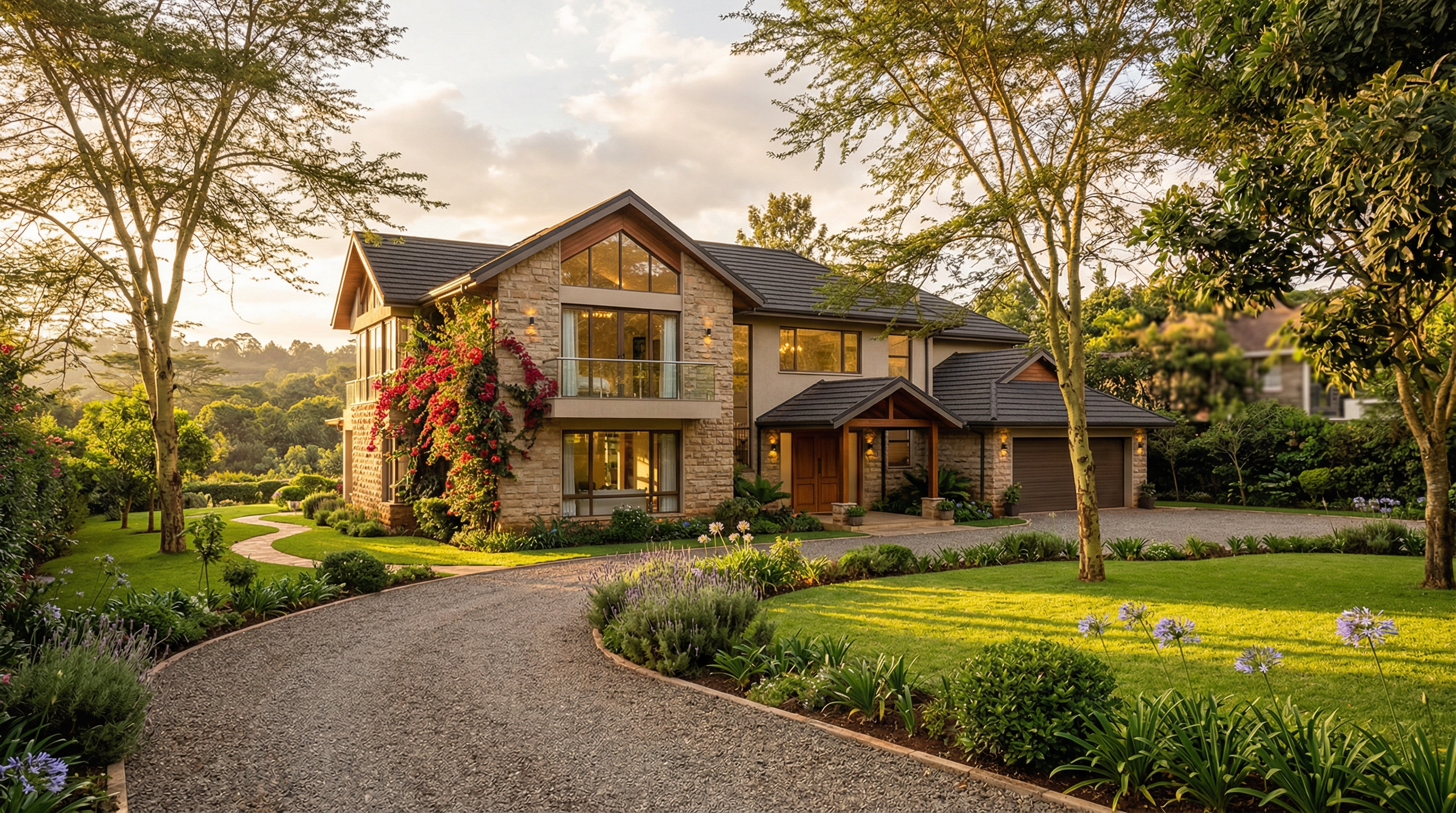
Houses for Sale in Karen: Price Guide 2026
Karen house prices from KES 35M–250M+. 4-bedroom, 5-bedroom, villas. Karen Hardy, Ndege Road, budget breakdown. Updated March 2026.