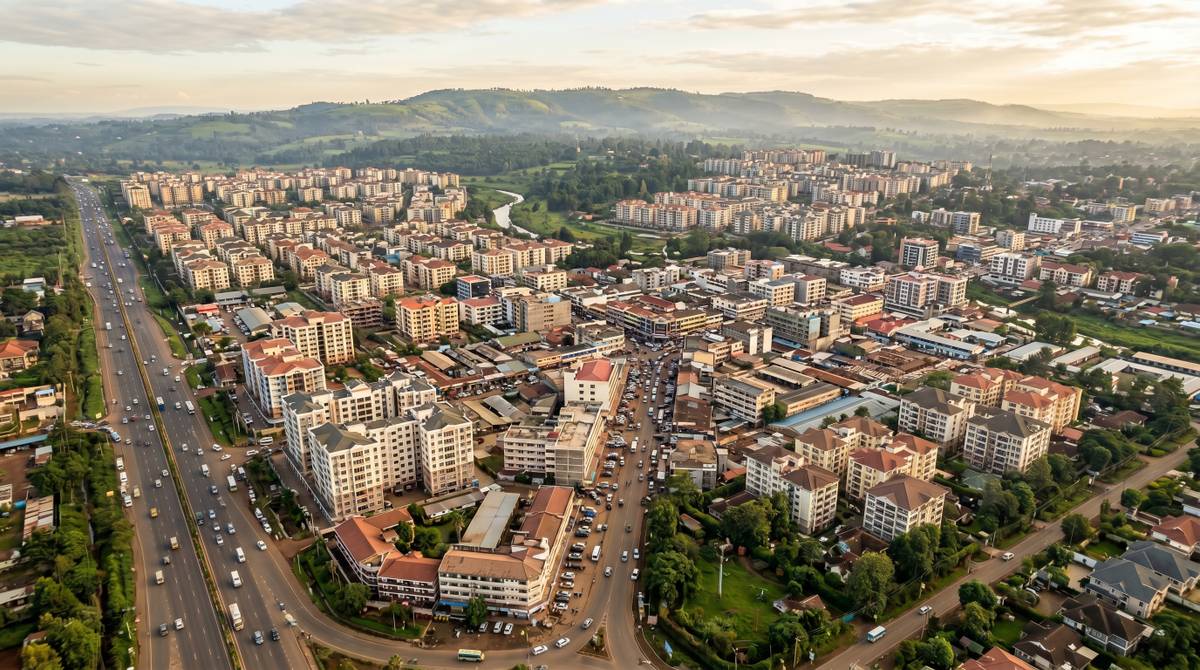
Living in Thika: Prices, Estates, Commute & Honest Guide (2026)
2-bed apartments from KSh 15K/month. 50+ factories, MKU campus, 45-min Superhighway commute. Prices 40–60% below Nairobi. Full estate-by-estate guide.
Introduction
Thika is not a suburb of Nairobi — it is a self-contained industrial town of nearly 280,000 people, 42 kilometres northeast of the capital along the eight-lane Thika Superhighway. It sits at the confluence of the Thika and Chania rivers in Kiambu County, at an elevation of 1,631 metres, with a subtropical highland climate that is noticeably cooler than Nairobi's lower-lying areas.
What makes Thika distinctive in Kenya's property market is the combination of an established industrial economy, significantly lower prices than Nairobi, and a commute that the Superhighway has compressed to 45–60 minutes off-peak. A 2-bedroom apartment rents from KSh 15,000/month here — roughly a third of what equivalent units cost in Kilimani. Houses in gated estates like Thika Greens and Golf View sell from KSh 12M–27M, with amenities that rival anything in Nairobi's established suburbs. For buyers priced out of the capital but unwilling to sacrifice quality of life, Thika is one of the strongest options in Kenya's northern growth corridor.
Quick Facts
Detail | Thika |
|---|---|
County | Kiambu (Thika Town Constituency) |
Distance from Nairobi CBD | ~42 km via Thika Superhighway |
Population | ~279,429 (2019 census) — growing rapidly |
Elevation | 1,631 m |
Property types | Apartments, maisonettes, bungalows, townhouses, plots |
Apartment prices (sale) | KSh 2M–5M (1-3 bed) |
House prices (sale) | KSh 6.5M–45M |
Plot prices (1/4 acre) | KSh 2.5M–9M (estate-dependent) |
Rental range | KSh 4,000–120,000/month |
Commute to Nairobi CBD | 45–60 min (off-peak), 75–120 min (rush hour) |
Key industries | Del Monte, BIDCO, textile, manufacturing (50+ major factories) |
Universities | Mount Kenya University, JKUAT (nearby in Juja) |
Property Prices in Thika (2026)
Apartments and Houses for Sale
Property Type | Price Range (KSh) | Notes |
|---|---|---|
2-bed apartment | 2M–4M | Kings Orchid from KSh 3.5M; newer builds in Makongeni area |
3-bed apartment | 3.5M–5M | Garissa Road developments (Kivulini, Flame Tree Park) from KSh 5M |
3-bed maisonette | 6.5M–15M | Ngoingwa, Section 9, Tola Estate |
4-bed maisonette | 12M–27M | Thika Greens from KSh 22M; Golf View from KSh 22M |
5-bed mansion | 15M–45M | Happy Valley, Thika Greens premium |
1/4 acre plot (gated estate) | 6.5M–9M | Thika Greens from KSh 6.5M; Albizzia Groove from KSh 9M |
1/4 acre plot (developing area) | 2.5M–5M | Ngoingwa, Tora, Kiganjo |
50×100 plot | 850K–2.5M | Salama from KSh 850K; Landless area |
Rental Prices
Unit Type | Rent (KSh/month) | Notes |
|---|---|---|
Bedsitter | 4,000–8,000 | Basic builds near town centre |
1-bed apartment | 10,000–18,000 | Makongeni from KSh 12K; Marcis Apartments near bus park |
2-bed apartment | 15,000–35,000 | Modern units in Ngoingwa KSh 20K–35K |
3-bed apartment | 25,000–45,000 | Newer developments along Garissa Road |
3-4 bed house | 30,000–60,000 | Section 9, Ngoingwa gated communities |
4-bed maisonette (premium) | 60,000–120,000 | Golf View Estate, Thika Greens |
Context: These prices are roughly 40–60% below equivalent Nairobi neighbourhoods. A 2-bed apartment that rents for KSh 20,000 in Thika would cost KSh 40,000–60,000 in Kilimani or Kileleshwa. Groceries and utilities are estimated at 15–20% cheaper than Nairobi.
Estates and Micro-Areas
Thika Greens
The premium address in Thika — a 306-acre gated estate with an eighteen-hole golf course, 5 km from town centre. Fully serviced 1/4 acre plots from KSh 6.5M; 4-bed maisonettes from KSh 22M. Amenities include tarmacked internal roads, electricity, water, sewer system, and planned additions (hospital, shopping mall, school). This is where Thika's highest-end buyers live. Approximately 30 minutes from Nairobi on the Superhighway.
Golf View Estate
Adjacent to the Thika Sports Club, Golf View offers luxury maisonettes from KSh 22M with 4+ bedrooms, all ensuite. Quiet, low-density, and well-secured. Popular with senior professionals and business owners who work in Thika's industrial sector.
Ngoingwa
The fastest-growing residential area, 4 km from Thika CBD along the Thika-Mangu road. A mix of modern apartments, standalone houses, and gated developments. Plots from KSh 2.5M; 3-bed maisonettes from KSh 6.5M–15M. More affordable than Thika Greens but with good infrastructure, schools (Bishop Kanyiri Academy), and easy access to town. The primary market for middle-class families.
Section 9
One of Thika's older established residential areas with a mix of bungalows on generous plots and newer apartment developments. Centrally located with walking access to town facilities. Prices vary widely — older properties on large plots can be bargains, while renovated or new-build properties command premiums. Houses on 1/3 acre from KSh 10M–15M.
Makongeni
Thika's largest apartment cluster, located along the Thika-Garissa road near Ananas Mall. The area hosts most of the town's high-rise rental stock. 1-bed apartments from KSh 12,000/month; bedsitters from KSh 4,000. Higher density, more commercial character, and the highest concentration of student and worker accommodation (proximity to industrial zone and Mount Kenya University).
Salama & Landless
Further out along the Thika-Garissa Highway, 8–12 km from town. The most affordable entry point: 50×100 plots from KSh 850K in gated subdivisions with basic services (electricity, water access). Well-connected by road but infrastructure is still developing. These areas attract land investors and first-time buyers building incrementally.
Kiganjo
A developing area approximately 4 km from Thika town, near Mount Kenya University's main campus. Attractive for student-housing investors — demand is consistent during term time. Mixed residential and small-scale commercial activity. Plots and rental units at entry-level prices.
What It Is Like to Live in Thika
Thika is an industrial town that has become a residential destination. Unlike satellite towns that are essentially dormitory communities for Nairobi commuters, Thika has its own economy — over 50 major factories and 100+ small-scale industries including Del Monte (Kenya's largest pineapple processor), BIDCO (cooking oils), textile mills, and manufacturing plants. This means many residents actually work in Thika rather than commuting to Nairobi, giving the town an economic independence that places like Ruiru or Syokimau lack.
The daily experience depends heavily on where you live. In Thika Greens or Golf View, life resembles a Nairobi suburb — gated, manicured, and self-contained. In Makongeni or the CBD area, the atmosphere is commercial and bustling, with matatu noise, street markets, and the energy of a working-class town. Ngoingwa sits in between — quieter than the CBD, more accessible than the premium estates.
Shopping has improved significantly. Ananas Mall provides Naivas supermarket, banks, and restaurants. The CBD has a busy open-air market for fresh produce at prices 15–20% below Nairobi. For larger retail trips, TRM (Thika Road Mall) and Garden City Mall are accessible along the Superhighway route to Nairobi.
Thika is an education hub: Mount Kenya University (Kenya's largest private university), several Thika colleges, Mangu High School, and the proximity of JKUAT in neighbouring Juja create a large student population. This drives rental demand — particularly for bedsitters and 1-bed units — and gives the town a younger demographic mix than typical satellite towns.
Climate is a genuine advantage. At 1,631 metres elevation, Thika is cooler and less humid than lower-lying areas. The long rains run March–June and short rains October–December. The cooler climate makes it comfortable year-round without air conditioning — a meaningful cost saving compared to Mombasa or lower Nairobi areas.
Security varies by area. Gated estates (Thika Greens, Golf View, newer Ngoingwa developments) have 24-hour guards, CCTV, and controlled access. The CBD and older areas like Majengo have typical town-centre security challenges — petty theft and occasional vehicle crime. Residents generally advise choosing gated or controlled-access properties and avoiding isolated routes at night.
Thika has a nightlife scene that is modest but real — clubs like Blend and The Garage Bar & Grill, plus hotel restaurants at the Blue Post Hotel (a colonial-era landmark at the Chania Falls viewpoint). Weekend activities include visits to Chania Falls and Fourteen Falls, hiking at Ol Donyo Sabuk National Park, or simply driving into Nairobi for dining and entertainment. The town has a strong community fabric — particularly in the older estates where multigenerational families have been present since Thika's industrial heyday.
The social mix is diverse: factory workers, university students (MKU alone enrols tens of thousands), young professionals commuting to Nairobi, and an older generation of Thika families who have been here for decades. This gives Thika a more rooted, community-oriented feel than newer satellite towns like Ruiru or Syokimau where most residents are recent arrivals.
Amenities
Shopping
Ananas Mall (Naivas, banks, restaurants), Thika CBD open-air market, Blue Post Hotel area shops. TRM and Garden City Mall accessible along the Superhighway. Makongeni commercial strip for everyday needs.
Education
Mount Kenya University (private, largest in Kenya), JKUAT in nearby Juja, Mangu High School, Bishop Kanyiri Academy (Ngoingwa), Stepping Stone Academy, numerous primary and secondary schools across all estates. Post-secondary options make Thika a student town.
Healthcare
Thika Level 5 Hospital (county referral), multiple private hospitals and clinics across estates. For specialised care, Nairobi hospitals are 45–60 minutes away on the Superhighway.
Recreation
Chania Falls and Thika Falls (scenic waterfalls within town), Fourteen Falls on the Athi River (off Garissa Road), Ol Donyo Sabuk National Park (southeast of town), Thika Greens Golf Course, Blend and The Garage Bar & Grill for nightlife. Weekend day trips to Nairobi or the central highlands are straightforward via the Superhighway.
Pros and Cons
Pros
Affordability: Property prices 40–60% below equivalent Nairobi areas. A modern 2-bed apartment at KSh 15,000–25,000/month delivers the same quality as a KSh 40,000–60,000 unit in Kilimani.
Own economy: Unlike dormitory satellite towns, Thika has 50+ factories and a full commercial infrastructure. Job opportunities exist locally — not everyone commutes to Nairobi.
Superhighway access: The eight-lane Thika Superhighway reduced commute times dramatically. Off-peak, Nairobi CBD is 45–60 minutes away.
Education hub: Mount Kenya University, proximity to JKUAT, and strong secondary schools create steady rental demand and a young population base.
Climate: Cooler and more comfortable than lower-lying areas. Year-round comfort without air conditioning.
Growth trajectory: Thika is the largest economy in Kiambu County. Infrastructure investment (road upgrades, Superhighway service lane expansions) continues.
Cons
Rush-hour commute: The Superhighway is excellent off-peak but congested during morning and evening rush hours. Expect 75–120 minutes to Nairobi CBD at peak times. No SGR station — commuters are road-dependent.
Industrial character: Parts of Thika — particularly near the Del Monte factory and the industrial zones — have an industrial atmosphere. Air quality in specific zones can be affected by factory operations. Choose residential areas upwind from industrial sites.
Water supply: Water rationing occurs, particularly in newer developing estates where supply infrastructure has not kept pace with building. Budget for borehole water costs (KSh 2,000–5,000/month) in areas without reliable piped supply. Established estates like Thika Greens and Golf View have their own water systems.
Limited nightlife and cultural infrastructure: Thika has malls, restaurants, and bars, but it is not a cultural destination. For dining, entertainment, and social life beyond estate amenities, most residents drive to Nairobi.
Rapid unplanned growth: Some areas (particularly Makongeni and the Garissa Road corridor) are developing faster than planning can manage. Building density is increasing, and not all new developments meet adequate standards. Due diligence on any apartment purchase here is essential.
2027 election cycle: As with all Kenyan satellite towns, the property market typically slows 12–18 months before general elections. Transaction volumes may decrease from late 2026.
Thika Compared to Neighbours
Factor | Thika | Ruiru | Juja |
|---|---|---|---|
2-bed apartment (sale) | KSh 2M–4M | KSh 3M–6M | KSh 2M–3.5M |
2-bed rent | KSh 15K–35K | KSh 20K–40K | KSh 12K–25K |
1/4 acre plot (gated) | KSh 6.5M–9M | KSh 5M–12M | KSh 3M–6M |
Commute to Nairobi CBD | 45–60 min | 30–45 min | 35–50 min |
Own economy | Strong (50+ factories) | Growing (logistics, commercial) | Limited (university-driven) |
University presence | MKU + colleges | Minimal | JKUAT (major) |
Premium estates | Thika Greens, Golf View | Tatu City, Kamakis | Limited |
Vibe | Self-contained industrial town | Fast-growing Nairobi dormitory | University town + agricultural |
Best for | Families, local workers, value seekers | Nairobi commuters, families | Land investors, student rentals |
For a detailed comparison of the northern corridor, see our guide: Ruaka vs Ruiru vs Juja: Where to Invest.
Getting Around
Destination | Mode | Time (Off-Peak) | Time (Rush Hour) |
|---|---|---|---|
Nairobi CBD | Car via Superhighway | 45–60 min | 75–120 min |
Nairobi CBD | Matatu | 50–70 min | 90–130 min |
Juja / JKUAT | Car / matatu | 15–20 min | 25–40 min |
Ruiru | Car / matatu via Superhighway | 20–30 min | 35–50 min |
Garden City Mall | Car via Superhighway | 30–40 min | 50–75 min |
Murang'a | Car via A2 | 40–50 min | 50–70 min |
JKIA Airport | Car via Superhighway + Eastern Bypass | 60–80 min | 90–120 min |
Matatus run frequently along the Superhighway and Garissa Road. Boda bodas are common for short trips within town. There is no rail connection — a proposed light rail link to Nairobi has been discussed but has no confirmed timeline.
Investment Outlook
What is working
Thika benefits from several structural tailwinds: population growth driven by Nairobi spillover, an established industrial employment base that provides local demand, university-driven rental demand (particularly for affordable units near MKU and JKUAT), and continued Superhighway infrastructure improvements that reduce commute friction. Land appreciation in developing areas like Ngoingwa and Kiganjo is estimated at 8–12% annually, driven by new development activity.
Rental yields are attractive at the affordable end. A KSh 3.5M 2-bed apartment (Kings Orchid) renting at KSh 18,000–22,000/month delivers a gross yield of approximately 6–7.5%. Student-targeted bedsitters near MKU offer higher yields on a percentage basis but require more active management and experience vacancy during term breaks.
What to watch
Oversupply in the apartment segment is a growing risk. Multiple large developments (Kings Orchid alone has 975 units) are launching simultaneously in the Thika CBD and Garissa Road corridor. Not all will find tenants immediately — vacancy rates in less competitive buildings may rise. New investors should target developments with clear differentiators (amenities, location, security) rather than the cheapest available unit.
Infrastructure lag in outer estates: water, roads, and security in areas like Salama, Landless, and outer Kiganjo have not kept pace with residential development. Buying plots in these areas is a valid long-term strategy, but expect to wait 3–5 years for full infrastructure before the investment becomes liquid.
For diaspora investors
Thika offers one of the best value propositions for diaspora investors with budgets under $40,000 (approximately KSh 5.2M). A 2-bed or 3-bed apartment in a modern development can generate KSh 18,000–35,000/month in rent. At current exchange rates (~KSh 130/$1), entry prices are roughly $27K–$38K for an apartment or as low as $6.5K for a 50×100 plot in developing areas.
Key considerations: appoint a verified agent and independent property manager, verify all titles on Ardhisasa, and budget for water costs and service charges that may not appear in headline rental figures. For country-specific buying guidance: USA · UK · UAE · Canada.
Frequently Asked Questions
Is Thika a good place to live in 2026?
Yes — particularly for families and professionals seeking affordable housing with good amenities. The combination of property prices 40–60% below Nairobi, a 45–60 minute off-peak commute via the Superhighway, an established local economy, and institutions like Mount Kenya University makes Thika one of the strongest satellite town options in Kenya. The trade-offs are rush-hour traffic and industrial-zone air quality in specific areas.
How much does it cost to rent a 2-bedroom apartment in Thika?
A modern 2-bed apartment in Thika rents for KSh 15,000–35,000/month depending on estate and amenities. Units in Ngoingwa and newer developments along Garissa Road are at the higher end; basic apartments in Makongeni and the CBD start lower. Service charges, where applicable, are typically KSh 2,000–5,000/month.
How long is the commute from Thika to Nairobi?
Off-peak (mid-morning or late evening): 45–60 minutes via the Thika Superhighway. Rush hour (7–9 AM, 5–7 PM): 75–120 minutes. Matatus are slightly slower due to stops. There is no SGR or rail connection — commuters are entirely road-dependent.
What are the best estates in Thika?
For premium living: Thika Greens (golf estate, 1/4 acre plots from KSh 6.5M) and Golf View Estate (luxury maisonettes from KSh 22M). For middle-class families: Ngoingwa (fastest-growing, 3-bed houses from KSh 6.5M) and Section 9 (established, central). For affordable entry: Makongeni (highest apartment density) and Salama (plots from KSh 850K).
Is Thika a good place to invest in property?
Thika offers strong value at the affordable end, with rental yields of 6–7.5% gross on apartments and land appreciation of 8–12% in developing areas. The risk is apartment oversupply in the Makongeni/Garissa Road corridor as multiple large developments launch simultaneously. Target properties with competitive amenities, good management, and verified titles.
Is the water supply reliable in Thika?
It varies by estate. Established gated communities (Thika Greens, Golf View) have their own water systems. Developing areas and some apartment buildings experience rationing and depend on boreholes. Budget KSh 2,000–5,000/month for supplementary water in areas without reliable piped supply. Always ask about water arrangements before purchasing.
Explore Thika on Afriqahome
Ready to explore? Browse apartments for sale in Thika, houses for sale, or plots for sale — all from verified agents who have passed our document verification process.
Compare Thika with neighbouring areas: Ruaka vs Ruiru vs Juja · Kitengela vs Athi River vs Syokimau · Best Areas to Live in Nairobi.
For buying process guidance: How to Buy Land in Kenya · First-Time Buyer Guide · Stamp Duty & Closing Costs · Due Diligence Checklist · Freehold vs Leasehold.
For diaspora investors: Kenya Diaspora Investment Hub · Power of Attorney Guide · Common Mistakes Diaspora Buyers Make.
Afriqahome agents can earn a Verified Agent badge by submitting identity and licence documentation. The badge is optional, so look for it rather than assuming it. Start with a verified agent to reduce risk.
Other Guides
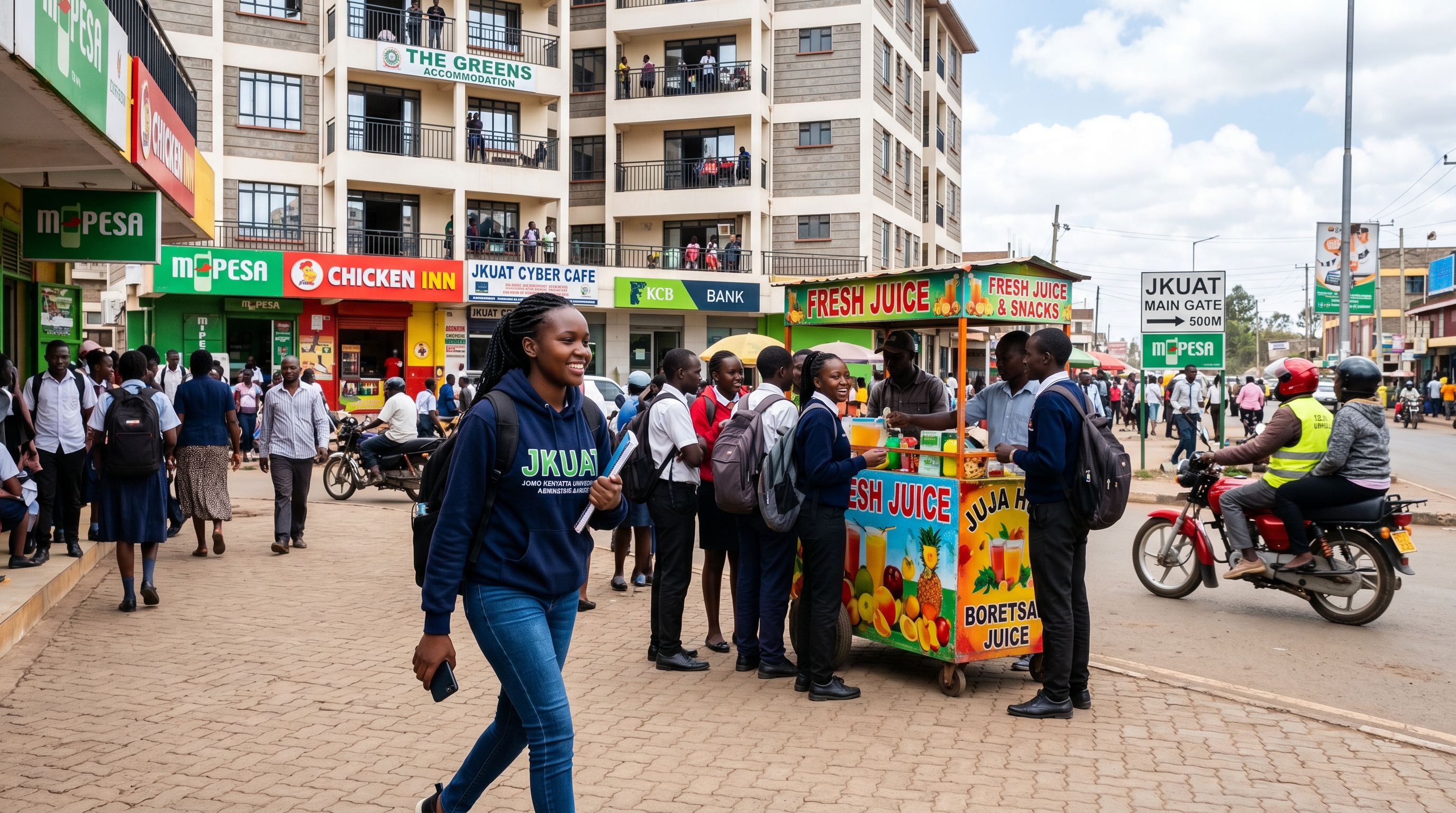
Living in Juja, Kiambu: The University Town That Became a Satellite City — Prices, Estates & Honest Guide (2026)
Juja houses from KSh 1.2M, rent from KSh 2.5K. JKUAT area, Kenyatta Road estates, Kalimoni, Witeithie. Student yields 9-15%.
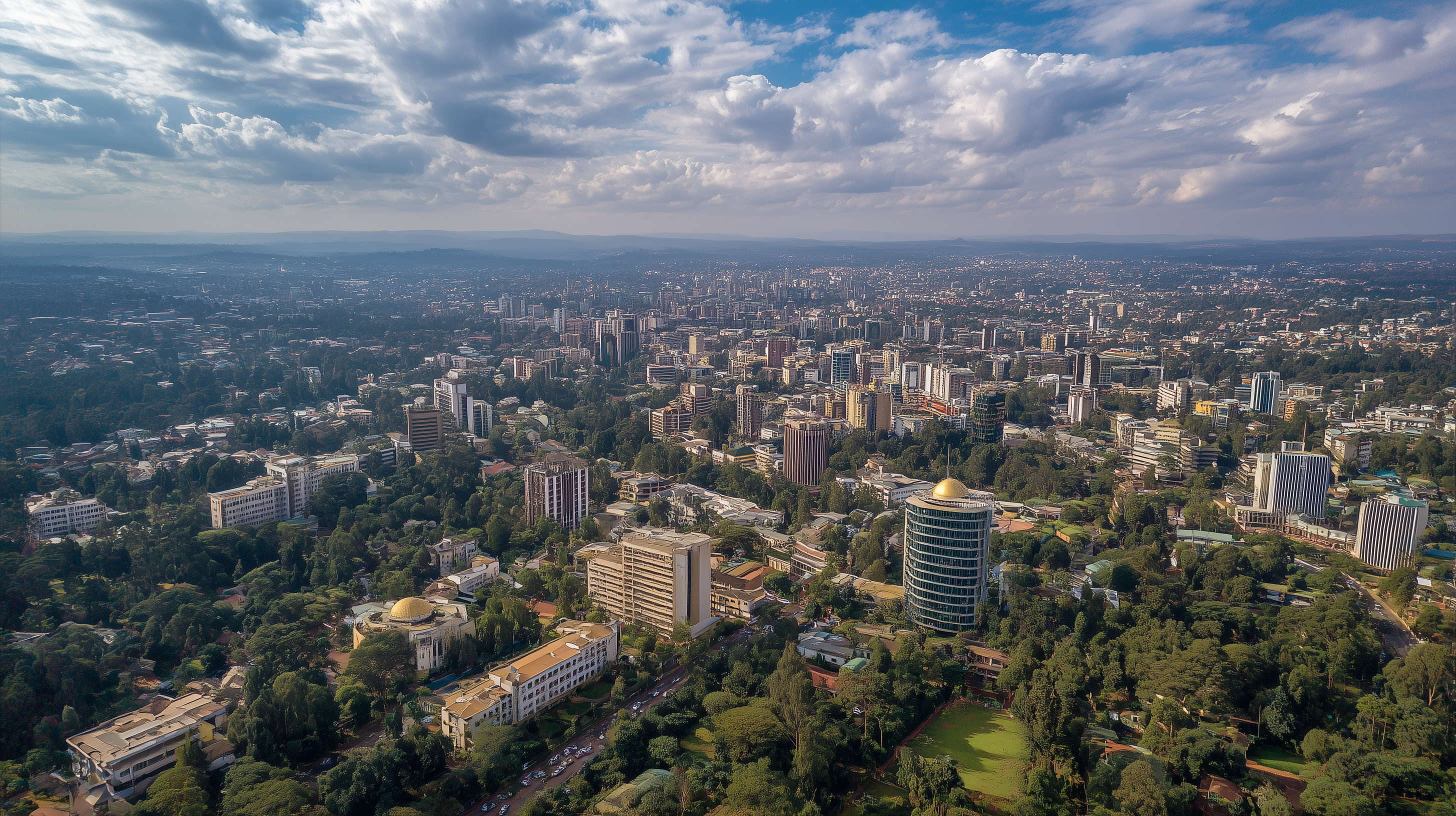
Westlands Property Guide: Prices, Lifestyle & Investment (2026)
Complete guide to Westlands real estate. Apartments from KES 8M, rental yields 6-8%, plus lifestyle amenities. Browse verified Westlands listings today.
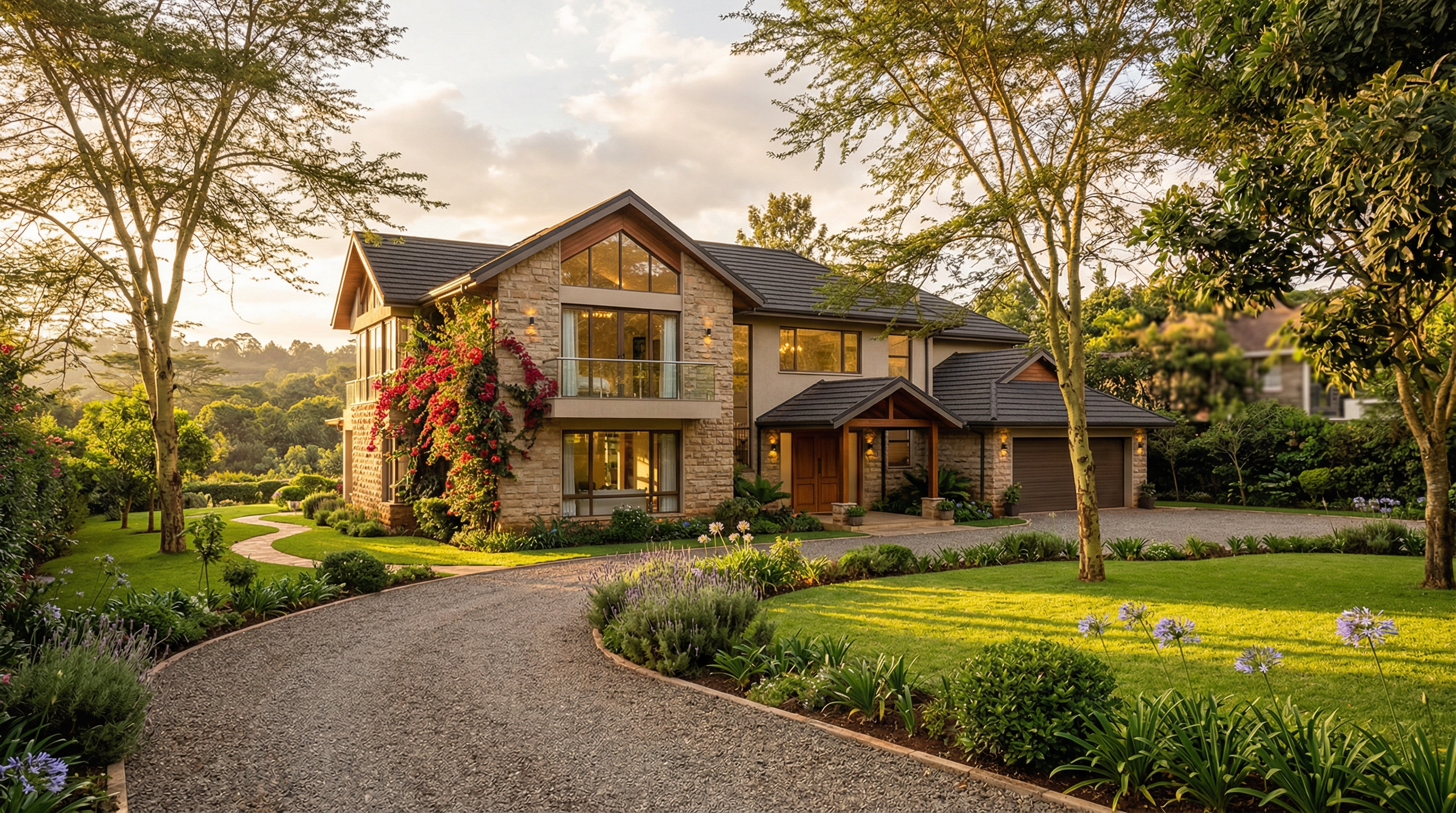
Houses for Sale in Karen: Price Guide 2026
Karen house prices from KES 35M–250M+. 4-bedroom, 5-bedroom, villas. Karen Hardy, Ndege Road, budget breakdown. Updated March 2026.